
Vietnam-Australia forum boosts AI and digital technology cooperation

The event took place in Hanoi on October 12, aiming to translate cooperation commitments into concrete projects and expand connections among businesses, research institutes, universities, and investors from both countries in AI, semiconductors, and innovation.
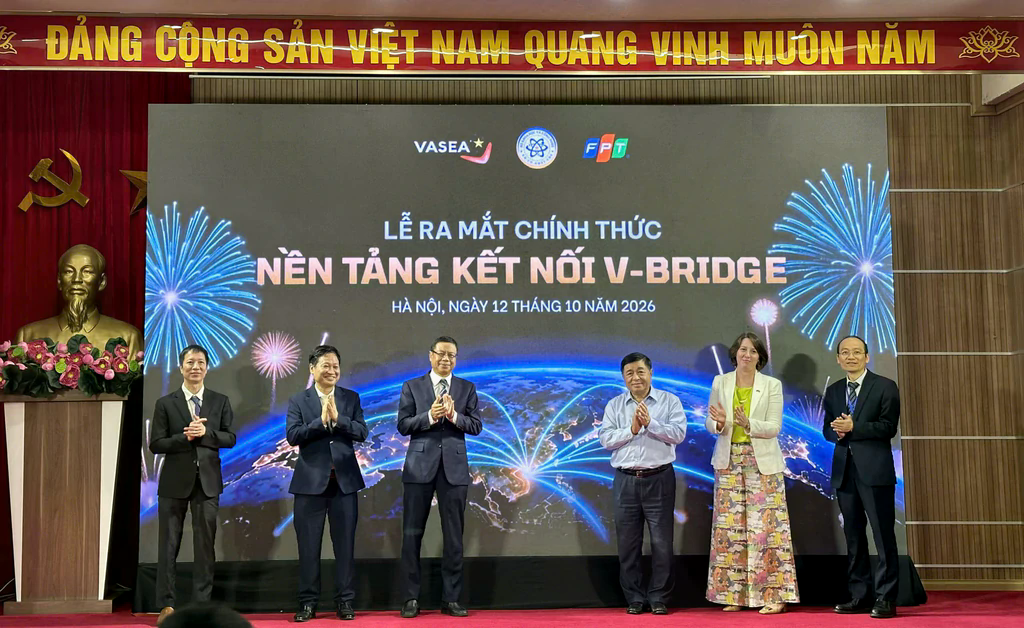 |
| The launch of the V-bridge platform. Photo: MST |
The event was organised by the Digital Technology and AI Authority under the Ministry of Science and Technology (MST) in collaboration with Vietnam-Australia Scholars and Experts Association (VASEA).
The forum brought together numerous representatives from regulatory bodies, research institutes, universities, and leading technology enterprises from both nations.
In his opening remarks at the forum, Nguyen Khac Lich, general director of the authority, stated, “The organisation of this forum marks a shift from the signing of cooperation agreements to the implementation of concrete activities, focusing on digital technology, AI, semiconductors, and innovation.”
He added that technology cooperation requires the participation of enterprises, research institutes, universities, and experts, alongside investment and market partners. The event provided a platform for these parties to directly discuss needs, showcase capabilities, and identify suitable partners.
Addressing the forum, Deputy Minister of Science and Technology Le Xuan Dinh said that Vietnam identifies science, technology, innovation, and digital transformation as key drivers for enhancing productivity, growth quality, and national competitiveness. In this context, international cooperation plays a pivotal role in enabling enterprises and research and educational institutions to access new knowledge, develop high-quality workers, and strengthen domestic technological capabilities.
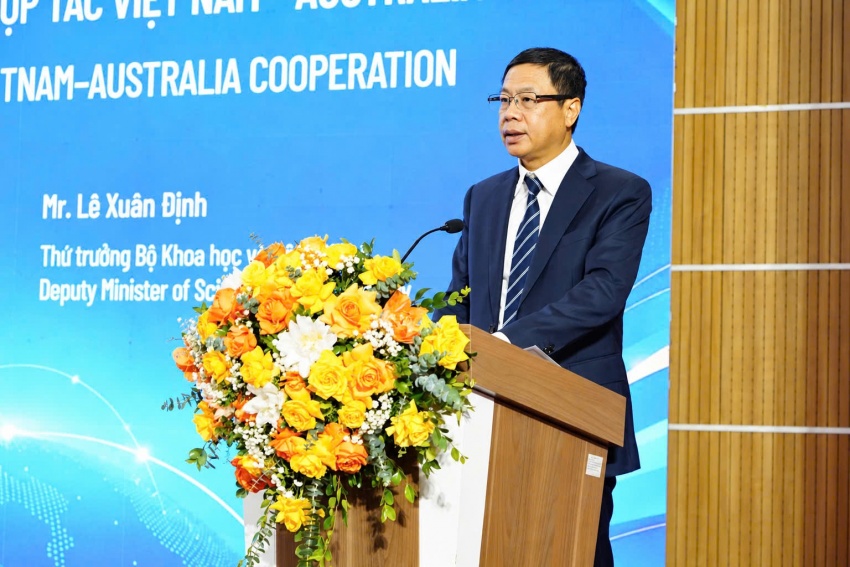 |
| Deputy Minister of Science and Technology Le Xuan Dinh. Photo: MST |
He explained, "What cannot be measured cannot be improved, nor can it generate new results." To ensure the cooperation yields practical and sustainable outcomes, he proposed that both sides focus on four key areas: project selection based on practical realities; link research and development with human resource training; maximising the effectiveness of the V-Bridge platform; and organising implementation with clear responsibilities and transparent evaluation milestones.
Elaborating on the direction of cooperation, Professor Nghiem Duc Long, president of VASEA, suggested that following the upgrade to a Comprehensive Strategic Partnership, the bilateral relationship needs to shift from a model of traditional cooperation to one of comprehensive integration.
He said, “Integration signifies the unhindered flow of knowledge, talent, and resources between the two countries, alongside the co-creation of new technologies. Prime examples of this effort include the AI-powered Vietnamese language learning platform VietNest and the launch of the V-Bridge technology connector, designed to put the 'triple helix' collaboration model into practice.”
Renee Deschamps, chargé d'affaires of the Australian Embassy in Vietnam, praised the potential of Vietnam's digital economy.
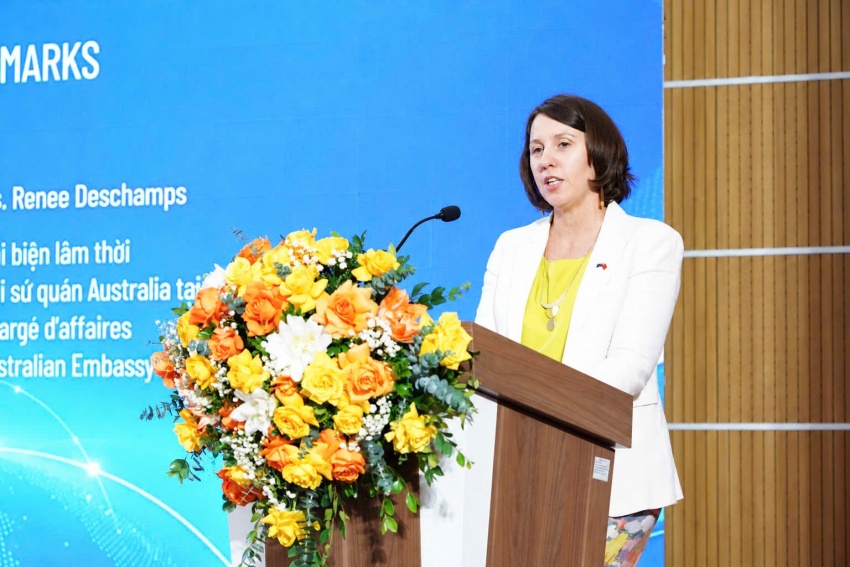 |
| Renee Deschamps, chargé d'affaires of the Australian Embassy in Vietnam. Photo: MST |
"Australia regards the digital economy, AI, and semiconductors as top priorities under its Southeast Asia Economic Strategy to 2040," she said. "We are committed to partnering with Vietnam to build robust digital infrastructure and secure cybersecurity, while unlocking opportunities for deep integration between Australian innovative enterprises and the Vietnamese market."
At the forum, the V-bridge platform was launched to support connections between businesses and organisations within the Vietnam-Australia technology ecosystem.
What the stars mean:
★ Poor ★ ★ Promising ★★★ Good ★★★★ Very good ★★★★★ Exceptional
 Tag:
Tag:Themes: Digital Transformation
- Vietnam-Australia forum boosts AI and digital technology cooperation
- Digital transformation shifts focus to added value
- Amazon Kuiper licensed for private satellite telecommunications network in Vietnam
- AWS ramps up security tools amid growing AI risks
- Machine vision and 3D: How logistics and warehousing are catching up with manufacturing
Related Contents




Latest News
More News
- Digital transformation shifts focus to added value (October 09, 2026 | 18:00)
- Melatec Dental Clinic - accompanying international clients on their smile care journey (October 09, 2026 | 17:25)
- 12 localities achieve double-digit growth in first nine months (October 09, 2026 | 17:00)
- CYE 2026 announces top 5 finalists (October 09, 2026 | 16:55)
- Robotics inspires Vietnam’s next generation of engineers (October 08, 2026 | 15:18)
- Vietnam among fastest AI adopters, Pearson-AWS study finds (October 07, 2026 | 12:26)
- Ho Chi Minh City Oncology Hospital signs MoU with Novartis Vietnam (October 07, 2026 | 10:36)
- Expanding education partnerships to drive mutual growth (October 06, 2026 | 16:04)
- VTG 2026 to showcase textile and footwear innovation in Ho Chi Minh City (October 06, 2026 | 16:00)
- Infineon boosts Vietnam footprint with Ho Chi Minh City office (October 06, 2026 | 10:02)



 Mobile Version