
Cambodian patient treated for severe aortic stenosis in Vietnam

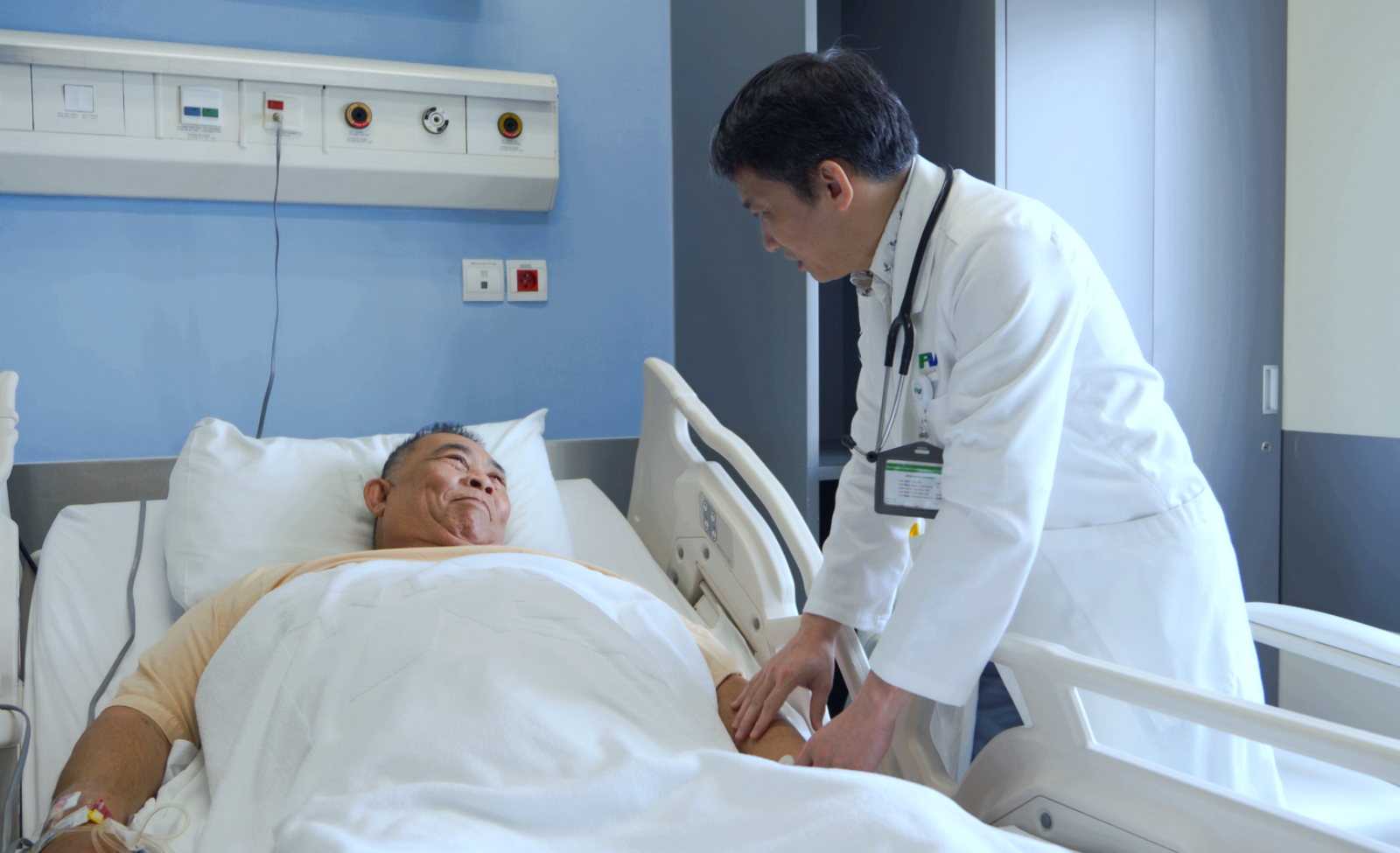 |
| Dr. Ho Minh Tuan checks on the patient following the TAVI procedure. Photo: FV Hospital |
In August, Chhay Chek had been frequently experiencing shortness of breath and chest tightness during physical activity. At times, he also suffered severe chest pain accompanied by excessive sweating. When he visited a hospital in Cambodia, his doctor recommended that he seek further assessment at a specialised medical centre to evaluate his cardiovascular risk.
After researching major hospitals with expertise in cardiovascular care in Thailand and Vietnam, Chek and his family decided to choose FV Hospital. He had learned about FV through Facebook, and several of his relatives had also received medical care there. In particular, a family member working in Vietnam recommended FV as a trusted healthcare provider.
At FV Hospital, Dr. Ho Minh Tuan, head of Cardiology & Interventional Cardiology, diagnosed Chek with severe aortic stenosis. Notably, his aortic valve had only two leaflets instead of the usual three. This congenital abnormality, known as a bicuspid aortic valve, can increase the risk of valvular heart disease and cardiovascular complications.
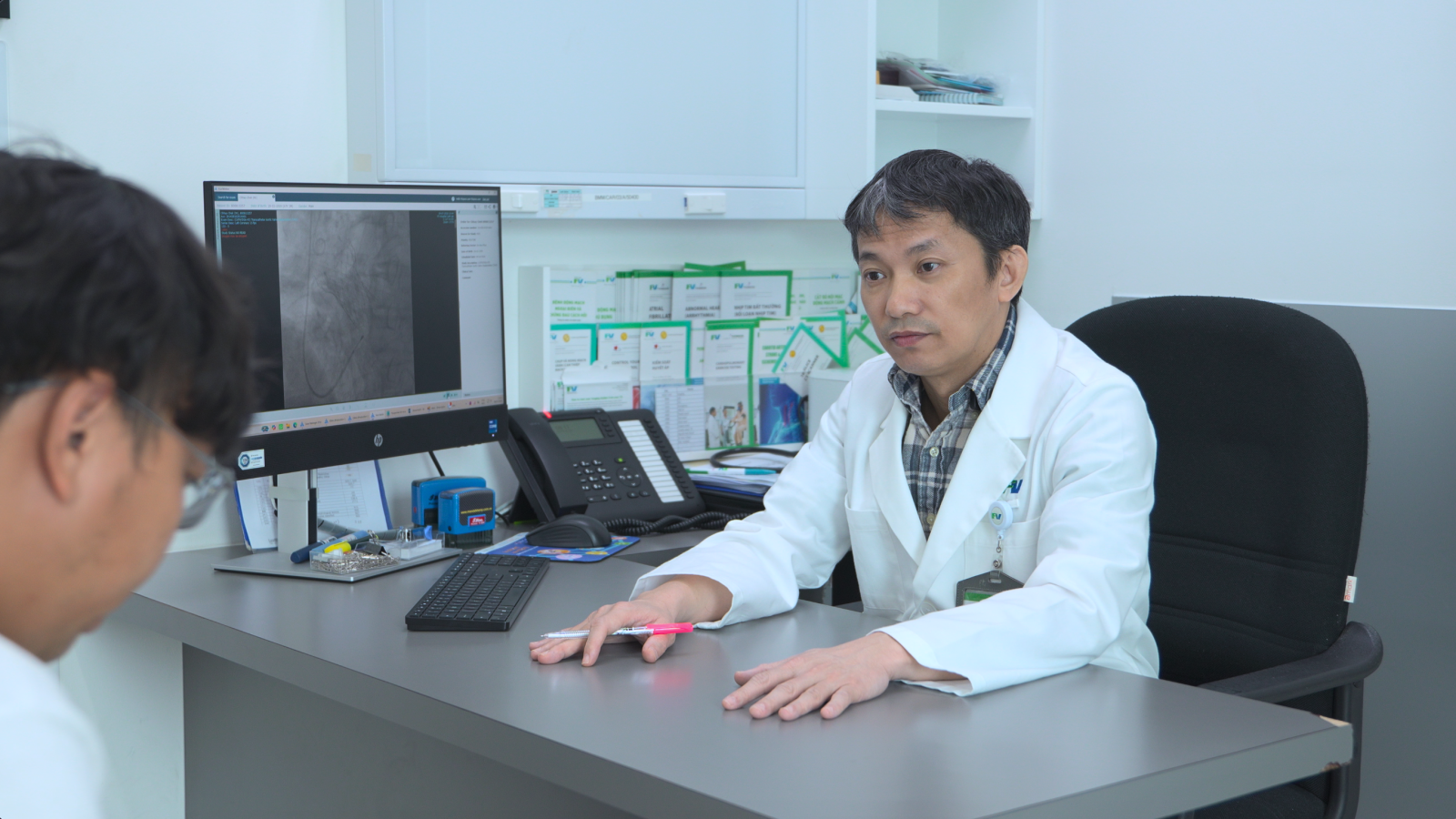 |
| Dr. Ho Minh Tuan counsels the patient on undergoing TAVI. Photo: FV Hospital |
“Chek's condition was complicated by severe calcification of the aortic valve, causing significant narrowing of the valve opening. In addition, his BMI of approximately 40, which falls within the Class III obesity category, further increased the risks associated with the procedure. Therefore, we had to carefully consider the intervention approach to effectively treat the aortic stenosis while ensuring patient safety," Dr. Tuan explained.
He said, "Severe aortic stenosis accompanied by symptoms such as shortness of breath, chest pain or tightness, or fainting requires prompt intervention. If left untreated, the condition can progress to heart failure and may even increase the risk of sudden cardiac death. Given the severity of Chek's aortic stenosis, heart valve replacement was essential."
Open-heart surgery carries significant risks for patients with Class III obesity, particularly respiratory complications during recovery and complications involving the sternotomy wound. Therefore, the medical team opted for Transcatheter Aortic Valve Implantation (TAVI), which avoids the need for open-heart surgery.
With this technique, the physician delivers an artificial heart valve to the site of the damaged aortic valve through a catheter, usually inserted via the femoral artery through an access point of approximately 8 mm. The artificial valve is then deployed within the diseased native valve, restoring blood flow from the heart to the body's organs.
Before the procedure, the medical team used AI-integrated 3Mensio CT imaging analysis software to reconstruct the heart and blood vessels in 3D. This enabled them to assess the valve dimensions, evaluate the patient's anatomical characteristics, and determine the most appropriate valve positioning.
Chek's case was particularly complex because his bicuspid aortic valve was severely calcified and required a large replacement valve. In addition, the thick layer of tissue in his groin area due to obesity made it more difficult to identify the vascular access route and close the access site following the procedure.
“In patients with a larger body habitus, blood vessels are located deeper beneath the skin, making vascular access more challenging. After the intervention, closing the vascular access site also requires great precision to minimise the risk of bleeding," Dr. Tuan shared.
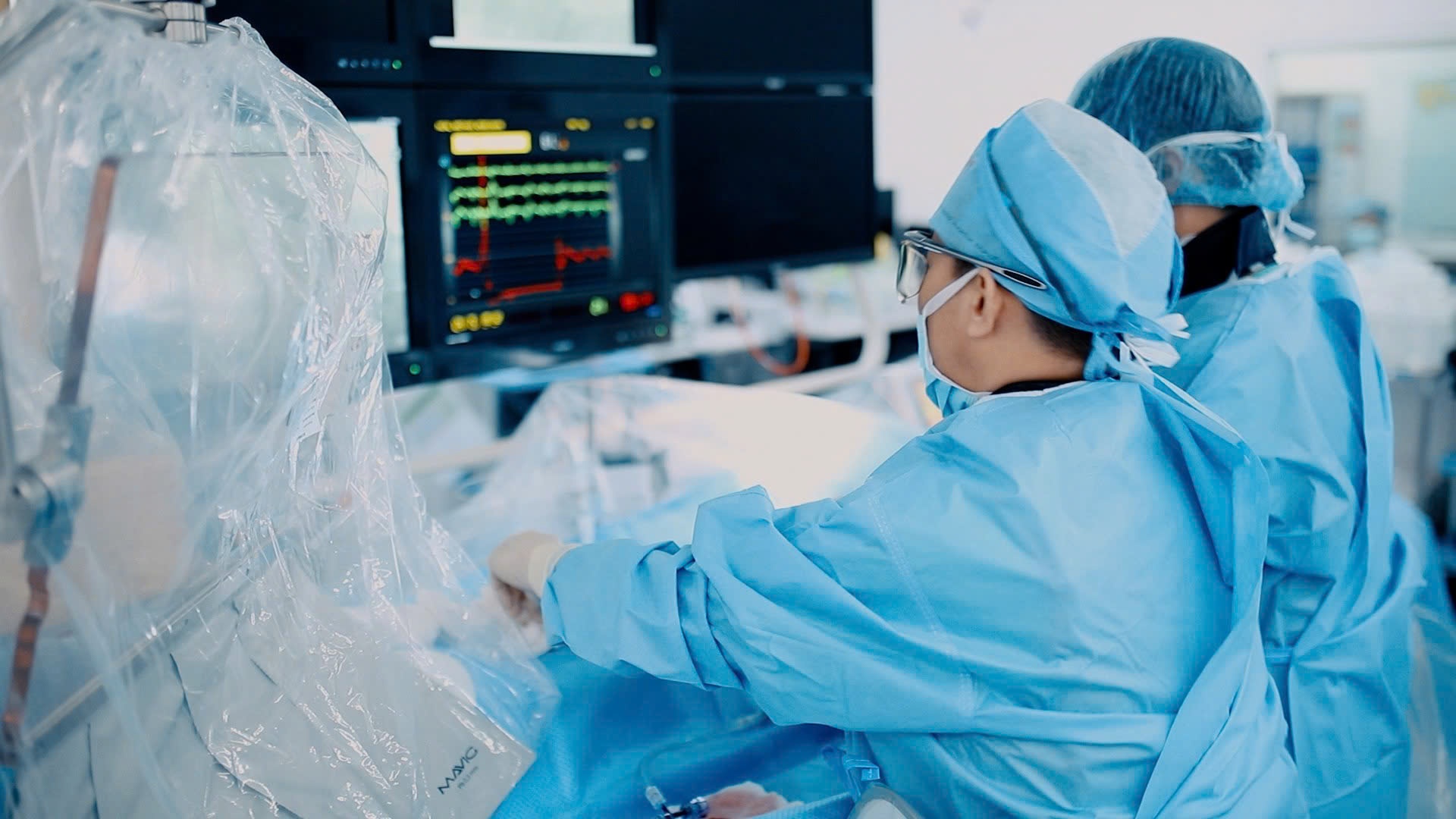 |
| Dr. Ho Minh Tuan (left) performs a TAVI procedure to treat aortic stenosis. Photo: FV Hospital |
The procedure took approximately 120 minutes, longer than the usual 90 minutes. Following the intervention, the artificial valve functioned well, and the vascular access sites were successfully closed without any signs of bleeding. Chek also experienced significant improvement in his shortness of breath and chest discomfort.
“I feel much better and can breathe more easily after having my heart valve replaced. I am grateful to the medical team, especially Dr. Tuan, who did everything they could to treat me," Chek said.
According to Dr. Tuan, following valve replacement, Chek requires close monitoring of his nutritional intake and physical activity, together with an appropriate weight-loss plan, to protect his cardiovascular health in the long term.
Studies have indicated that obesity increases the workload on the heart and is associated with a higher risk of various cardiovascular conditions, including heart failure and coronary artery disease. Doctors therefore recommend that patients develop an appropriate weight-management plan, combining dietary modifications, physical activity under medical guidance and medication when indicated.
FV is one of the few cardiovascular centres in Vietnam equipped to perform advanced interventional procedures. At its Cath-lab, an experienced team of interventional cardiologists diagnoses and treats a wide range of cardiovascular conditions without the need for open surgery. These procedures include coronary angioplasty and heart valve repair or replacement. FV's specialists have extensive expertise in treating coronary artery disease, valvular heart disease, congenital heart disease, and other complex cardiovascular conditions.
In addition to its interventional capabilities, FV has established a 24/7 cardiac emergency response system, aiming to restore blood flow to the heart within the golden 70-minute window of survival. This target is shorter than the recommended 90-minute benchmark for the management of acute myocardial infarction, helping maximise patients' chances of survival and minimise damage to the heart muscle.
For more information about cardiovascular interventional services at FV Hospital, please visit 06 Nguyen Luong Bang street, Tan My ward (formerly District 7), Ho Chi Minh City, or contact (028) 35 11 33 33. Emergency Hotline: (028) 35 11 35 00. FV Hospital allows patients to combine benefits from Vietnam's public health insurance and private health insurance, and also offers 0 per cent interest instalment payment plans for hospital bills.
 | Two Vietnamese midwives earn IBCLC certification in breastfeeding counselling Two midwives from the FV Thomson Maternity have earned an International Board Certified Lactation Consultant (IBCLC), an international credential for breastfeeding and lactation consultants. |
 | Breakthroughs in radiotherapy technology and new drugs for breast cancer treatment Instead of facing the prospect of having a breast completely removed or enduring prolonged treatment, breast cancer patients now have access to more precise radiotherapy techniques and advanced targeted therapies. |
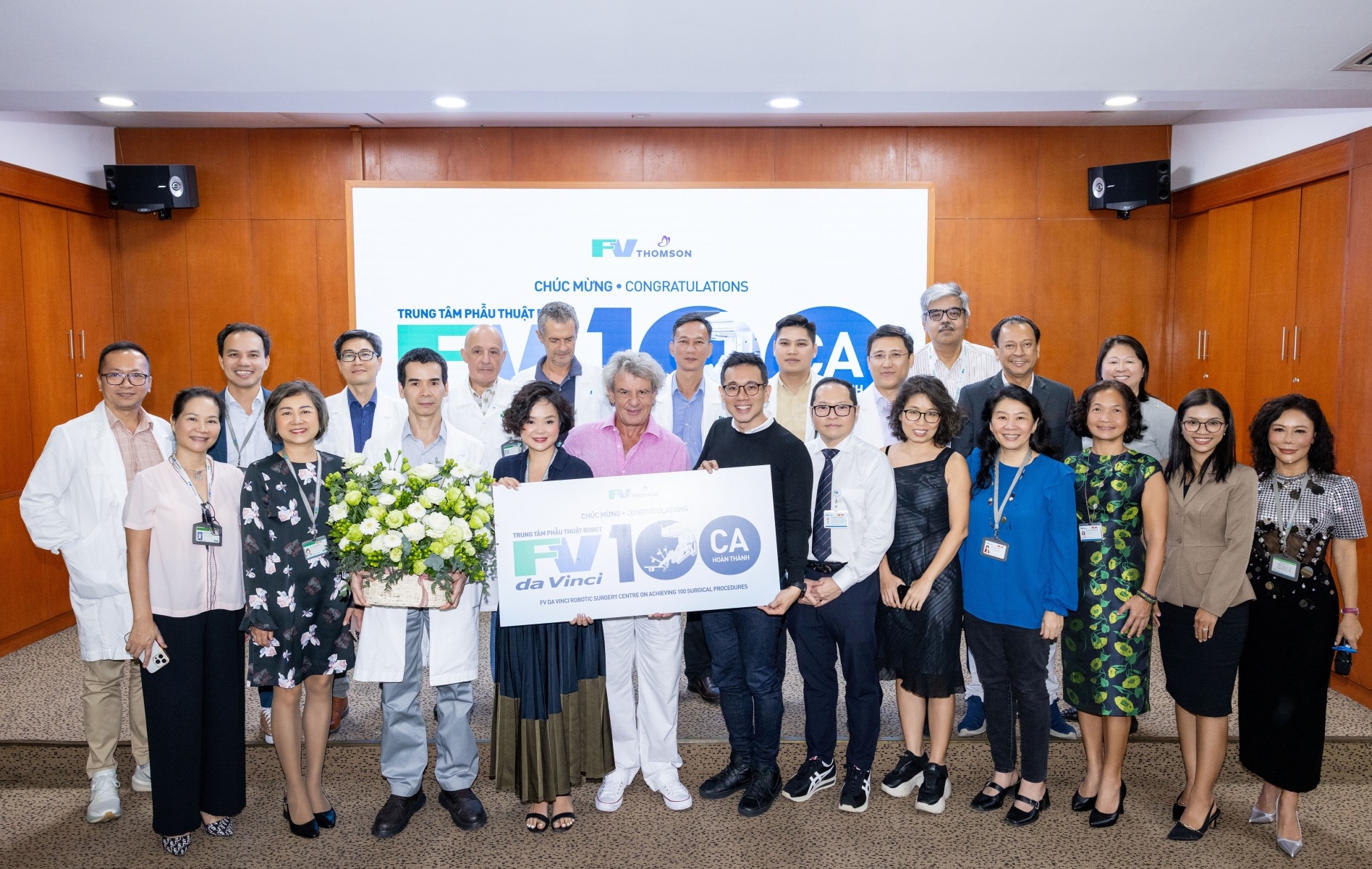
 | FV reaches 100 Da Vinci Xi robotic surgeries attracting international patients to Vietnam Performing more than 100 robotic surgeries marks a key milestone in the development of the FV da Vinci Robotic Surgery Centre, expanding access to advanced surgical techniques for patients in Vietnam and attracting international patients. |
What the stars mean:
★ Poor ★ ★ Promising ★★★ Good ★★★★ Very good ★★★★★ Exceptional
 Tag:
Related Contents



Latest News
More News
- Marico SEA moves higher in Top 100 Best Places to Work in Vietnam (November 19, 2026 | 16:26)
- MoF seeks HSBC support in expanding access to global investors (November 19, 2026 | 15:37)
- MoF and PCA strengthen cooperation on international dispute settlement (November 19, 2026 | 11:29)
- Sweden-Vietnam Health Week 2026 generates new partnerships (November 18, 2026 | 14:00)
- Partnership to develop city-level breast cancer plan in Danang (November 17, 2026 | 18:30)
- VICO 2026 opens in Ho Chi Minh City as industry weighs its future (November 17, 2026 | 11:48)
- Dong Nai delegation learns from Hanoi rabies pilot (November 17, 2026 | 11:32)
- Chinese automakers in Vietnam: New competitive landscape and power of local partners (November 15, 2026 | 21:00)
- Vietnam and South Korea strengthen semiconductor cooperation (November 13, 2026 | 08:00)
- Shopee livestream joins Ho Chi Minh City stimulus drive (November 12, 2026 | 15:36)






 Mobile Version