
Vietnam Digital Summit promotes shift to digital platforms and services

The event took place on June 5 in collaboration with the Vietnam Union of Science and Technology Associations and the Ninh Binh People's Committee. The annual forum brought together government agencies, experts, scientists, technology companies, and international partners to promote the development of Vietnam's digital economy, digital society, and digital nation.
In the opening remarks, Deputy Minister of Science and Technology Bui Hoang Phuong explained that Vietnam is entering a new phase of development with sci-tech, innovation, and digital transformation identified as three strategic pillars, creating important impetus for rapid and sustainable growth.
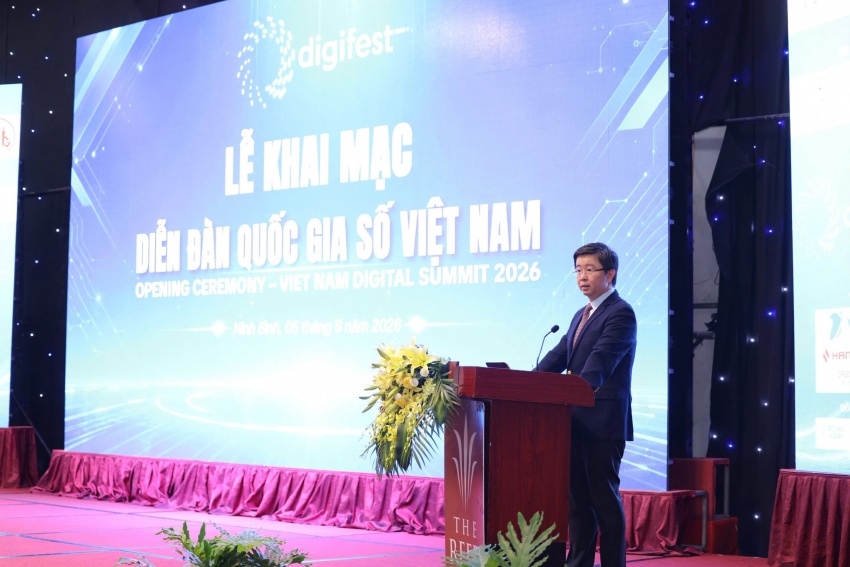 |
| Deputy Minister of Science and Technology Bui Hoang Phuong. Photo: MST |
"In recent years, Vietnam has built important foundations for national digital transformation," said Deputy Minister Phuong. "The institutional system continues to be improved, with many important legal documents being approved and amended. In 2025 alone, many laws directly related to digital transformation were developed and finalised, including the Law on Digital Transformation, the Law on Digital Technology Industry, the Law on Data, and the Law on AI."
Simultaneously, digital infrastructure continues to develop strongly. 5G coverage has reached over 90 per cent of the population. Large-scale national databases and shared digital platforms such as the national population database and VNeID are gradually becoming the foundational infrastructure for state management, economic development, and serving the people.
Another noteworthy point is the increasingly strong promotion of AI applications in both the public and private sectors. Many activities to train high-quality workers, support small and medium-sized enterprises in digital transformation, and disseminate digital knowledge and skills to the public are also being implemented on a wide scale.
However, alongside the achievements, Phuong noted that the digital transformation process still faces many challenges. "We are still witnessing a gap between institutions and implementation; between invested infrastructure and the actual value created; and between expectations and the digital experience of citizens and businesses," he said.
He noted the big question now is no longer how to acquire more technology or digital platforms, but how to truly integrate digital transformation into daily life, creating new value and breakthroughs in socioeconomic development.
Phuong believes that the most important thing now is to change the approach to digital transformation.
"The essence of digital transformation is problem-solving. Digital transformation must begin with the problems faced by citizens, businesses, and government agencies in practice to create new and more effective ways of doing things," the deputy minister explained. "Digital transformation is not about digitising old processes, but about creating new ways of doing things based on digital technology."
 |
| Photo: MST |
Against this backdrop, the Vietnam National Digital Forum focused on four key objectives:
First, creating a space for policy dialogue between regulators, businesses, researchers, and international partners to identify issues and propose solutions for national digital transformation.
Second, strengthening the development of digital platforms and services based on data and AI as core infrastructure for digital government, economy, and society.
Third, enhancing resource connectivity, sharing experiences, and disseminating effective digital transformation models from central to local levels, including rural, mountainous, and island areas.
Fourth, expanding international cooperation, boosting technological self-reliance, and strengthening Vietnam's position in the global technology chain.
 |
| Photo: MST |
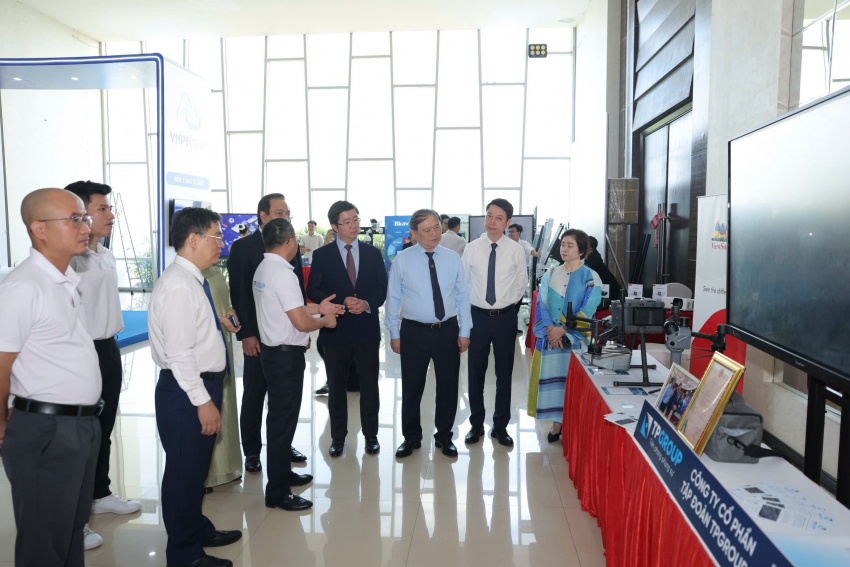
During the forum, experts, technology businesses, and representatives from many international organisations focused on discussing solutions for developing digital platforms, digital data, AI, digital services, and effective digital transformation models in socioeconomic fields.
The discussions also focused on finding solutions to more effectively utilise data sources, promoting the application of AI in governance, production, and service delivery, thereby contributing to improved labour productivity, competitiveness, and the quality of service for the people.
Expressing confidence in Vietnam's development prospects in the digital age, Deputy Minister Phuong said that the country now has a great opportunity to leverage digital technology, data, and AI to create new growth drivers.
"With the support of the state, the business community, scientists, and the people, Vietnam can absolutely successfully build a developed, prosperous, and sustainable digital nation," he noted.
 | Vietnam announces 10 strategic technology groups Vietnam’s latest issuance of 10 strategic technology groups is expected to create an important basis for developing core technologies, and products, contributing to digital economy development, national competitiveness and security. |
 | Vietnam targets $300 billion digital technology industry by 2030 Deputy Prime Minister Ho Quoc Dung approved a key decision on May 13, approving the digital technology industry development programme for 2026-2030. |
 | Vietnam enhances cooperation in digital economy and AI with regional partners Vietnam will increase cooperation in digital economy, AI and innovation with Thailand and Singapore as part of efforts to strengthen bilateral ties. |
 | Digital economy tops $72 billion as Resolution 57 drives transformation push Vietnam’s digital economy expanded to more than $72 billion in 2025, underscoring the early success of Resolution 57, even as slow fund disbursement and data integration hurdles continue to test implementation. |
What the stars mean:
★ Poor ★ ★ Promising ★★★ Good ★★★★ Very good ★★★★★ Exceptional
 Tag:
Tag:Themes: Digital Transformation
- Vietnam-Australia forum boosts AI and digital technology cooperation
- Digital transformation shifts focus to added value
- Amazon Kuiper licensed for private satellite telecommunications network in Vietnam
- AWS ramps up security tools amid growing AI risks
- Machine vision and 3D: How logistics and warehousing are catching up with manufacturing
Related Contents









Latest News






More News
- Vietnam-Australia forum boosts AI and digital technology cooperation (October 13, 2026 | 11:30)
- Digital transformation shifts focus to added value (October 09, 2026 | 18:00)
- Melatec Dental Clinic - accompanying international clients on their smile care journey (October 09, 2026 | 17:25)
- 12 localities achieve double-digit growth in first nine months (October 09, 2026 | 17:00)
- CYE 2026 announces top 5 finalists (October 09, 2026 | 16:55)
- Robotics inspires Vietnam’s next generation of engineers (October 08, 2026 | 15:18)
- Vietnam among fastest AI adopters, Pearson-AWS study finds (October 07, 2026 | 12:26)
- Ho Chi Minh City Oncology Hospital signs MoU with Novartis Vietnam (October 07, 2026 | 10:36)
- Expanding education partnerships to drive mutual growth (October 06, 2026 | 16:04)
- VTG 2026 to showcase textile and footwear innovation in Ho Chi Minh City (October 06, 2026 | 16:00)







 Mobile Version