

Ministry welcomes World Innovation Day

Innovation is shaping the future of development, enabling Vietnam to become not only a frontrunner in innovation, but a global beacon of creativity.
Deputy Minister of Science and Technology Le Xuan Dinh said that if science creates new knowledge, and technology creates new tools, then innovation is the bridge that transforms knowledge and technology into products, services, and practical value.
“In recent times, Vietnam's system of policies and laws on science, technology, and innovation has been perfected, contributing to the formation of institutional conditions for the national innovation system. Strategic technology development programmes are focusing on foundational areas such as AI, big data, biotechnology, new materials, and new energy, demonstrating a clear shift from technology adoption to proactively mastering and developing technology,” he said.
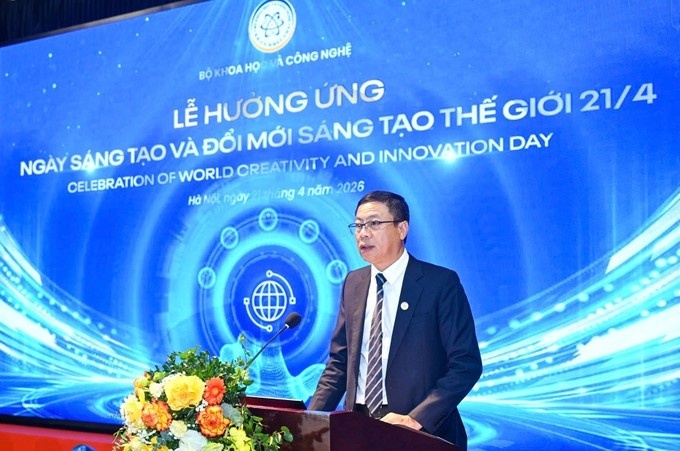 |
| Deputy Minister of Science and Technology Le Xuan Dinh. Photo: MST. |
This year, the MST chooses two themes: “Innovation - Breakthrough Action, Spreading Results”, and “Innovation - Transforming Faster and Stronger to Turn Ideas into Value, Aspirations into Reality”.
These themes focus on shifting from awareness to decisive action, creating concrete results with the potential for widespread impact in society; while asking acceleration, improved organisational capacity for implementation, and shortening the process from idea to application and commercialisation.
A key focus of this year's celebration is encouraging the role of stakeholders in the national innovation system. In particular, research institutes, universities, and the scientific community play a core role in creating new knowledge, developing core technologies, training high-quality workers, and providing scientific arguments for development.
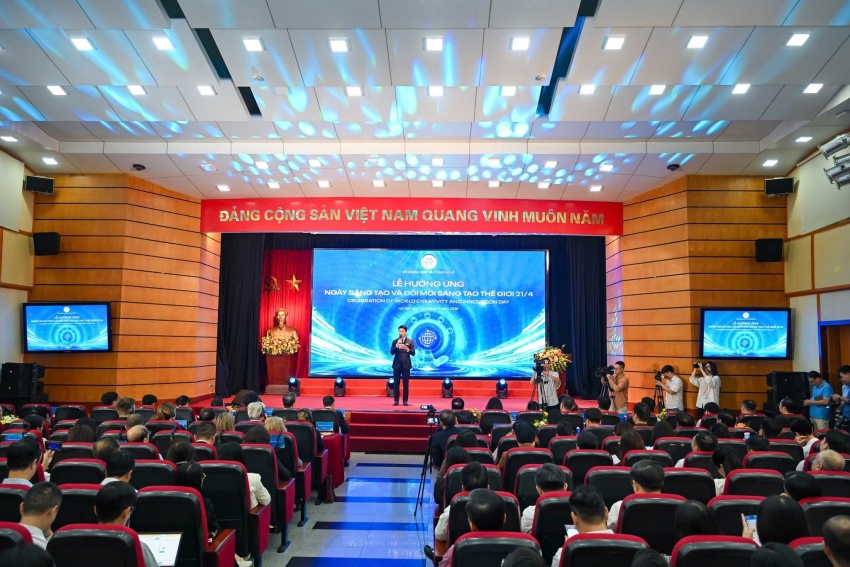 |
| Photo: MST |
The business community sits at the centre of the system, absorbing, mastering, and commercialising technology while embedding innovation in production and business practices. It is expected to proactively commission research, take part in testing, and lead the adoption of new solutions and products.
For state agencies, the role extends beyond institution building to leading and organising effective implementation. This includes identifying development challenges across industries and localities through the lens of science, technology, and innovation, and coordinating resources to deliver tangible, broad-based results.
Addressing the event, Pauline Tamesis, United Nations Resident Coordinator in Vietnam, said the UN’s Global Digital Compact calls for closing divides, expanding inclusion, and guiding innovation responsibly. In Vietnam, she noted, this vision aligns closely with Party Resolution 57, which places science, technology, and innovation at the core of national development.
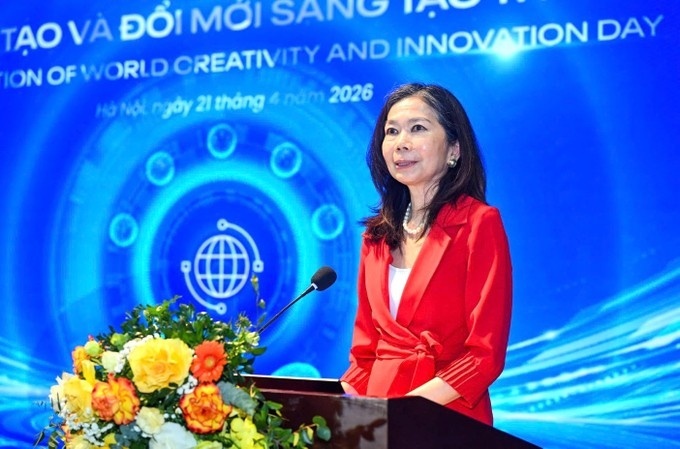 |
| Pauline Tamesis, United Nations Resident Coordinator in Vietnam. Photo: MST. |
“UNESCO’s work on AI and culture already shows us how technology can converge with responsibility. In Vietnam, initiatives like the Hanoi Creative City programme demonstrate how youth, policymakers, and creators are shaping a more human-centered future for AI,” she said.
“But creativity does not thrive in isolation. It flourishes in ecosystems where governments, businesses, academia, and communities – especially young people – work together. The Global Digital Compact encourages this collaboration. Resolution 57 gives it national momentum. Together, they align global vision with local action.”
As part of the event, the forum on developing the system of innovation centres was organised as a space for exchange and discussion, where participants focused on clarifying the role, organisational model, operating mechanism, and policy implementation for innovation centres in Vietnam.
The forum proposed solutions to enhance the role of these centres as effective intermediary institutions in searching for, connecting, and encouraging the application of innovative solutions, contributing to solving problems of industries, sectors, and localities; providing support services for the application, transfer, and innovation of technology.
 | Qualcomm names 28 startups for 2026 Vietnam Innovation Challenge Qualcomm has shortlisted 28 startups for its 2026 Vietnam Innovation Challenge, with those selected to receive grants, technical support, and business coaching. |
 | Vietnam announces national strategy for innovative startups With the issuance of a resolution on a national strategy for innovative startups, Vietnam aims to foster a widespread wave of innovative entrepreneurship throughout society. |
 | Vietnam eyes new growth drivers as fiscal policy takes centre stage Vietnam retains strong growth potential but must pivot to innovation-led drivers, with fiscal policy and capital markets set to play a larger role as monetary policy space narrows. |
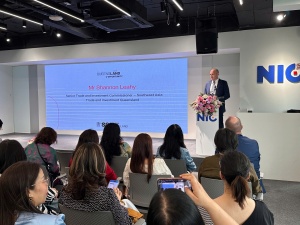 | Vietnam and Queensland deepen education ties to power innovation On April 15, the National Innovation Centre (NIC) under the Ministry of Finance, in collaboration with Trade and Investment Queensland (TIQ), hosted the Education for Innovation Showcase in Hanoi, bringing together around 80 representatives from government agencies, universities, research institutes and businesses across Vietnam and Australia. |
What the stars mean:
★ Poor ★ ★ Promising ★★★ Good ★★★★ Very good ★★★★★ Exceptional
 Tag:
Tag:
Themes: Digital Transformation
- Amazon Kuiper licensed for private satellite telecommunications network in Vietnam
- AWS ramps up security tools amid growing AI risks
- Machine vision and 3D: How logistics and warehousing are catching up with manufacturing
- Nvidia proposes areas of strategic cooperation with Vietnam
- Draft legal amendments target red tape and decentralisation
Related Contents



Latest News




More News
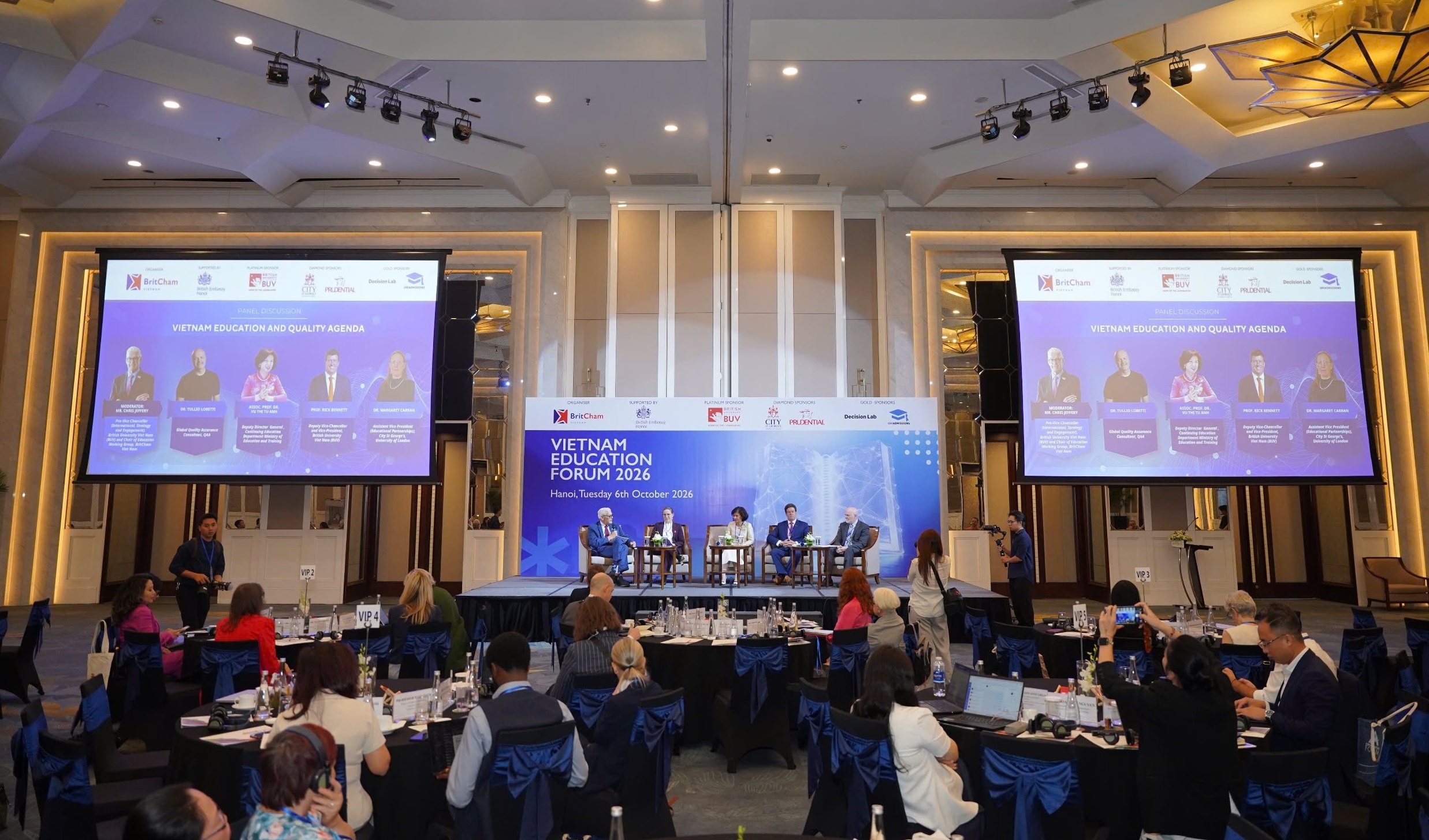
- Expanding education partnerships to drive mutual growth (October 06, 2026 | 16:04)
- VTG 2026 to showcase textile and footwear innovation in Ho Chi Minh City (October 06, 2026 | 16:00)
- Infineon boosts Vietnam footprint with Ho Chi Minh City office (October 06, 2026 | 10:02)
- Vietnam Customs expands priority enterprise scheme to 74 firms (October 03, 2026 | 08:00)
- ASL Law opens Danang office (October 02, 2026 | 22:12)
- Project ACTIVE 2.0 launches in Vietnam to boost cervical cancer care (October 02, 2026 | 22:02)
- Vietnam launches first embodied AI conference to advance robotics ecosystem (October 02, 2026 | 17:00)
- DKSH Performance Materials – A trusted partner in Vietnam’s evolving personal care landscape (October 02, 2026 | 14:28)
- Ghanaian delegation reviews PSL Machinery’s cashew factory-management and implementation roadmap (October 02, 2026 | 10:18)
- People living with chronic kidney disease and diabetes should be aware of infectious disease risks (September 30, 2026 | 18:00)


Latest News



 Mobile Version