
Vietnam urged to strengthen compliance and competitiveness to expand US market access

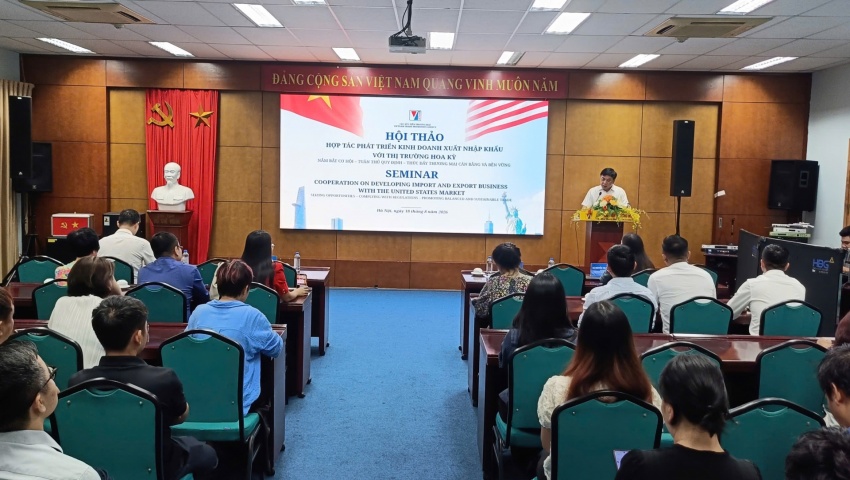 |
| Le Hoang Tai, deputy director general of Vietrade. Photo: Trong Nghia |
Speaking at the opening, Le Hoang Tai, deputy director general of Vietrade, said the United States is one of Vietnam’s most important export markets, with a large consumer base, strong purchasing power, diverse distribution networks and broad demand.
The market is highly competitive and imposes strict requirements on product quality, traceability, labelling, environmental standards, labour practices and intellectual property protection.
Vietnamese companies need to increase the value added of their products, diversify their offerings and expand imports of machinery, technology, materials, products and services from the US, Tai said. “Compliance must be considered a core element of competitiveness,” he said.
Do Ngoc Hung, trade counsellor and head of the Vietnam Trade Office in the US, said two-way trade reached approximately $132.4 billion in the first six months of 2026, making Vietnam the US’ fifth-largest trading partner and its largest source of trade surplus.
However, trade remains heavily concentrated in the foreign-invested enterprises (FIEs). During the first seven months of 2026, FIEs accounted for more than 80 per cent of Vietnam’s total exports and recorded a trade surplus of nearly $8 billion.
Domestic businesses accounted for about 19.9 per cent of exports and posted a trade deficit of approximately $28.5 billion.
The figures highlight the need to strengthen the competitiveness of domestic companies, increase localisation and value added, and improve their ability to participate in supply chains, Hung said. These measures are also important in addressing risks related to transhipment and origin fraud.
The US has more than 330 million consumers, with personal consumption expenditure estimated at $12.1 trillion, equivalent to roughly 68 per cent of GDP. The country is expected to import about $3.4 trillion worth of goods in 2026.
Significant differences among US states mean Vietnamese companies need to identify specific consumer segments and market niches before entering the market, Hung said.
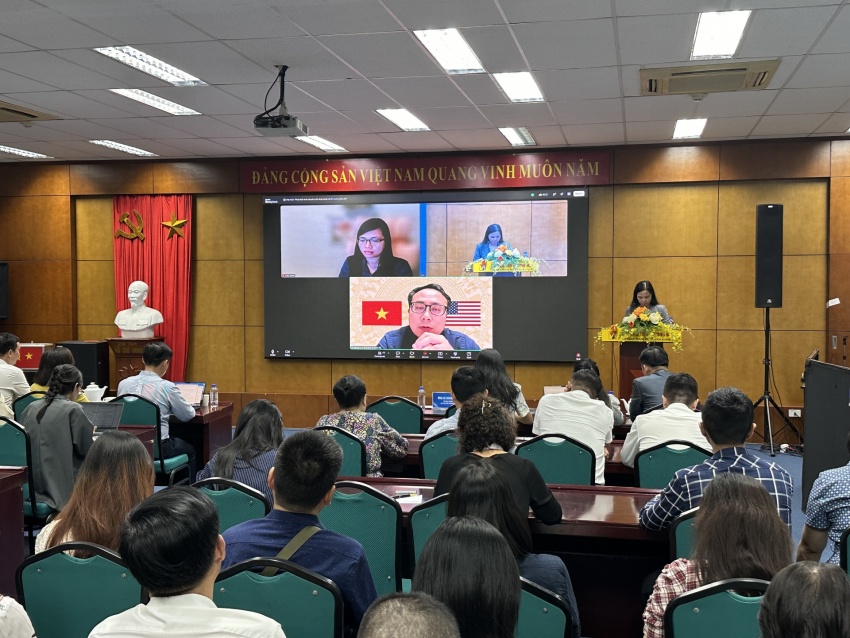 |
| Photo: Nguyen Huong |
According to Hung, opportunities in the US market can translate into sustainable advantages only when businesses can manage regulatory and operational risks.
Vietnamese companies need to closely monitor US trade regulations, including Most-Favoured-Nation treatment, measures under Section 301 of the US Trade Act of 1974, Section 232 and the Uyghur Forced Labour Prevention Act.
From July 24, the additional 10 per cent tariff under Section 301 related to forced-labour concerns was removed and replaced by a 12.5 per cent tariff on Vietnamese goods, except for products covered by exemption lists, he said.
For imported inputs, businesses need to maintain documentation and data demonstrating substantive manufacturing processes in Vietnam and comply with product-specific rules of origin.
The Vietnam Trade Office in the US recommended that companies professionalise their English-language documentation, clearly specifying HS codes, certificates, sources of materials, factories, production capacity, minimum order quantities, delivery times and quality-control procedures.
Dinh Dieu Linh, a representative of STSB CPA tax advisory firm, highlighted several challenges facing Vietnamese exporters, including 60-120-day collection cycles, banking and SWIFT costs, USD/VND exchange rate fluctuations, limited US credit histories, state-level sales taxes and differences between Vietnam’s Accounting Standards (VAS) and US Generally Accepted Accounting Principles
Incorrect or incomplete filing of Form W-8BEN-E could result in US partners withholding 30 per cent of gross payments for remittance to the US Internal Revenue Service, she said.
Companies also face a starting penalty of $25,000 for each late or incomplete Form 5472 filing, with an additional $25,000 imposed every 90 days if the issue is not resolved.
“US tax and accounting should not be treated as year-end administrative procedures. They are part of a company’s risk-management strategy,” Linh said.
She recommended measures including export factoring and purchase-order financing, which can provide advances equivalent to 80-90 per cent of invoice value, as well as foreign-exchange hedging, payment optimisation and appropriate legal-entity and transfer-pricing structures.
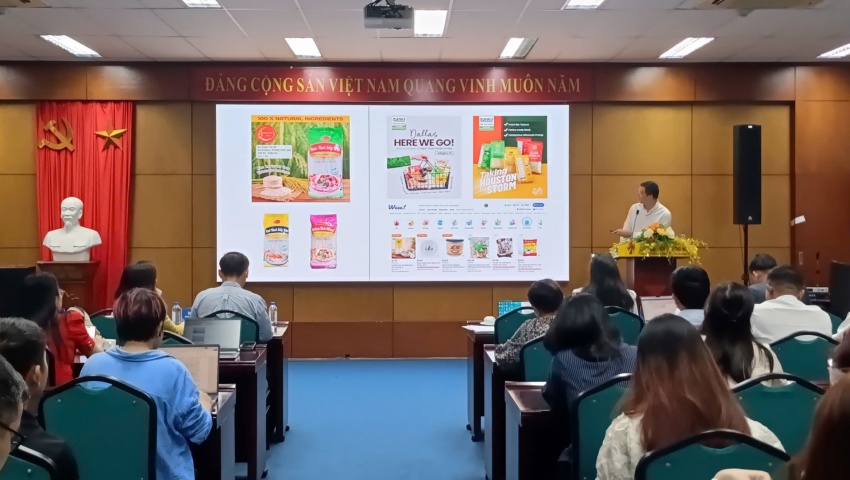 |
| Tran Lich, director of VISIA. Photo: Trong Nghia |
Tran Lich, director of VISIA and general coordinator of Ready2US – Ready for the US Market, said approximately 85 per cent of surveyed businesses are not yet fully prepared to enter the US market.
The five key challenges identified by the survey were understanding the US market and consumers, cited by 77.3 per cent of respondents; a lack of marketing strategies and sales channels, 76 per cent; legal and compliance requirements, 58.7 per cent; working capital and cash-flow management, 56 per cent; and developing appropriate branding, design and research and development (R&D), 53.3 per cent.
“A good product alone is not enough to enter the US market,” Lich said.
Businesses need a comprehensive roadmap covering market research, legal compliance, go-to-market strategy, R&D, financing, logistics and sales channels.
Early preparation for requirements from agencies such as the US Food and Drug Administration, Consumer Product Safety Commission and US Department of Agriculture, along with intellectual property protection, can shorten negotiations by three to 12 months and help protect cash flow, he said.
VISIA and Ready2US have developed a 2026 US Market Readiness Checklist to help businesses assess their preparedness before making investments.
Experts at the seminar agreed that Vietnamese companies need to move beyond the mindset of simply having products available for export and focus on building sustainable competitive capabilities.
Long-term success in the US market requires companies to conduct proactive market research, manage finances, demonstrate product origin, control supply chains and comply with US regulations.
The seminar’s policy discussions and business-to-business connections highlighted the importance of greater preparedness, transparency and professionalism as Vietnamese companies seek to expand exports and strengthen their position in the US market.
 | US retail giant Target eyes Vietnamese suppliers Target, one of the US’ largest retail groups, will make its first appearance at Vietnam International Sourcing 2026, as it looks to expand its network of Vietnamese suppliers across a range of consumer product categories. |
 | US businesses remain committed to Vietnam with measured outlook While business confidence has become more measured compared with the optimistic outlook at the beginning of the year, US companies remain committed to Vietnam. |
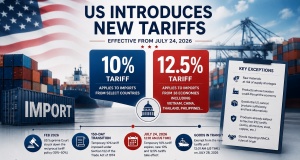 | US introduces new 10 and 12.5 per cent tariffs, replacing temporary 10 per cent levy The United States has introduced new import tariffs of 10 and 12.5 per cent, replacing the temporary 10 per cent tariff that expired at the same time. |
What the stars mean:
★ Poor ★ ★ Promising ★★★ Good ★★★★ Very good ★★★★★ Exceptional
 Tag:
Tag:
Related Contents






Latest News





More News
- Garment and textile industry transitions towards high-value production (October 14, 2026 | 17:30)
- French business delegation meets MoF to discuss investment cooperation (October 14, 2026 | 11:37)
- Friso promotes global scientific collaboration on children’s gut health in Vietnam (October 13, 2026 | 16:18)
- Germany and Vietnam look to expand strategic cooperation and investment (October 13, 2026 | 16:14)
- Vietnam-Australia forum boosts AI and digital technology cooperation (October 13, 2026 | 11:30)
- Digital transformation shifts focus to added value (October 09, 2026 | 18:00)
- Melatec Dental Clinic - accompanying international clients on their smile care journey (October 09, 2026 | 17:25)
- 12 localities achieve double-digit growth in first nine months (October 09, 2026 | 17:00)
- CYE 2026 announces top 5 finalists (October 09, 2026 | 16:55)
- Robotics inspires Vietnam’s next generation of engineers (October 08, 2026 | 15:18)








 Mobile Version