
AWS ramps up security tools amid growing AI risks

At a regional media briefing on September 15, Bryce Boland, head of Security Solutions Architecture for Asia-Pacific and Japan (including China) at Amazon Web Services (AWS), said AI security is now a pressing concern, with 13 per cent of organisations using AI having already experienced a breach – 97 per cent of which were due to weaknesses in AI access controls.
“We see that enterprises are spending 10 to 12 per cent of their AI budgets on security, and this is expected to rise as more AI moves into production. We see that AI agents can execute transactions, they can interact with customers, and they can access customer data, sensitive information, all autonomously. And this makes any vulnerability in an AI system a direct business risk,” he said.
 |
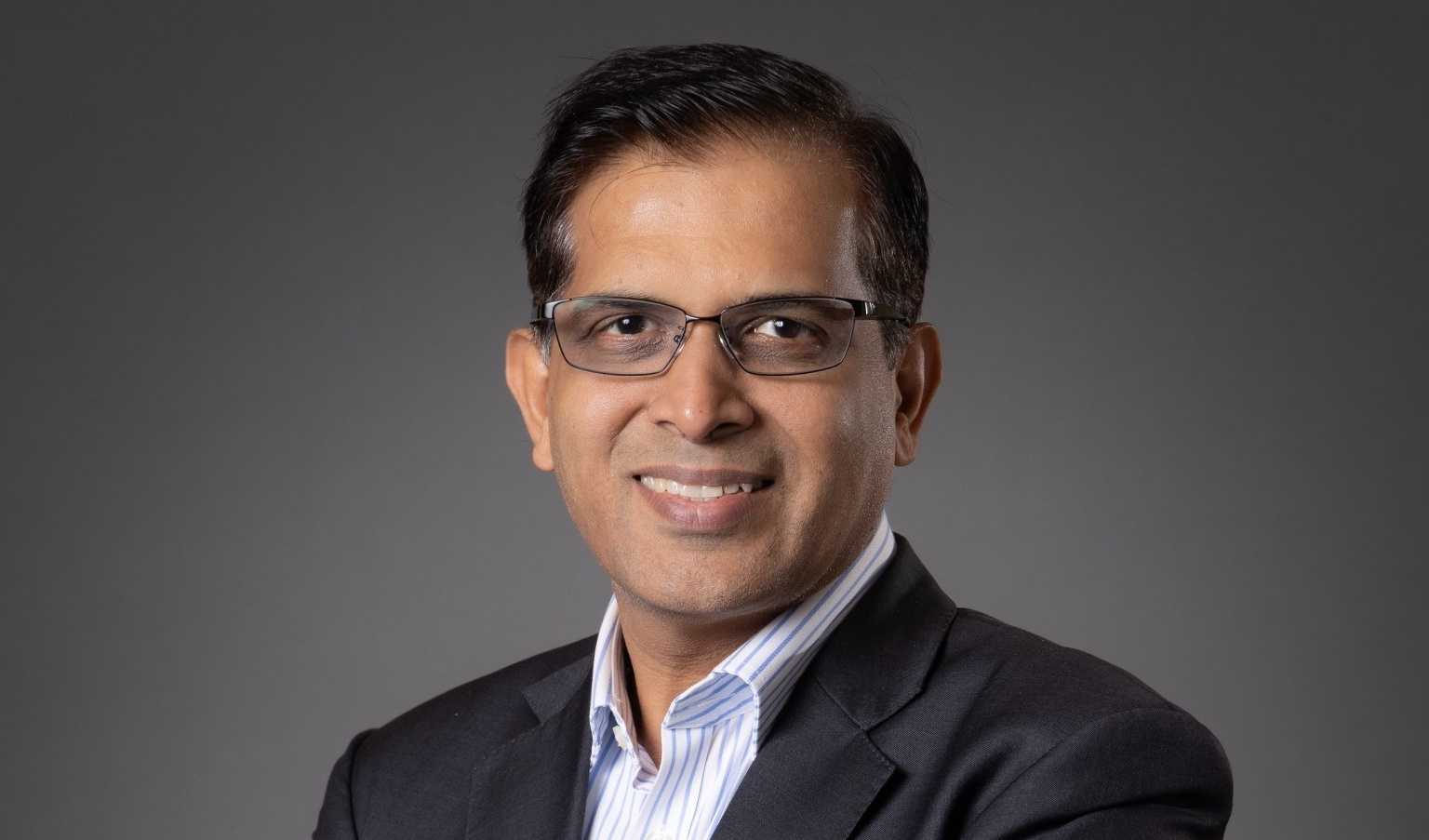
| Bryce Boland, head of Security Solutions Architecture, APJC, at AWS. Photo: AWS |
“The AI regulatory scrutiny is intensifying across the region. We see many governments imposing new obligations on AI-powered systems. AI security isn't just an IT problem because when an agent can move money or access customer data, securing it becomes a board level business priority,” he added.
Reshaping AI-driven cybersecurity
In this digital age, according to AWS, modern AI brings some impressive capabilities to both defence and attack. The same capability that helps a security team find a vulnerability faster can also help an attacker to find it faster.
“We saw that it took around 2.3 years back in 2018 (to find a vulnerability), and it is now down to maybe 10 hours today. Last year, the number of common vulnerabilities and exposures (CVEs) reported went up significantly. It was 48,000 CVEs published, up 20 per cent year over year,” Bryce Boland said.
This year the numbers have doubled from about 5,000 CVEs a month in Q1 to about 10,000 per month in Q3.
Boland shared that most organisations are still struggling with patching speed. Previously, finding vulnerabilities was quite hard, but AI models are making that a lot easier.
“The timelines for vulnerabilities are collapsing. But this risk is a bit different to what security teams are used to because there are three key differences: scale, speed, and accessibility,” he added.
Given the current threat landscape, three things are impacting enterprise customers. The first is vulnerability overload. When a vulnerability is announced, it has to be patched, but if patching isn't automated, then organisations face a scaling problem, and potentially the number of patches that organisations have to deal with is an order of magnitude greater than what they've been dealing with previously.
Then there's regulatory compliance. “We see frameworks are being updated actively right now. The CSA, NIST, and OWASP are all revising guidance, so a compliance posture that worked a year ago might not reflect the actual risk today. Compliance is essential, and we think that compliance has to be continuous rather than an annual process,” he shared.
The third item is risk management. Most protocols were built for vulnerabilities and exploits and patching at human speed, but when the speed and scale are fundamentally different, the risk management processes based on historical approaches might no longer hold.
Scaling AI security with AWS
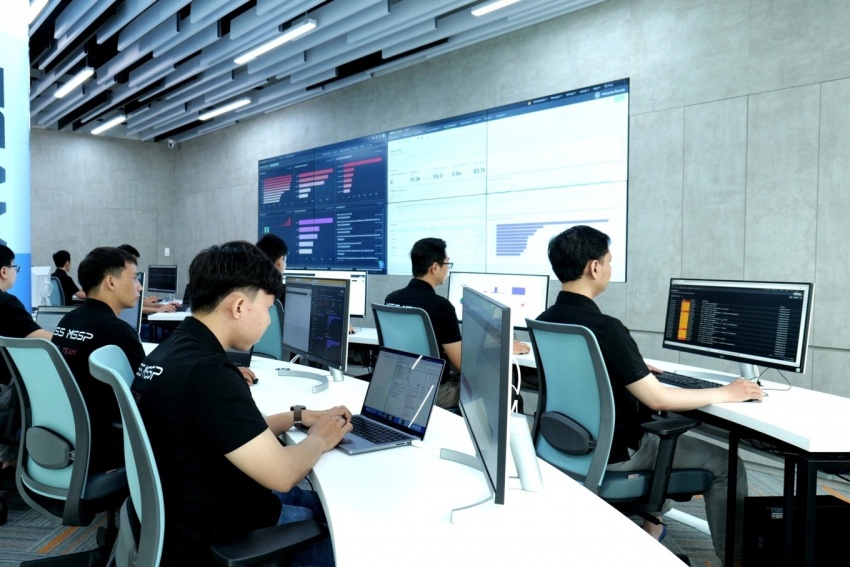
To support customers, AWS has been proactively building defences before those threats emerge by combining security and observability to give its customers complete visibility across their workloads.
 |
| Photo: National Cybersecurity Association |
“AWS provides the most comprehensive set of tools for customers to build their own workloads and to keep them secure. And we unify security across all environments through a single integrated platform,” Boland said.
At present, AWS boasts the full picture of AWS AI from the silicon all the way to agentic solutions. At the bottom, there are data centres optimised for AI across 39 regions. Next, Tranium, Graviton, and the world's largest fleet of Nvidia GPUs, with the data foundation, ready for AI. For companies that want to build their own, there is Sage Maker for training, Bedrock for inference, and AgentCore to help deploy production-ready agents.
AWS has been strengthening its cybersecurity capabilities through large-scale threat intelligence and automated defence systems designed to protect its infrastructure and customers. The company’s security team analyses more than 400 trillion network flows per day, while AWS GuardDuty monitors over eight trillion events per hour. Three key solutions underpin AWS’s threat intelligence framework: Mithra, which evaluates the trustworthiness of internet domains; MadPot, which detects and responds to malicious activities; and Sonaris, which analyses network traffic and blocks attempts to discover vulnerable services and customer data.
Their findings are then integrated into AWS security services, including GuardDuty, Shield, Web Application Firewall, and Inspector.
As AI-powered attacks become faster and more complex, AWS is also focusing on securing agentic AI systems. The company emphasises that traditional security practices, such as secure software development, least-privilege access, and protection against injection and privilege escalation, remain essential.
However, AI systems also require continuous behavioural testing and monitoring. AWS recommends using deterministic security controls that sit outside the AI agent to govern access to tools and data, while increasing an agent’s autonomy gradually based on ongoing evaluation and performance. Human oversight remains important for high-stakes decisions.
To help customers respond to security threats at machine speed, AWS has introduced AWS Continuum, an AI-powered security agent that supports the software security lifecycle. The platform offers threat modelling, design review, code review, and autonomous penetration testing to help identify, validate, prioritise, and remediate vulnerabilities.
Customers including HENNGE and LG CNS have used Continuum to reduce the time and cost of penetration testing, with LG CNS reporting faster assessments and improved reliability when additional contextual information was provided. AWS positions Continuum as a combination of autonomous security capabilities and human oversight, operating within customer-defined security controls and guardrails.
According to Boland, “Every organisation right now is pushing to modernise and automate their patching, but what we would suggest is that simply buying a tool is probably not the right strategy. You need to also think about architecture and process”
Automated reasoning is something that makes AWS fundamentally different. For the last decade, AWS has invested in automated reasoning research. and embedding it into tools available for its customers. This takes frontier research on formal methods and symbolic reasoning to mathematically prove a result, such as AI outputs, and turning it into scalable production solutions.
Boland cited an example of how automated reasoning capabilities are embedded into Amazon Bedrock Guardrails, allowing it to mathematically verify that AI outputs are factually grounded in the customer's rules. This makes it provable security, not probabilistic security, he added.
"At AWS, we don't treat security as a feature. It's a core requirement that drives our engineering decisions from before the first line of code to well after post-launch and maintenance," he said. "The tools raise the security floor, but the ceiling depends on the people and their culture around security. Responsibility doesn't disappear just because a decision was automated."
What the stars mean:
★ Poor ★ ★ Promising ★★★ Good ★★★★ Very good ★★★★★ Exceptional
 Tag:
Tag:Themes: Digital Transformation
- Amazon Kuiper licensed for private satellite telecommunications network in Vietnam
- AWS ramps up security tools amid growing AI risks
- Machine vision and 3D: How logistics and warehousing are catching up with manufacturing
- Nvidia proposes areas of strategic cooperation with Vietnam
- Draft legal amendments target red tape and decentralisation
Related Contents







Latest News





More News
- Expanding education partnerships to drive mutual growth (October 06, 2026 | 16:04)
- VTG 2026 to showcase textile and footwear innovation in Ho Chi Minh City (October 06, 2026 | 16:00)
- Infineon boosts Vietnam footprint with Ho Chi Minh City office (October 06, 2026 | 10:02)
- Vietnam Customs expands priority enterprise scheme to 74 firms (October 03, 2026 | 08:00)
- ASL Law opens Danang office (October 02, 2026 | 22:12)
- Project ACTIVE 2.0 launches in Vietnam to boost cervical cancer care (October 02, 2026 | 22:02)
- Vietnam launches first embodied AI conference to advance robotics ecosystem (October 02, 2026 | 17:00)
- DKSH Performance Materials – A trusted partner in Vietnam’s evolving personal care landscape (October 02, 2026 | 14:28)
- Ghanaian delegation reviews PSL Machinery’s cashew factory-management and implementation roadmap (October 02, 2026 | 10:18)
- People living with chronic kidney disease and diabetes should be aware of infectious disease risks (September 30, 2026 | 18:00)








 Mobile Version