
Vaccination in comprehensive cardiovascular care: From recommendations to clinical practice

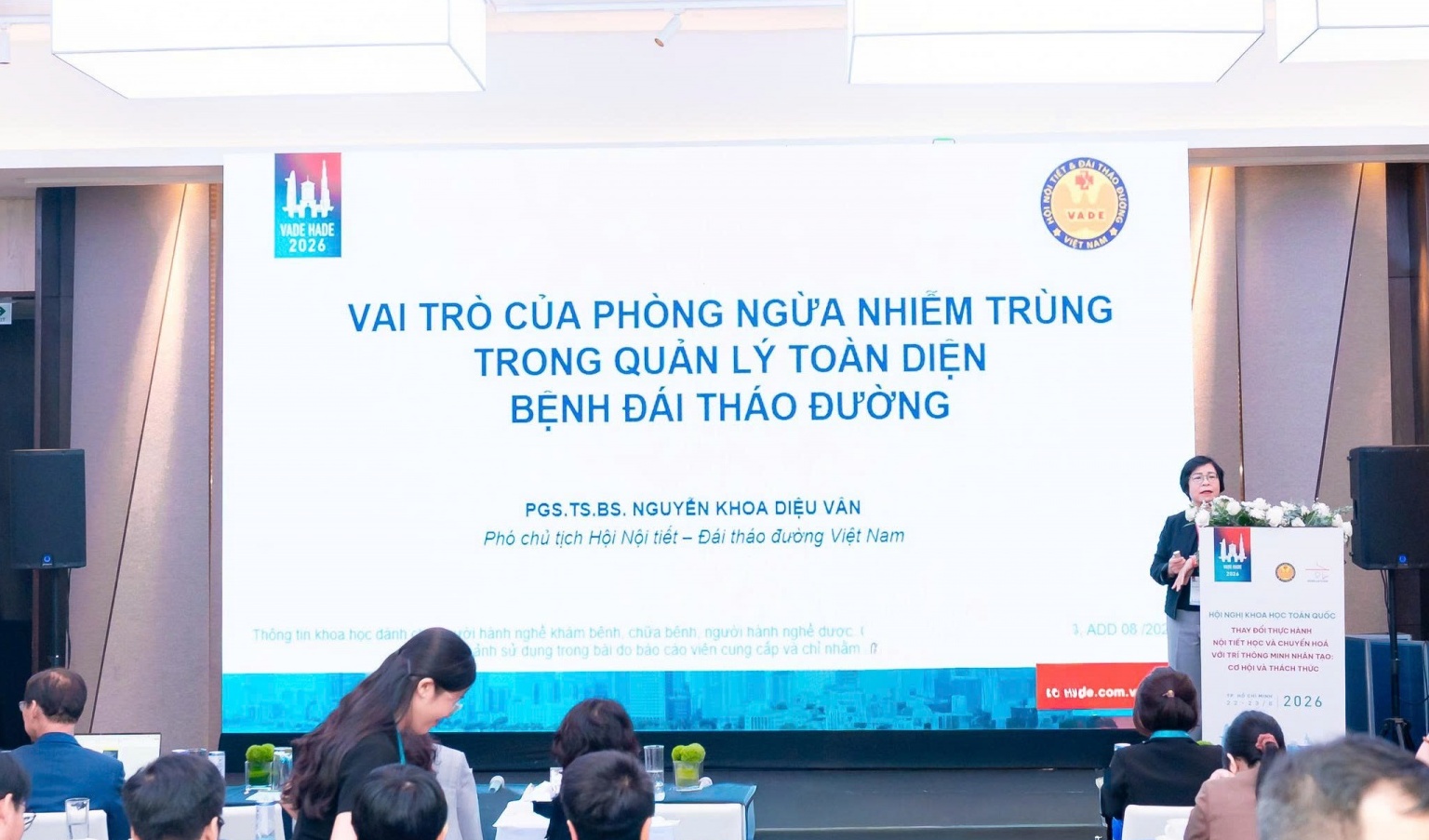
At the 20th National Congress of Cardiology organised in early October by the Vietnam National Heart Association, leading experts presented the latest advances in comprehensive cardiovascular disease management.
Scientific sessions also highlighted the important role of proactive prevention of infectious diseases in patients with cardiovascular diseases, with the support of GSK Vietnam.
 |
| The 20th National Congress of Cardiology, organised by the Vietnam National Heart Association. Photo: GSK |
According to estimates from the World Health Organization, approximately 200,000 deaths related to cardiovascular diseases occur annually in Vietnam. Older cardiovascular patients with multiple comorbidities are at high risk of severe infection and cardiovascular decompensation.
At the congress, Dr. Vu Quynh Nga from Hanoi Heart Hospital presented a notable clinical case involving a 67-year-old woman with heart failure, hypertension, and coronary artery disease. Prior to hospitalisation, the patient remained clinically stable, was receiving guideline-based treatment, and had not required hospital visits for six months.
However, the patient suddenly developed what initially appeared to be common flu-like symptoms, including cough, fatigue and mild shortness of breath, but within one week the condition rapidly deteriorated, requiring hospitalisation. Upon admission, the patient presented signs of both acute respiratory infection and acute decompensated heart failure that had developed rapidly over a short period of time. Subsequent testing confirmed respiratory syncytial virus (RSV) infection.
“This case illustrates how a respiratory tract infection may act as a trigger for clinical deterioration in individuals with underlying cardiovascular diseases, potentially leading to hospitalisation. According to study findings, the rate of RSV-related hospitalisation among adults aged ≥65 years may be up to 6.5 times higher in individuals with coronary artery disease,” Nga added.
In addition to RSV, another topic discussed by experts at the congress was the role of herpes zoster prevention among high-risk individuals. the Department of Cardiology, Cho Ray Hospital, shared the case of a male patient born in 1958 who had undergone heart transplantation and had been receiving long-term immunosuppressive therapy. In September 2025, the patient developed vesicular lesions on the left side of the chest that subsequently extended to the left shoulder and was diagnosed with herpes zoster.
It said Individuals with cardiovascular diseases may have an approximately 34 per cent higher risk of developing herpes zoster. The burden of herpes zoster can extend beyond acute skin manifestations and include the risk of prolonged postherpetic neuralgia, the common complication of herpes zoster, which may have a substantial impact on quality of life.
According to Prof. Pham Manh Hung, president of the Vietnam National Heart Association, head of the Department of Cardiology at Hanoi Medical University, and director of the Cardiovascular Institute at Hospital 19-8, a single infectious episode can negate months of successful cardiovascular disease control. It needs to begin with a comprehensive management and prevention strategy for patients with cardiovascular diseases.
“Vaccination should be considered a cornerstone of comprehensive disease management and an integral component of cardiovascular patient care,” he added.
This perspective is consistent with both international and national professional recommendations. The European Society of Cardiology Clinical Consensus Statement and the American College of Cardiology recommendations published in 2025 recognise vaccination as an important component of comprehensive cardiovascular prevention strategies for patients at elevated risk.
Decision No.1983/QD-BYT issued by the Ministry of Health also highlights the role of vaccination in preventing exacerbations and cardiovascular complications, including myocardial infarction and stroke associated with infectious diseases.
The congress additionally introduced updated recommendations on the diagnosis and management of hypertension, which include guidance regarding vaccination. Hypertension is a major cardiovascular risk factor and frequently coexists with other chronic conditions. Infectious diseases, particularly respiratory infections, may contribute to systemic inflammation, oxidative stress, endothelial dysfunction, and a prothrombotic state, thereby increasing the risk of myocardial infarction, heart failure, stroke, and cardiovascular mortality.
The recommendations emphasise that individuals with hypertension should undergo regular assessment of their vaccination status based on age, comorbidities, exposure risk, and vaccination history. Pneumococcal, RSV, influenza, diphtheria-tetanus-pertussis, hepatitis B, and other vaccines should be administered according to current recommendations and individual risk profiles.
Hypertension alone is not a contraindication to vaccination, and achieving target blood pressure levels is not a prerequisite for immunisation. For patients with blood pressure levels between 140–179/90–109 mmHg, vaccination should not be unnecessarily delayed.
What the stars mean:
★ Poor ★ ★ Promising ★★★ Good ★★★★ Very good ★★★★★ Exceptional
 Tag:
Themes: Healthcare Platform
- Vaccination in comprehensive cardiovascular care: From recommendations to clinical practice
- Breast cancer awareness push gains
- Ministry of Health clarifies draft organ donation law amendments
- Ho Chi Minh City Oncology Hospital signs MoU with Novartis Vietnam
- Driving early detection and integrated liver disease management
Related Contents










Latest News
More News
- Ministry of Health clarifies draft organ donation law amendments (October 28, 2026 | 12:22)
- SABECO, VFF expand Ambassadors of National Progress Award (October 19, 2026 | 13:17)
- Vietnam prepares communications campaign for APEC 2027 (September 24, 2026 | 18:13)
- Overseas employment costs fall for Vietnamese workers (September 09, 2026 | 12:20)
- SABECO strengthens community ties through Bia Saigon partnership (August 24, 2026 | 15:29)
- Vietnam strives to build safer digital environment to protect children online (August 21, 2026 | 17:19)
- RE:ACT challenge aims to turn youth ideas into community impact (August 10, 2026 | 10:09)
- Financing options for shock-responsive social protection in Vietnam (July 30, 2026 | 14:59)
- HER2+ breast cancer carries $3.71 billion productivity burden in Vietnam (July 30, 2026 | 14:32)
- Party Resolution charts Vietnam’s development model through 2045 and beyond (July 30, 2026 | 12:29)









 Mobile Version