
GSK supports medical community in raising awareness of severe asthma in Vietnam

For many people living with severe asthma, every day can be a challenging journey. Persistent symptoms, unpredictable exacerbations and the lasting impact on daily life create a burden not only for patients, but also for their families and the healthcare system.
It is estimated that around 3.25 per cent of the Vietnamese population is living with asthma, of whom approximately 7-11 per cent have severe asthma. Although this group represents only a small proportion of all asthma patients, they face recurrent exacerbations, hospitalisation, reduced lung function and significant impact on quality of life. Severe asthma also accounts for more than 70 per cent of total asthma treatment costs.
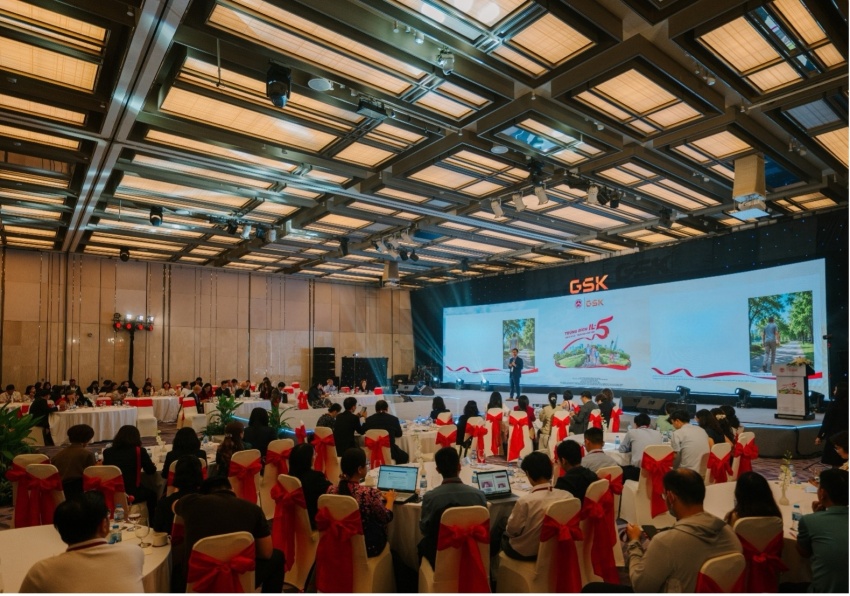 |
| The symposium was organised by GSK Vietnam in collaboration with the Vietnam Respiratory Society. Photo: GSK |
Prof. Ngo Quy Chau, president of the Vietnam Respiratory Society, said, “This is why raising awareness, recognising disease characteristics early and improving the management of severe asthma remain important priorities for the respiratory field in Vietnam.”
The event organised by GSK Vietnam, in collaboration with the Vietnam Respiratory Society also updated the medical community on new scientific advances in respiratory medicine.
According to Assoc. Prof. Phan Thu Phuong, deputy head of the Department of General Internal Medicine, Hanoi Medical University,, over the past decade, many countries around the world have accumulated important real-world experience in using targeted treatments for appropriate patients with severe asthma. At the same time, scientific understanding of the biological basis of the disease has continued to expand.
“Type 2 inflammation and the role of IL-5 in eosinophilic inflammatory responses are among the areas of growing interest for the international scientific community. These advances support physicians in identifying disease phenotypes and selecting an appropriate approach for each patient,” she said.
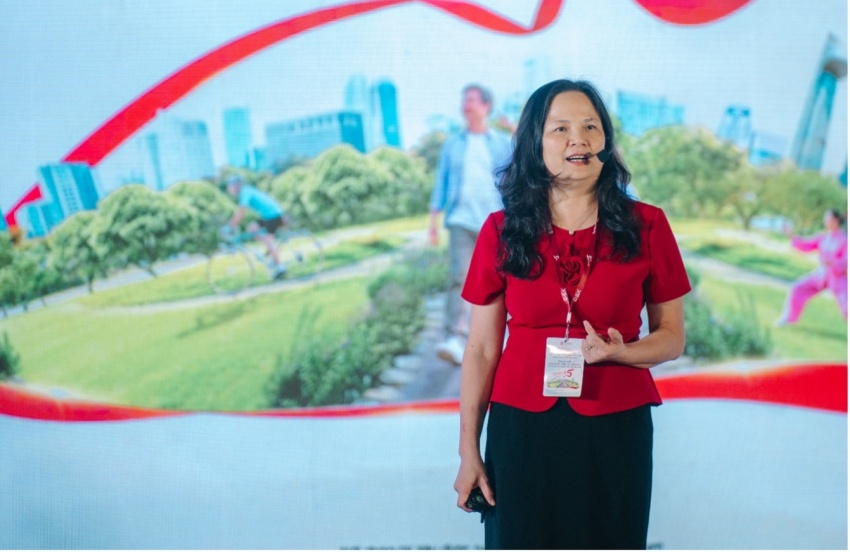 |
| Assoc. Prof. Phan Thu Phuong shared clinical experience in applying targeted treatments for suitable patients with severe asthma. Photo: GSK |
Assoc. Prof. Le Thuong Vu, head of the Respiratory Department, University Medical Centre Ho Chi Minh City, said, “A deeper understanding of asthma pathophysiology is helping the medical community take a more personalised approach to the disease."
"In addition to controlling symptoms and reducing the risk of exacerbations, physicians today are increasingly focused on improving quality of life and achieving longer-term treatment goals for patients. Biologic medicines are considered targeted treatments that may reduce the risk of asthma attacks, reduce the need for oral corticosteroids, improve physical and social functioning, and support progress towards asthma remission.”
The symposium marked another milestone in GSK’s journey in Vietnam, as the company continues to expand innovative solutions in respiratory medicine and advance scientific collaboration and medical education to support the healthcare community in enhancing patient care and contributing to improved health outcomes in the country.
MD Pham Thi My Lien, president of GSK Vietnam, said, “At GSK, we believe scientific advances can help create positive change for patients. For decades, respiratory medicine has been one of GSK’s global research priorities. We are honoured to continue working alongside the medical community, supporting scientific knowledge exchange and helping expand access to appropriate medical advances for patients in Vietnam.”
What the stars mean:
★ Poor ★ ★ Promising ★★★ Good ★★★★ Very good ★★★★★ Exceptional
Themes: Healthcare Platform
- Ho Chi Minh City Oncology Hospital signs MoU with Novartis Vietnam
- Driving early detection and integrated liver disease management
- GSK supports medical community in raising awareness of severe asthma in Vietnam
- Vaccinology training programme launched to boost preventive care capacity
- Opella and Hoan My Academy partner to advance medical education


Latest News



More News
- Vietnam-Australia forum boosts AI and digital technology cooperation (October 13, 2026 | 11:30)
- Digital transformation shifts focus to added value (October 09, 2026 | 18:00)
- Melatec Dental Clinic - accompanying international clients on their smile care journey (October 09, 2026 | 17:25)
- 12 localities achieve double-digit growth in first nine months (October 09, 2026 | 17:00)
- CYE 2026 announces top 5 finalists (October 09, 2026 | 16:55)
- Robotics inspires Vietnam’s next generation of engineers (October 08, 2026 | 15:18)
- Vietnam among fastest AI adopters, Pearson-AWS study finds (October 07, 2026 | 12:26)
- Ho Chi Minh City Oncology Hospital signs MoU with Novartis Vietnam (October 07, 2026 | 10:36)
- Expanding education partnerships to drive mutual growth (October 06, 2026 | 16:04)
- VTG 2026 to showcase textile and footwear innovation in Ho Chi Minh City (October 06, 2026 | 16:00)




 Mobile Version