
Hanoi students join push to stop rabies at source

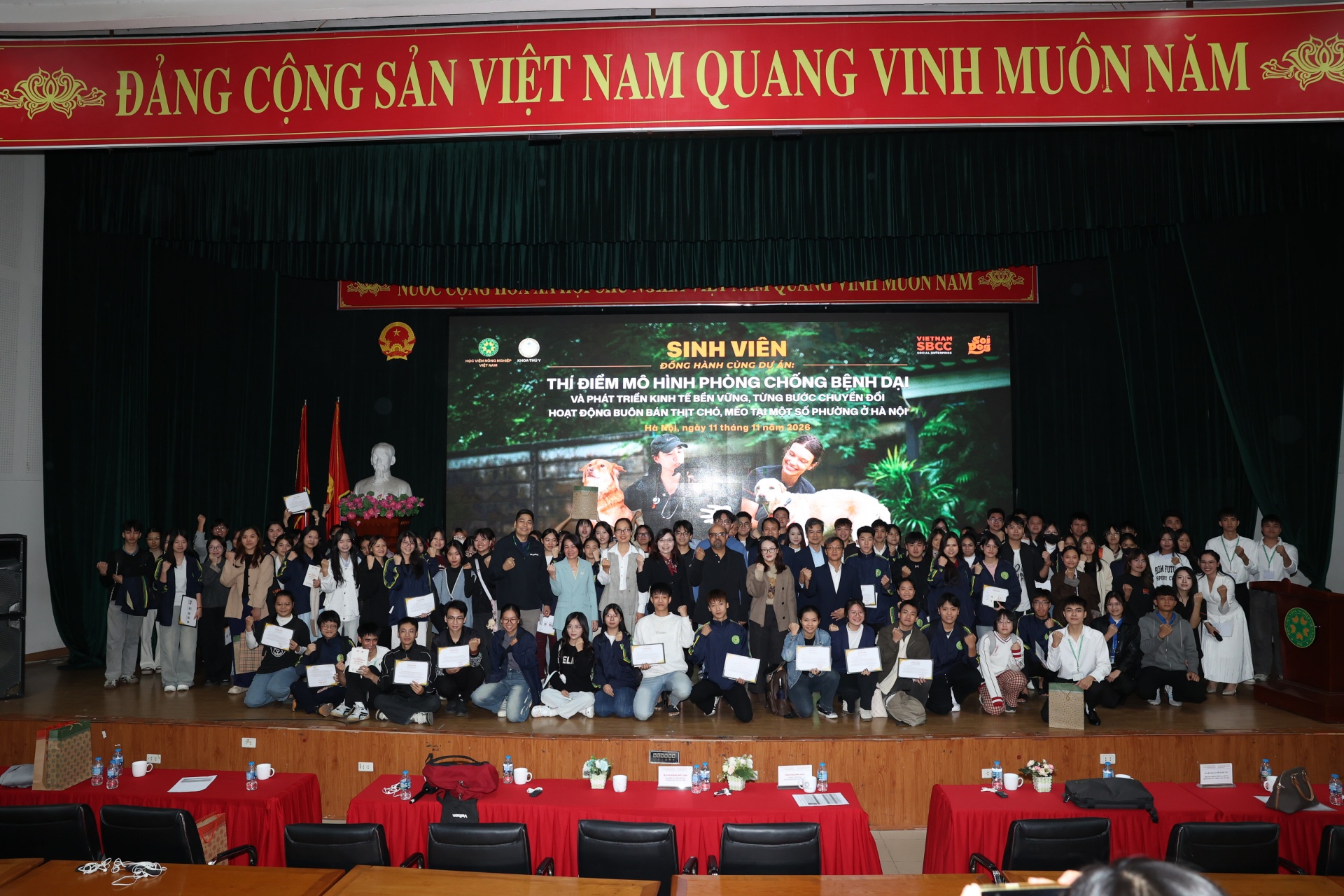 |
| Photo: SBCC Vietnam |
The social enterprise Vietnam Social and Behaviour Change Communication for Sustainable Development (SBCC Vietnam) and Soi Dog Foundation, in collaboration with the Faculty of Veterinary Medicine at the Vietnam National University of Agriculture (VNUA), hosted the event on November 11. Nearly 500 students, lecturers, and faculty staff took part, with the aim of equipping students with the knowledge, skills, and sense of responsibility to become behaviour change ambassadors in their communities.
Rabies is a zoonotic disease that is almost always fatal once symptoms appear, yet it is entirely preventable. In line with the global strategy of the World Health Organization (WHO), Vietnam has set a national goal of zero human deaths from rabies by 2030. Within the chain of transmission, the collection, transport, slaughter, and sale of dogs and cats for meat has been identified as one of the high-risk links for public health.
In response, Hanoi People’s Committee approved the pilot project in July 2025 for implementation in 14 wards of the city. The project is led by Hanoi Department of Agriculture and Environment/ Hanoi Sub-Department of Livestock Production, Fisheries, and Veterinary Medicine, with Soi Dog Foundation as the international partner and SBCC Vietnam providing technical assistance, behaviour change communication, and livelihood transition support.
Taking a One Health approach, the project combines rabies prevention with support for dog and cat meat businesses as they move, step by step, into safer and more sustainable livelihoods through three stages: vocational training, start-up support, and market linkage.
Students have been identified as a key force in this journey. Veterinary students in particular – the future veterinarians, epidemiologists, and animal welfare specialists – combine a solid professional foundation with the ability to carry messages to their families, friends, and online communities in a relatable and persuasive way. The event continues the project’s 'Students Engagement' series, which included an event at the Vietnam Youth Academy in December 2025.
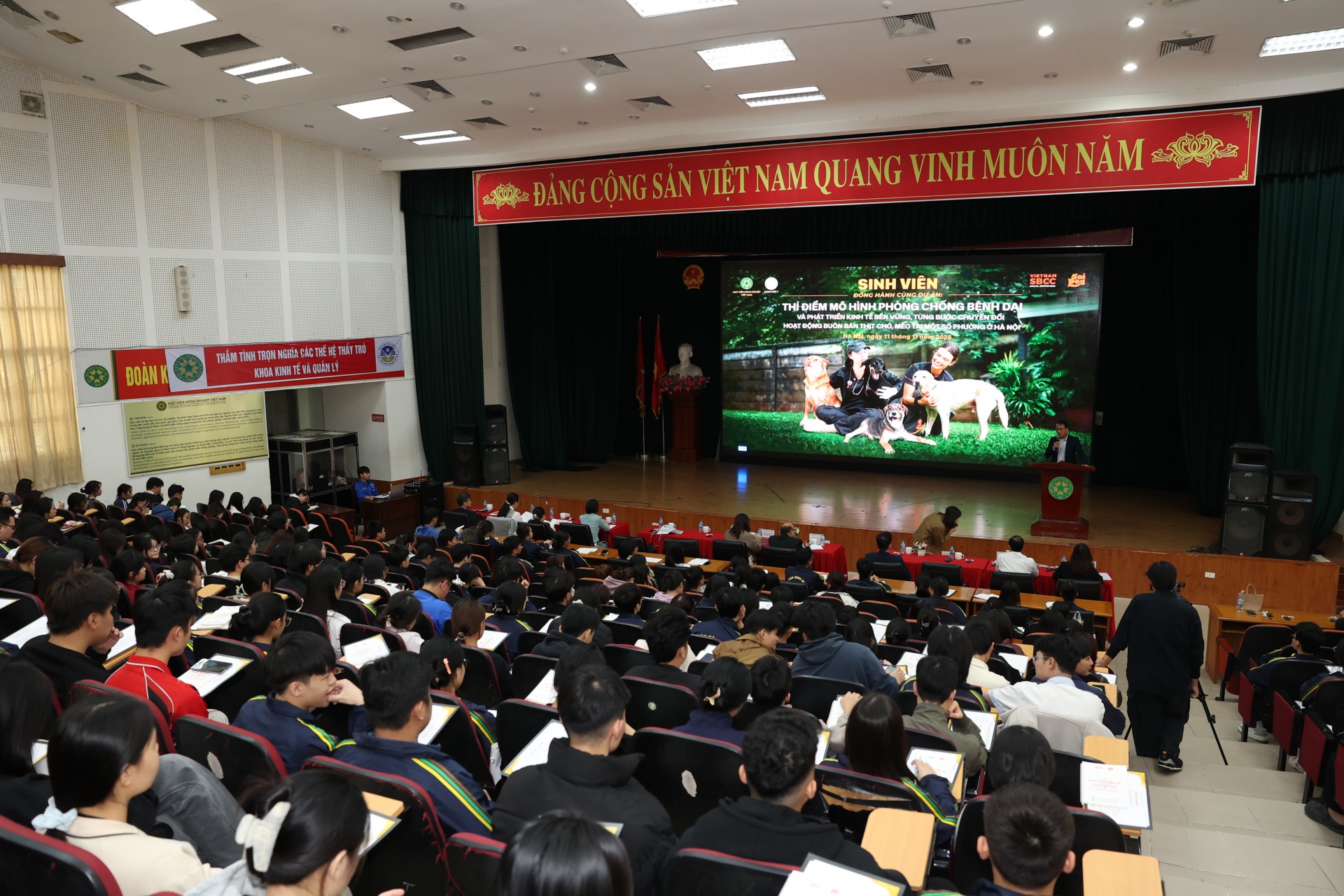 |
| Photo: SBCC Vietnam |
The programme focused on turning scientific knowledge into concrete action for rabies prevention and community health. Speaking at the event, Bui Tran Anh Dao, dean of the faculty of veterinary medicine at VNUA, stressed the importance of building practical skills and pairing academic learning with social responsibility.
"On their path to becoming veterinarians, our students must master technical skills and be ready to lead the way in protecting public health. Partnerships between the university and specialist organisations are a practical bridge that helps students turn what they learn in the lecture hall into positive change for society," Dao said.
Turning to the realities on the ground, an expert from the Hanoi Centre for Disease Control presented a comprehensive overview of the rabies situation in the capital and traced in detail the chain of transmission from the trade and slaughter of dogs and cats to humans. The expert underlined the urgency of controlling the disease through a One Health approach – one that closely links human, animal, and environmental health – and outlined practical actions young people can take starting today.
Complementing the public health perspective, Master Faizan Jalil, senior manager at Soi Dog Foundation, shared the organisation’s global mission and introduced Hanoi’s livelihood transition model as a way to prevent rabies at its source.
Highlighting the pivotal role of young people, he said, “Experience in many countries shows that when young people act together, society listens and changes. The model being implemented in Hanoi is clear evidence that rabies prevention, better animal welfare, and secure livelihoods can go hand in hand. Tomorrow’s veterinarians will be the core force that carries these positive changes forward and scales them up.”
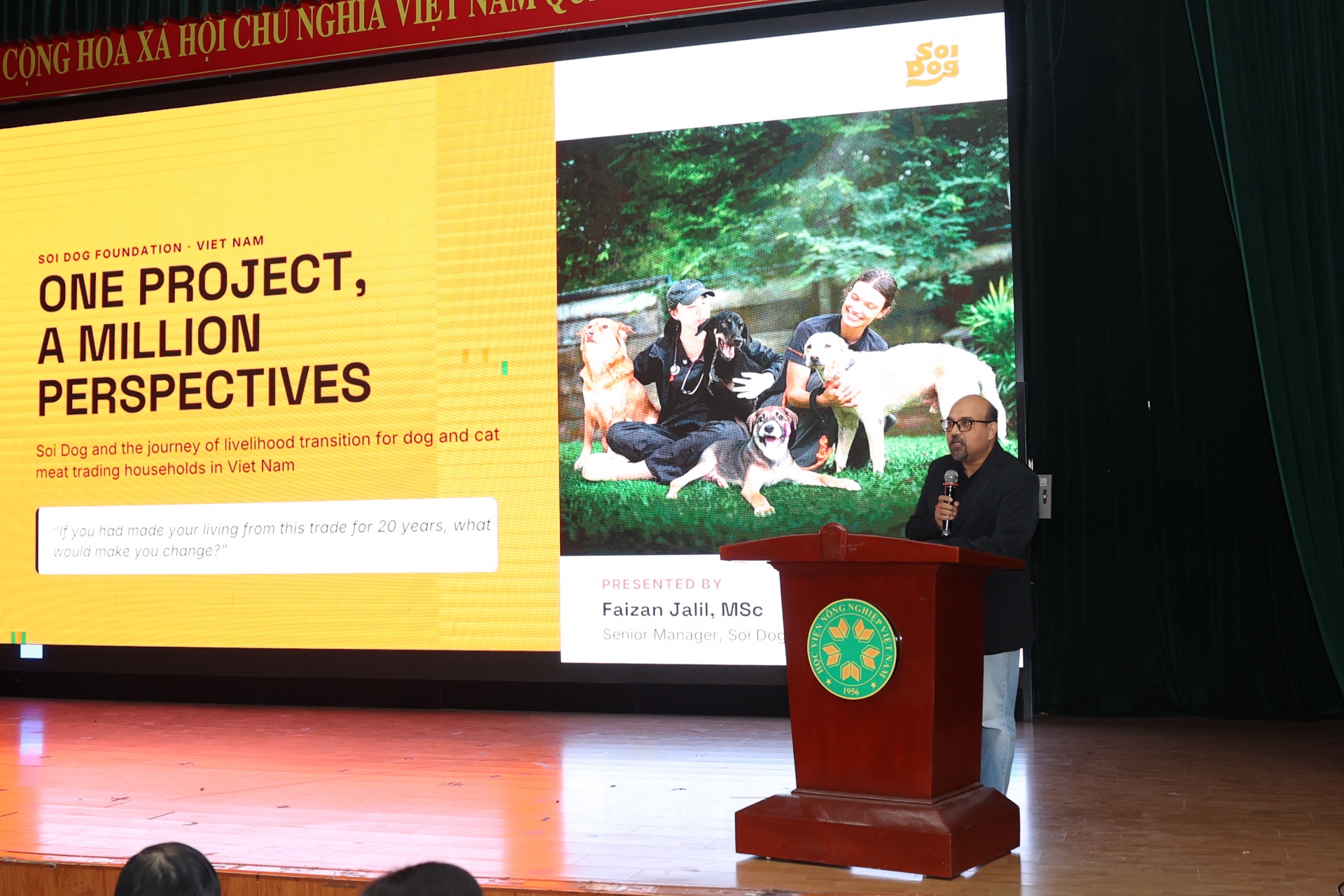 |
| Photo: SBCC Vietnam |
Bringing a behavioural science perspective, Bui Thi Duyen, director of SBCC Vietnam, described social and behaviour change communication as the bridge that brings rabies prevention and animal welfare policies into everyday life. Legal frameworks, she noted, only reach their full potential when they are translated into change that people themselves choose to make.
Praising the role of the younger generation, she said, “Changing a long-standing habit requires people who inspire – people who understand the subject and are close to everyday life. Veterinary students bring all of this together: they share the message through scientific knowledge, compassion for animals, and the fresh voice of their generation. Every student ambassador here today is a vital link that brings Hanoi closer to its goal of zero deaths from rabies.”
Beyond deepening students’ understanding of rabies, zoonotic diseases, and their link to the dog and cat meat trade, the event opens the door for students to take part directly in project activities in the pilot wards. Through the student ambassador network, scientific knowledge will be turned into accessible messages that reach families, neighbourhoods, and online communities, contributing to the national goal of zero human rabies deaths by 2030 and to a green, modern Hanoi that is safe from disease and friendly to animals. The event also connected Vietnamese students with national and international experts in public health and animal welfare.
 | Training conference helps workers transition out of dog and cat meat trade A training conference was held in Hanoi on September 16 to facilitate the transition of workers from the trading and slaughter of dogs and cats. |
 | Hanoi scales up training on humane euthanasia standards for dogs and cats Hanoi has expanded training on international standards for the humane euthanasia of dogs and cats to 120 ward officials, veterinary staff, and clinics. |
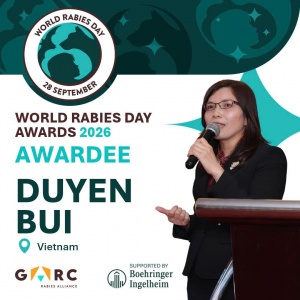 | Hanoi rabies project wins World Rabies Day award A pilot programme helping dog and cat meat traders in Hanoi shift to safer livelihoods has won international recognition for its work on rabies prevention and sustainable economic development. |
What the stars mean:
★ Poor ★ ★ Promising ★★★ Good ★★★★ Very good ★★★★★ Exceptional
 Tag:
Related Contents





Latest News
More News
- 65 nationalities at UNIS Hanoi answer the call for "dialogue over division" (November 06, 2026 | 16:20)
- Translating scientific evidence into practice for dengue control (November 06, 2026 | 16:12)
- 79 per cent of people with chronic conditions say respiratory viruses disrupt daily life: survey (November 05, 2026 | 17:25)
- From adversity to empowerment: A woman's mission to help others (November 04, 2026 | 12:05)
- Vaccination in comprehensive cardiovascular care: From recommendations to clinical practice (October 31, 2026 | 08:00)
- Ministry of Health clarifies draft organ donation law amendments (October 28, 2026 | 12:22)
- SABECO, VFF expand Ambassadors of National Progress Award (October 19, 2026 | 13:17)
- Overseas employment costs fall for Vietnamese workers (September 09, 2026 | 12:20)
- SABECO strengthens community ties through Bia Saigon partnership (August 24, 2026 | 15:29)
- Vietnam strives to build safer digital environment to protect children online (August 21, 2026 | 17:19)







 Mobile Version