
Prime Minister: Science and technology, and digital transformation must serve economic development

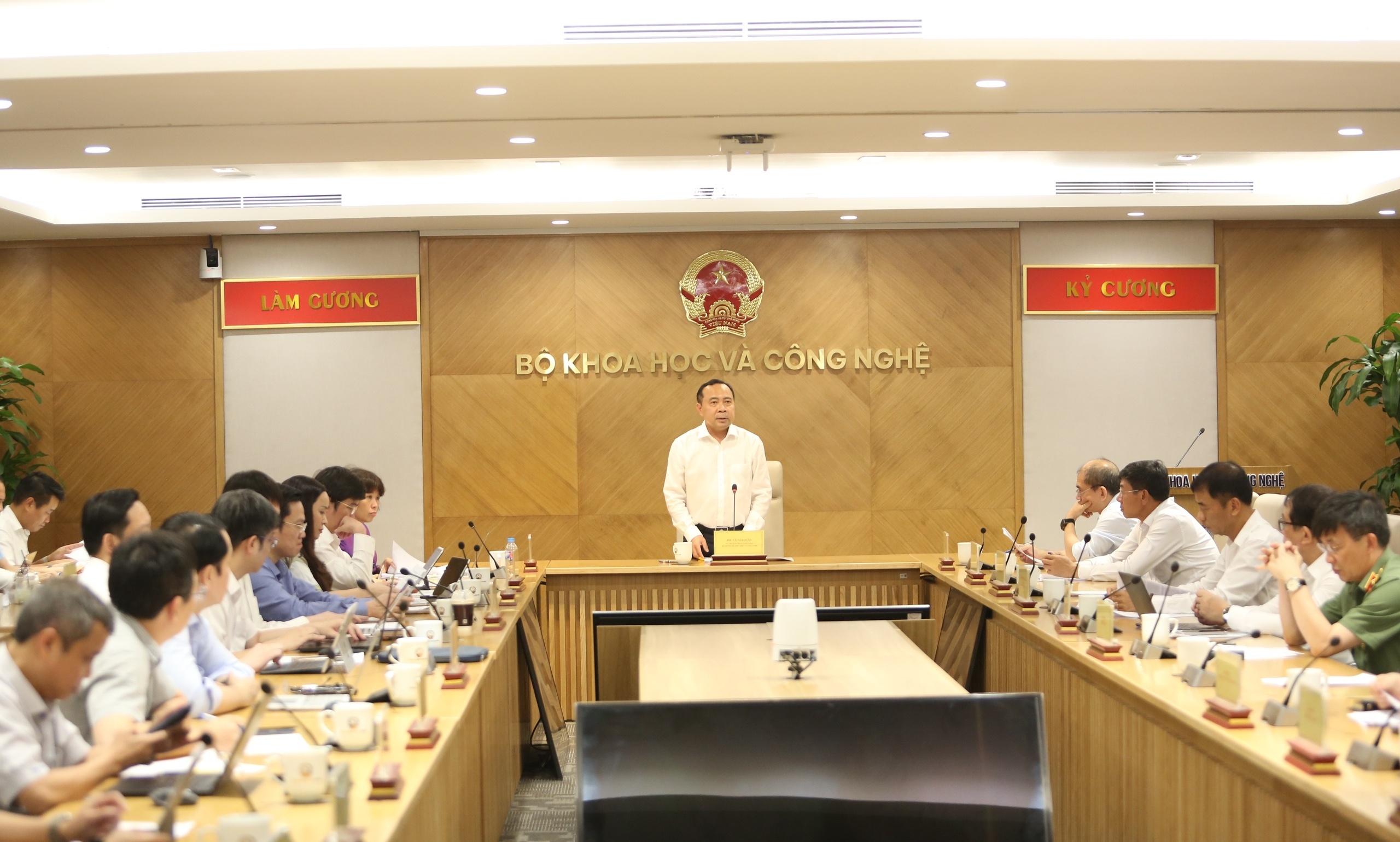
The government leader made the statement on June 23 at the thematic meeting of the government's steering committee on the development of science, technology, innovation, digital transformation, and Project 06.
The prime minister called for a strong shift towards a mindset that prioritises output, application effectiveness, and commercialisation potential as metrics, while focusing on removing institutional obstructions, financial mechanisms, and infrastructure to accelerate the implementation of Resolution No.57-NQ/TW.
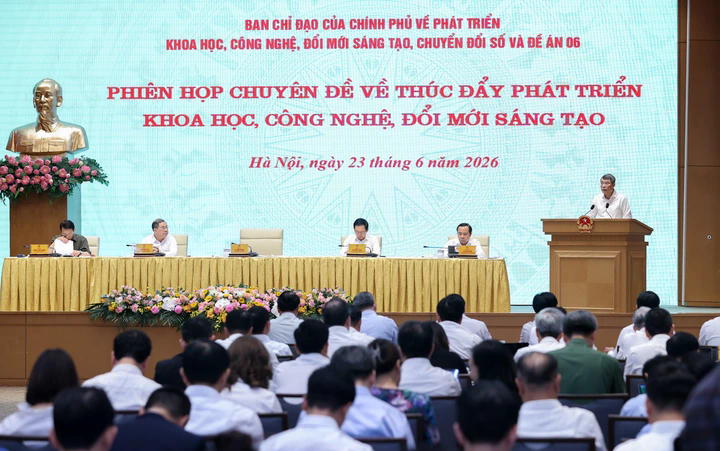 |
| Prime Minister Le Minh Hung delivered a directive speech at the thematic meeting. Photo: TTXVN |
At the meeting, delegates focused on discussing mechanisms, policies, and impediments that need to be addressed immediately to shorten the time from research to product and market, especially specific financial mechanisms for the development of sci-tech, innovation, and digital transformation.
They also looked at how ministries and industry management agencies can lead the value chain and assign roles to localities, institutes, universities, and businesses; and how each locality can identify key development challenges linked to its potential and advantages, and what strategic and high-tech products are planned to apply to solve those challenges and create concrete results for socioeconomic development.
Along with that are specific mechanisms, policies, and solutions to remove obstacles in the management, operation, and sharing of infrastructure and laboratories; encouraging private enterprises to participate in investing in, operating research, testing, and commercialisation infrastructure for strategic technology products, especially in areas with the potential for early implementation.
Regarding digital infrastructure and databases, the state has invested in building 16 national key laboratories, with a total cost of approximately $38.44 million. Of the 12 key databases, four have fully met all 19 criteria.
The PM also issued decisions approving a list of 10 strategic technology groups and 30 strategic technology products, assigning 10 ministries, sectors, and agencies to implement strategic technology development tasks based on 20 major problems; 29 out of 34 localities registered 124 sci-tech and innovation products.
Regarding funding, 3 per cent of the total state budget expenditure has been prioritised; by 2026, approximately over $4 billion will be allocated to sci-tech, innovation, and digital transformation.
Furthermore, the PM pointed out existing shortcomings and limitations, noting that many relevant authorities still have a passive attitude, fear of responsibility, and a tendency to shirk and avoid accountability. Digital infrastructure, research infrastructure, laboratories, and equipment are still outdated, fragmented, and inefficient; large-scale research infrastructures serving strategic technology development have not yet been established. There is a lack of overall architecture and design to guide the implementation of major and important tasks.
The PM outlined future directions. Accordingly, ministries and agencies should identify major, leading problems closely linked to their functions and tasks, and connected to localities; localities should select products based on their strengths and practical needs.
Businesses are at the centre, from defining the problem, selecting technology, investing, testing, and developing the market. Research institutes and universities link research with order fulfilment needs, and the state creates the appropriate institutions, standards, testing environment, and initial market.
He asked that a flexible financial mechanism should be implemented, focusing on immediately addressing obstacles, shortcomings, and obstructions related to ordering, contracting, procurement of initial products, intellectual property (IP) valuation, and risk acceptance. Priority should be given to allocating resources to the development of core technologies, commercially viable products, and solutions with spillover effects; maximising the effectiveness of laboratories, research infrastructure, and expert teams.
In the coming period, the PM requested that relevant authorities review all assigned tasks and definitively resolve overdue tasks; no extensions of deadlines should be proposed until the causes, responsibilities, and solutions are clarified; and completion must be ensured before June 30.
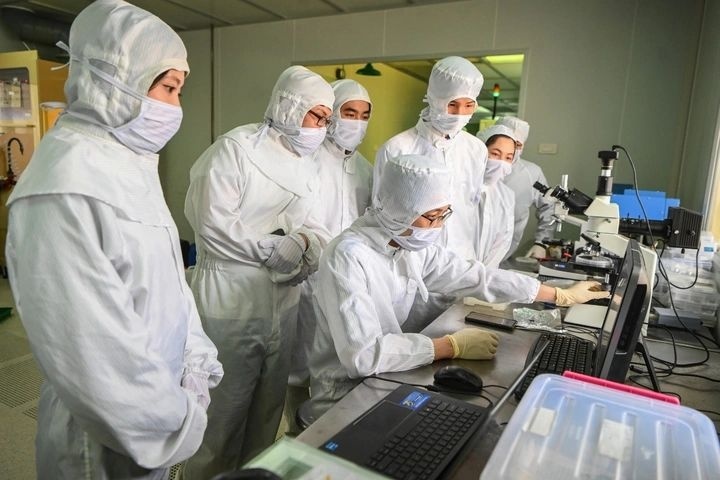
 | Postal services revenue rises 30 per cent in May Revenue from postal services was estimated to reach VND8.5 trillion ($340 million) in May, a 30 per cent increase compared to the same period last year, reflecting the continued boom in demand for transportation and e-commerce. |
 | Vietnam aims for 100,000 digital tech businesses by 2030 Vietnam is synchronising policy mechanisms and implementation to achieve the goal of having 100,000 digital technology businesses by 2030, a government official has said. |
 | Quantum technology targeted for long-term advantage Vietnam is developing quantum technology to participate in the global quantum value chain and gain a competitive edge for future sustainable development. |
 | Government urged to expand public procurement to create innovation Vietnam cannot continue relying primarily on capital expansion and labour growth if it wants to achieve double-digit economic growth, experts have said. Instead, the country needs to create stronger market demand for science, technology and innovation through concrete mechanisms. |
 | New investment model proposed for Hanoi's sci-tech projects Hanoi has all the necessary conditions to create innovations in sci-tech and digital transformation, with five noteworthy advantages. |
What the stars mean:
★ Poor ★ ★ Promising ★★★ Good ★★★★ Very good ★★★★★ Exceptional
 Tag:
Tag:
Themes: Digital Transformation
- Vietnam transforming AI ambitions into business impact
- Work on digital technology building begins in Hanoi
- Vietnam-Australia forum boosts AI and digital technology cooperation
- Digital transformation shifts focus to added value
- Amazon Kuiper licensed for private satellite telecommunications network in Vietnam
Related Contents





Latest News



More News
- AEON Vietnam steps up recruitment (October 23, 2026 | 18:16)
- Vietstar partners with Indiana University on AI-era leadership (October 23, 2026 | 12:44)
- Hanoi conference to explore AI, resilience, and integration (October 23, 2026 | 10:19)
- BPC Roundtable Conference 2026 to open in Ho Chi Minh City (October 21, 2026 | 14:46)
- AMATA congratulates Kao Vietnam on 30 years (October 21, 2026 | 14:17)
- Deputy Minister of Finance meets Gujarat delegation in Hanoi (October 21, 2026 | 12:11)
- Vietnam and US discuss financial cooperation and preparations for APEC 2027 (October 21, 2026 | 12:07)
- Vietnam and Denmark sign MoUs to strengthen bilateral ties (October 21, 2026 | 08:00)
- Vietnam and Liechtenstein sign double taxation avoidance agreement (October 19, 2026 | 18:08)
- Creative Young Entrepreneur 2026 showcases five young businesses (October 19, 2026 | 17:59)



Latest News





 Mobile Version