
Vietnam seeks closer policy cooperation with IMF

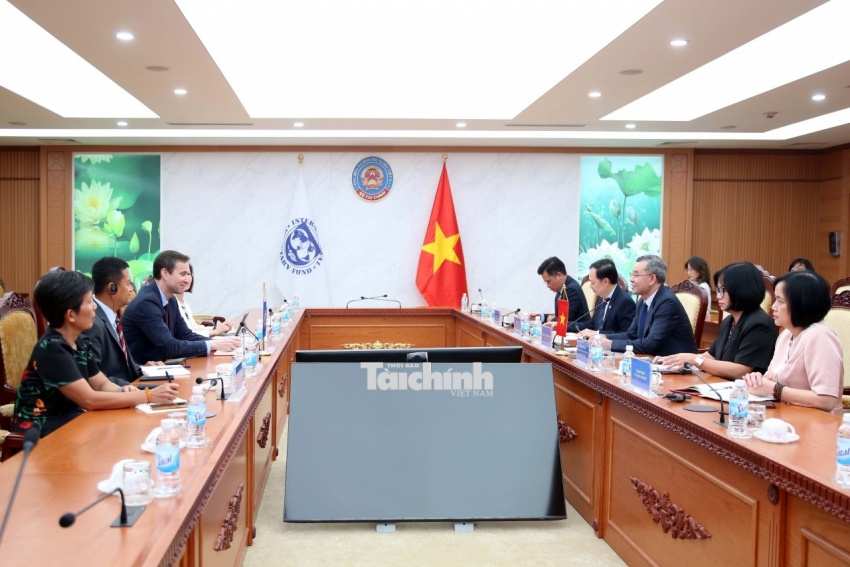 |
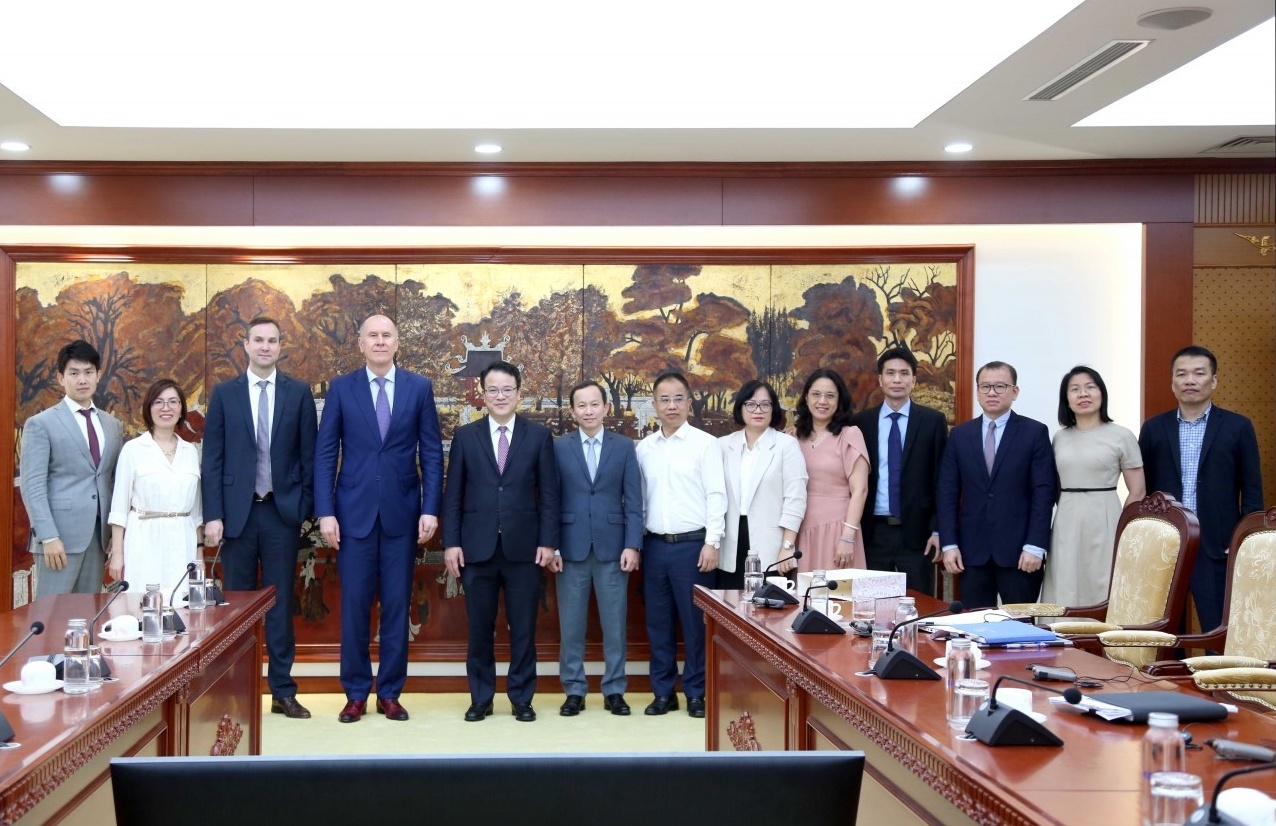
The meeting was held at the Ministry of Finance (MoF) in Hanoi and reaffirmed the close partnership between Vietnam and the IMF as the country enters a new phase of economic development.
Minister Tuan thanked Schmittmann for his contributions during more than three years of service in Vietnam. He commended the IMF Resident Office for maintaining regular policy dialogue, coordinating Article IV consultations, and supporting numerous capacity-building and training programmes for officials in Vietnam's finance sector.
The minister also congratulated Fazurin Jamaludin on his appointment, expressing confidence that his extensive experience across Asia and Europe would further strengthen cooperation between Vietnam and the IMF. He stated that the MoF would work closely with the new resident representative and provide the necessary support for his mission.
Schmittmann thanked the MoF and Vietnamese authorities for their close cooperation, particularly in macroeconomic management, fiscal policy, and tax administration. He said it had been a privilege to work alongside Vietnam during a period of strong economic progress.
Jamaludin noted that Vietnam was entering a new stage of development that presented both significant opportunities and challenges amid global uncertainties. He said he would build on the work of his predecessor and reaffirmed the IMF's commitment to serving as a trusted policy adviser to Vietnam.
Tuan said Vietnam had largely completed its strategic policy framework and was implementing development priorities for the next phase of growth. He noted that the National Assembly had approved the country's 2026-2030 socioeconomic development plan, which targets average annual GDP growth of at least 10 per cent and aims to place Vietnam among the world's 30 largest economies by 2030.
The minister described the coming period as a historic stage of development that would require disciplined policymaking and substantive reforms.
Reviewing Vietnam's economic performance in the first half of 2026, he highlighted GDP growth of 8.18 per cent, the highest first-half rate in many years. Realised foreign direct investment reached a five-year high of $13.03 billion, demonstrating Vietnam's continued appeal to high-quality international investors. State budget revenue reached 62 per cent of the annual target, while domestic consumption and international tourism also recorded strong recoveries.
At the same time, Minister Tuan acknowledged that the global environment remains challenging due to geopolitical tensions, rising trade protectionism, and tighter financial conditions. He noted that the IMF's July 2026 World Economic Outlook had revised global growth down to 3 per cent, while raising its inflation forecast to 4.7 per cent.
"The Vietnamese government remains firmly committed to boosting economic growth, but we will never sacrifice macroeconomic stability or the safety of the financial and banking system for unsustainable short-term growth," the minister said.
Minister Tuan said public investment would continue to play a central role in supporting economic expansion. As of early July 2026, public investment disbursement had reached 35.8 per cent of the annual plan assigned by the prime minister, equivalent to around VND 38 trillion ($1.5 billion) more than during the same period last year.
He noted that the government had issued Resolution No.168/NQ-CP on June 27, updating its growth outlook and committing to fully disbursing the 2026 public investment plan through more detailed weekly and monthly implementation schedules and stronger accountability for agency leaders.
Looking ahead, Vietnam will focus on improving project preparation, shortening administrative procedures while maintaining discipline and transparency, expanding decentralisation alongside greater accountability, deploying data-driven early warning systems to monitor implementation progress, and addressing fragmented investment practices. Priority will be given to transport infrastructure, energy, logistics, and digital infrastructure projects with strong spillover effects for the private sector.
The minister expressed hope that the IMF would continue to draw on its international experience to advise Vietnam on improving the efficiency of public investment and supporting long-term economic growth.
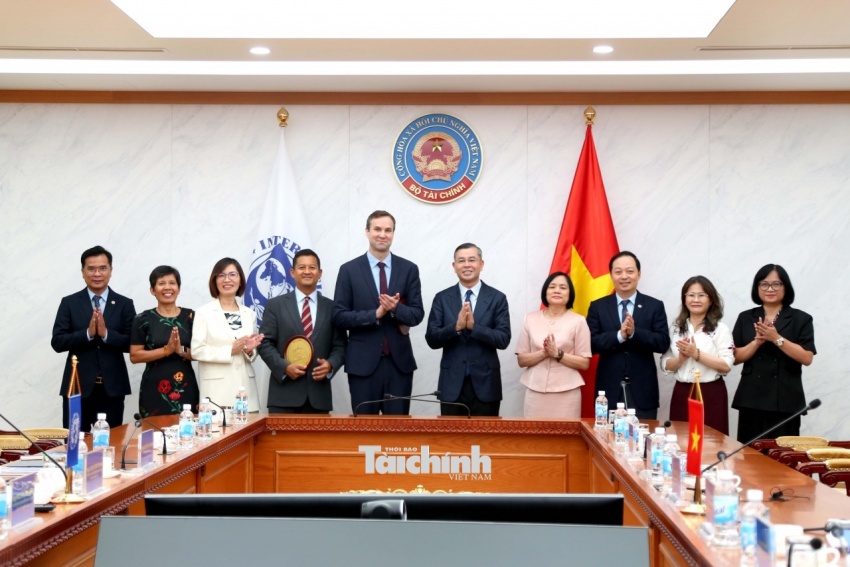 |
| Photo: Duc Minh |
Schmittmann congratulated Vietnam on its strong economic performance in the first half of 2026 while noting that the country continues to face both external and domestic risks. Externally, he pointed to ongoing volatility in global commodity and energy markets, as well as increasing trade investigations and tariff barriers in major export markets.
Domestically, he said Vietnam had experienced signs of tighter liquidity conditions, while inflation has moved closer to the government's target due to higher energy prices and persistent core inflation pressures.
Commenting on Vietnam's ambition to achieve double-digit economic growth, Schmittmann described the target as challenging but achievable. He said the most effective way to reduce reliance on credit-driven growth was to improve labour productivity and allocate resources more efficiently.
IMF research indicates that Vietnam still has substantial room to raise productivity, and reaching the average productivity level of emerging economies would significantly increase the country's economic output.
Concluding the meeting, the MoF minister reiterated Vietnam's commitment to pursuing a growth model centred on quality, efficiency, and institutional reform. He said the government would continue improving the business environment, with particular emphasis on helping small and medium-sized enterprises integrate more deeply into global value chains.
He stressed that Vietnam regards the IMF as an international financial institution, but also as a strategic policy adviser and trusted development partner. He also expressed confidence that cooperation between the two sides would deepen, contributing to Vietnam's goal of achieving rapid and sustainable development.
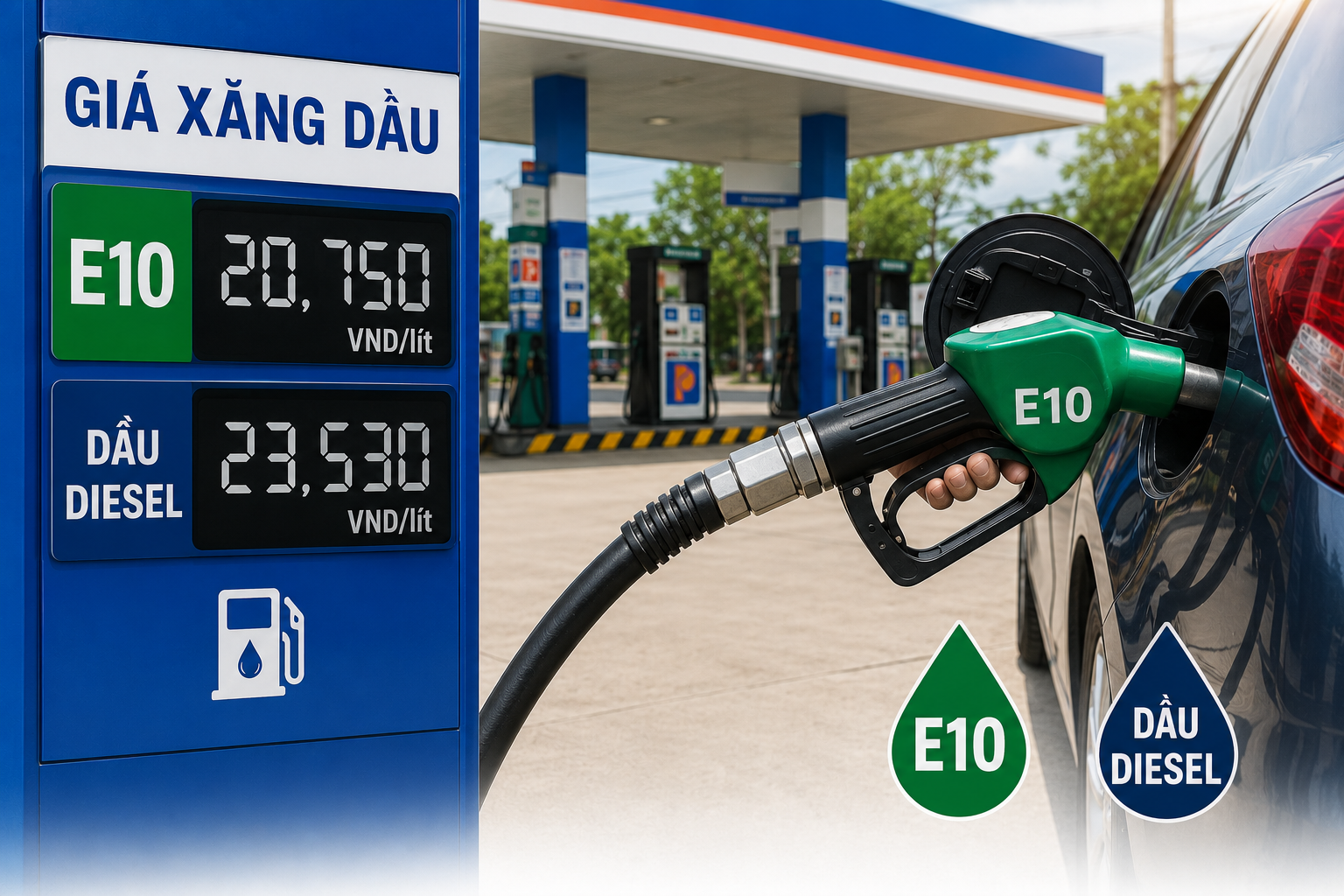 | MoF proposes extending tax relief to curb inflation risks The Ministry of Finance has proposed extending exemptions on environmental protection tax, VAT and most-favoured nation import duty on petroleum products for an additional three months until September 30. |
 | Vietnam and US launch real-time customs data exchange to enhance transparency Vietnam Customs and US Customs have signed an MoU on the electronic exchange of cargo manifest and shipment information. |
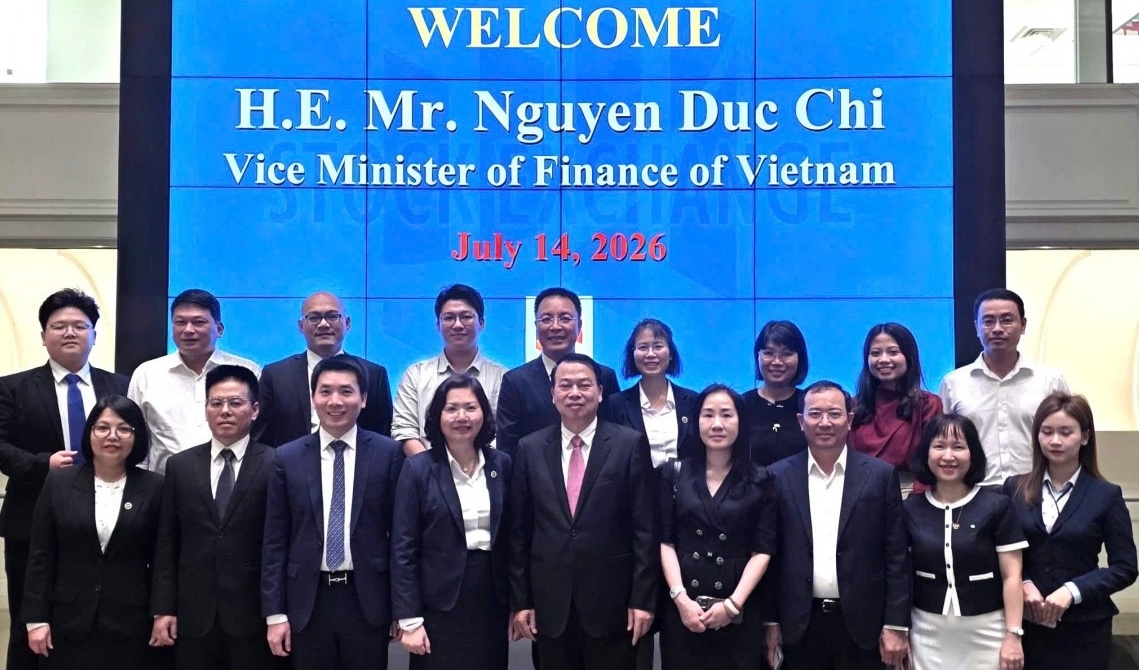
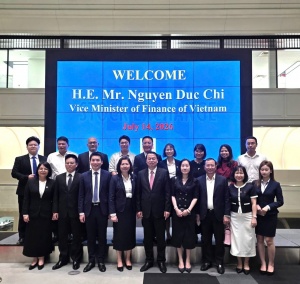 | Vietnam seeks Japanese expertise on financial reform On July 14, a delegation from Vietnam's Ministry of Finance, led by Deputy Minister Nguyen Duc Chi, held working sessions with Japan's Financial Services Agency and the Securities and Exchange Surveillance Commission in Tokyo to exchange experience in capital market development, financial innovation and securities regulation. |
What the stars mean:
★ Poor ★ ★ Promising ★★★ Good ★★★★ Very good ★★★★★ Exceptional
 Tag:
Tag:Related Contents





Latest News



More News
- A broader platform for France-Vietnam cooperation (October 16, 2026 | 17:51)
- AEON to open 13th general merchandise store in Vietnam (October 14, 2026 | 17:56)
- Three international exhibitions open to boost industrial supply chain links (October 14, 2026 | 17:37)
- Garment and textile industry transitions towards high-value production (October 14, 2026 | 17:30)
- French business delegation meets MoF to discuss investment cooperation (October 14, 2026 | 11:37)
- Friso promotes global scientific collaboration on children’s gut health in Vietnam (October 13, 2026 | 16:18)
- Germany and Vietnam look to expand strategic cooperation and investment (October 13, 2026 | 16:14)
- Vietnam-Australia forum boosts AI and digital technology cooperation (October 13, 2026 | 11:30)
- Digital transformation shifts focus to added value (October 09, 2026 | 18:00)
- Melatec Dental Clinic - accompanying international clients on their smile care journey (October 09, 2026 | 17:25)



Latest News






 Mobile Version