
Technology addresses solutions to cost challenges in food industry

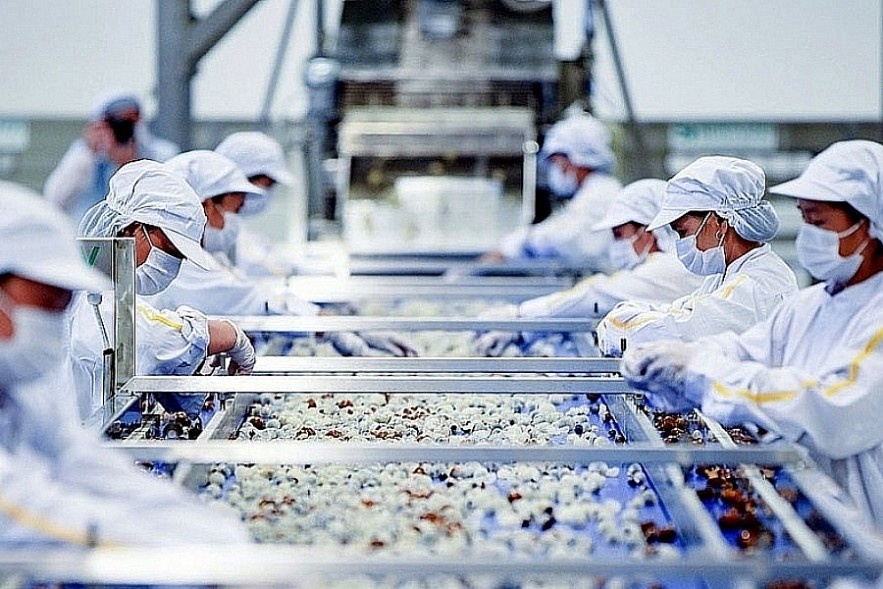 |
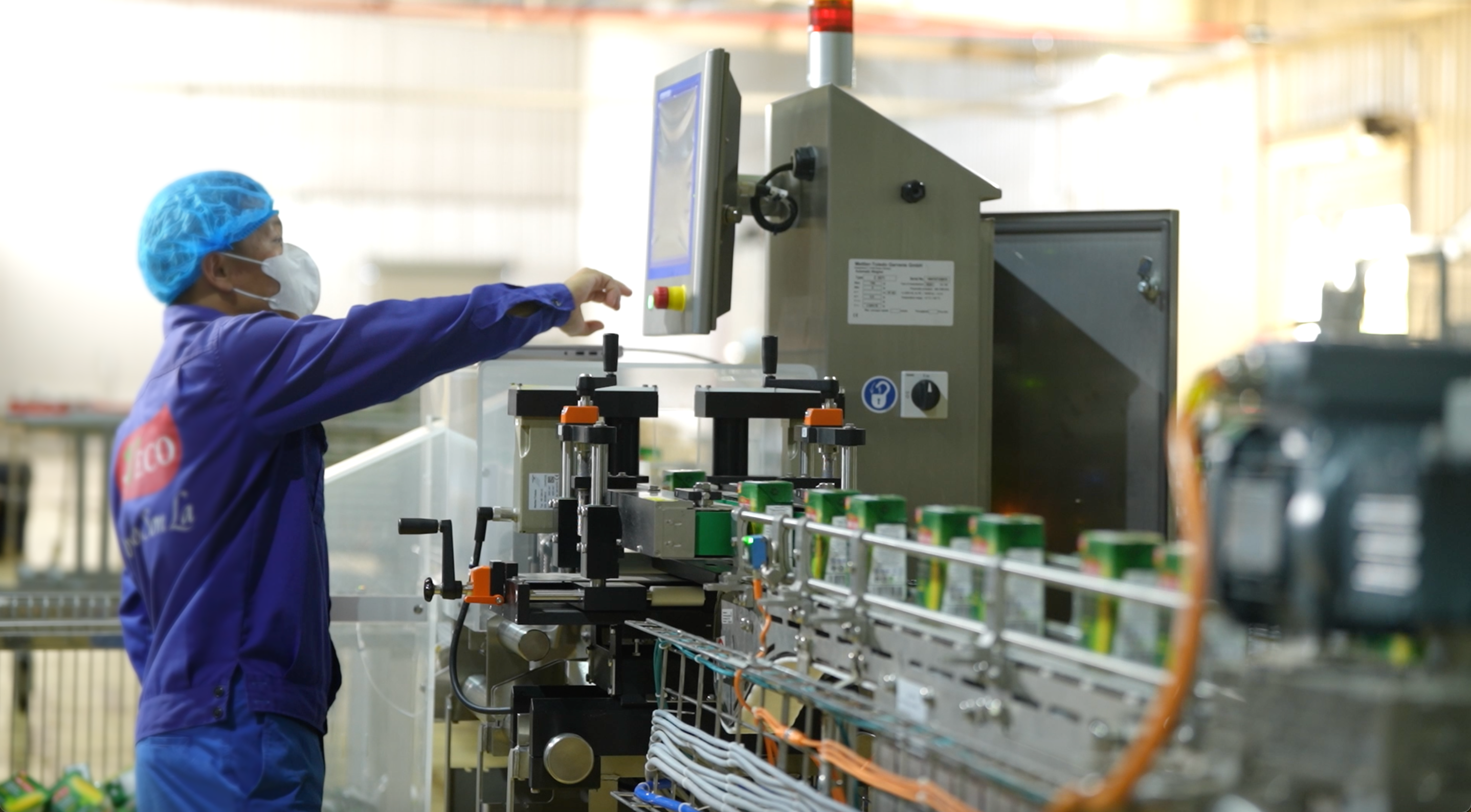
| Photo: thoibaotaichinh.vn |
The opening of Gulfood Manufacturing 2026 in Dubai on November 3, bringing together 2,500 exhibitors from 79 countries, has highlighted the growing role of technology in improving efficiency, managing production costs, and strengthening resilience across the global food manufacturing industry.
For Vietnamese food businesses, the pressure to improve productivity, maintain quality, and reduce operating costs is also driving demand for technological innovation. Speaking at the Smart and Sustainable Technology for Vietnam’s Food Industry Conference in Hanoi on October 14, Assoc. Prof. Dr. Nguyen Duy Lam, president of the Vietnam Association of Food Science and Technology, stated that technological innovation is becoming increasingly urgent for businesses to enhance their competitiveness. However, their ability to transform depends not only on market demand but also on financial resources, workforce skills, and access to technology.
“The current demand within the food industry goes beyond investing in new equipment. Businesses are looking for solutions that enhance productivity, ensure consistent quality, extend shelf life, minimise losses, and generate meaningful value. They need to clearly identify their production challenges before selecting the right technology,” he said.
Vietnam’s food processing sector grew by 11 per cent in 2025, reaching a scale of $88 billion, according to an annual report published by the US Department of Agriculture in early 2026. Meanwhile, the Vietnam’s food processing and handling equipment market was estimated at $1.2 billion last year, according to 6Wresearch.
As the market expands, requirements regarding quality, food safety, and traceability are driving businesses to invest in technology to improve production efficiency.
At Orion Vina Food, a smart factory project, was implemented in three phases from 2024, integrating a smart operations centre, robotics, automation, and the Industrial Internet of Things.
Jeong Jong Yeon, deputy general director of Orion Vina, said, “After approximately eight months of implementing the first phase, the smart factory project delivered clear benefits to Orion Vina across various areas, ranging from operational efficiency and cost reduction to a focus on sustainable production and the modernisation of management practices.”
According to the company, production capacity increased by 30 per cent during the initial implementation phase, while machine downtime fell by 68 per cent and inspection costs dropped by half, with estimated economic benefits of approximately $19 million. These results demonstrate that the application of technology extends beyond the automation of specific tasks; it also enables real-time operational monitoring, early fault detection, and the optimisation of production processes.
Alongside production line automation, energy optimisation is another way for food processing companies to reduce operating costs. CPV Food, a subsidiary of C.P. Vietnam, has invested in equipment upgrades to reduce electricity consumption and improve production efficiency.
Nguyen Hoang Thong, an energy management specialist at CPV Food, said, “An investment of over $10,000 in the compressed air system has allowed the company to save an average of more than $52 in electricity costs per day. Following the upgrades, the system’s operational efficiency has increased from 57 per cent to more than 80 per cent.”
Furthermore, the company has also adopted AI to assist in product inspection and the integration of goods into an automated warehousing system. By November 2025, energy consumption per tonne of product at the factory had decreased by 27.9 per cent compared with 2021, highlighting the potential for cost savings through improvements in technology and production processes.
Hoang Thi Le Hang, deputy director of the Central Fruit and Vegetable Research Institute, stated that Vietnam still has significant potential to extract greater value derived from agricultural and aquatic by-products. Each year, the country generates approximately 45 million tonnes of dry rice straw, 8 million tonnes of rice husks, 30-50 million tonnes of by-products from agricultural processing, and about 1 million tonnes of seafood processing by-products.
However, the utilisation of these by-products remains limited relative to their potential. In the seafood sector alone, the value of by-product processing currently stands at only about $275 million, compared with an estimated potential of $4 - $5 billion. This means that only around 40 per cent of by-products are being repurposed, mainly to produce low-value fishmeal.
“Beyond processing technology, we propose a four-layer integrated digital model, comprising the digitisation of data for each production batch, predictive modelling, digital twins, and digital passports for traceability. These technological layers are incorporated into the process to track information, support forecasting, and optimise performance across the entire processing chain,” Hang said.
However, the transition from a technological proposal to commercial-scale implementation depends on the ability to secure funding and achieve viable returns on investment. Decisions issued since 2025 on strategic technologies those prioritised for development provide a guiding framework for technology research and application.
Nevertheless, translating these directions into concrete investment in the food industry will require greater attention to financial support mechanisms and access to necessary resources, Hang added.
Ly Kim Chi, chairwoman of the Ho Chi Minh City Food and Foodstuff Association, stated that investment costs remain a key challenge that must be addressed to help businesses accelerate their green transition, especially since technology upgrades must go hand in hand with the need to maintain production efficiency and competitiveness.
“The government and relevant regulatory authorities should introduce financial support policies to help businesses invest in greener production, specifically by offering certain incentives to exporters investing in green transformation,” Chi said.






What the stars mean:
★ Poor ★ ★ Promising ★★★ Good ★★★★ Very good ★★★★★ Exceptional
 Tag:
Related Contents



Latest News
More News
- Building Vietnam’s digital future: Trustworthy agentic AI in 2026 (November 05, 2026 | 16:47)
- Average startup capital per new business doubled to $800,000 (November 05, 2026 | 11:56)
- Vietnam’s trade turnover surpasses $1 trillion for the first time (November 05, 2026 | 11:50)
- New customs framework to reward compliance and target risks (November 04, 2026 | 16:59)
- Vietnamese brands make gains in ASEAN’s brand economy (November 03, 2026 | 16:54)
- Lite-On to pump additional $320 million into subsidiaries in Vietnam (November 02, 2026 | 17:19)
- Local firms need bigger role in global supply chains, panel hears (November 02, 2026 | 14:03)
- SABECO posts stronger earnings ahead of Lunar New Year peak (November 02, 2026 | 14:01)
- FV reaches 100 Da Vinci Xi robotic surgeries attracting international patients to Vietnam (October 29, 2026 | 19:00)
- Robots no longer preserve of large corporations (October 29, 2026 | 15:35)








 Mobile Version