
Deputy Finance Minister meets Chinese State Council research delegation

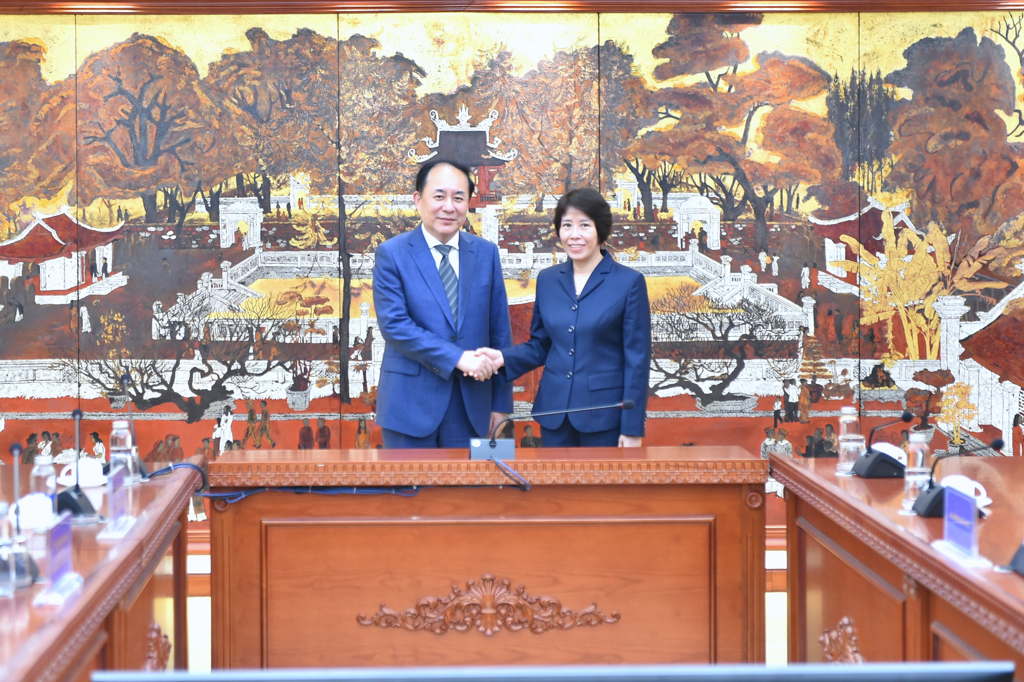 |
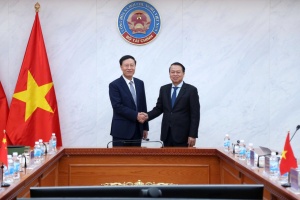
| Deputy Minister of Finance Nguyen Thi Bich Ngoc and Fan Bi, deputy director at Research Office of China's State Council. Photo: Tran Nam |
The meeting took place at the Ministry of Finance (MoF) on October 27. Deputy Minister Ngoc noted that Vietnam and China were neighbouring countries with a long-standing traditional friendship and close geographical and historical ties, and have established a Comprehensive Strategic Partnership, with sustained efforts to build a Vietnam-China community with a shared future of strategic significance.
In particular, the state visit to China by Party General Secretary and State President To Lam in August 2026 provided fresh momentum for deepening bilateral cooperation across all fields, especially in the economy, trade, investment, and strategic transport.
She expressed her confidence that the meeting would provide an important opportunity for both sides to exchange experience, address obstacles, and encourage substantive and effective cooperation in finance and investment.
Fan Bi noted that investment and trade cooperation between China and Vietnam was expanding rapidly, with Chinese businesses showing growing interest in Vietnam's investment environment.
During the visit, the delegation hoped to hold in-depth discussions with Vietnam's MoF on the development of production chains and supply chains, as well as models for establishing cross-border economic cooperation zones between the two countries, he said.
At the meeting, Deputy Minister Ngoc shared five key areas for elevating bilateral economic and financial cooperation.
First, investment cooperation and supply chain development. China is currently one of the largest foreign investors in Vietnam, ranking sixth among 143 countries and territories. China's total registered direct and indirect investment in Vietnam stands at approximately $37 billion, reflecting the strong appeal of Vietnam's investment environment.
In implementing Politburo Resolution No.50-NQ/TW on improving the institutional framework for foreign investment cooperation through 2030, Vietnam places particular emphasis on linking production chains and building interconnected business ecosystems.
The MoF leadership proposed that the Research Office of China's State Council serve as an information bridge to help businesses from both countries strengthen cooperation in technology, research and development, and global supply chains.
Second, strategic infrastructure and transport connectivity. She said Vietnam considers physical infrastructure connectivity, particularly railway development, one of its three strategic pillars. The Lao Cai–Hanoi–Haiphong railway project has been identified as an important model for strengthening transport connectivity between the two countries.
The MoF discussed financing conditions and framework agreements, while calling on China to support Vietnam in improving its capacity in railway management, operations, and industrial development.
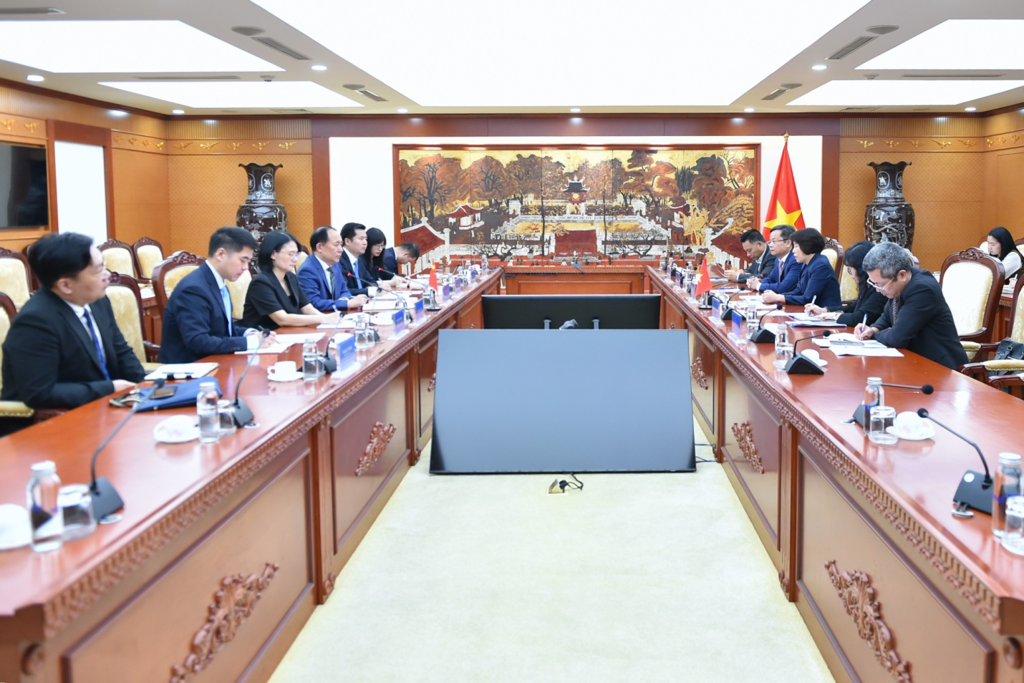 |
| Photo: Tran Nam |
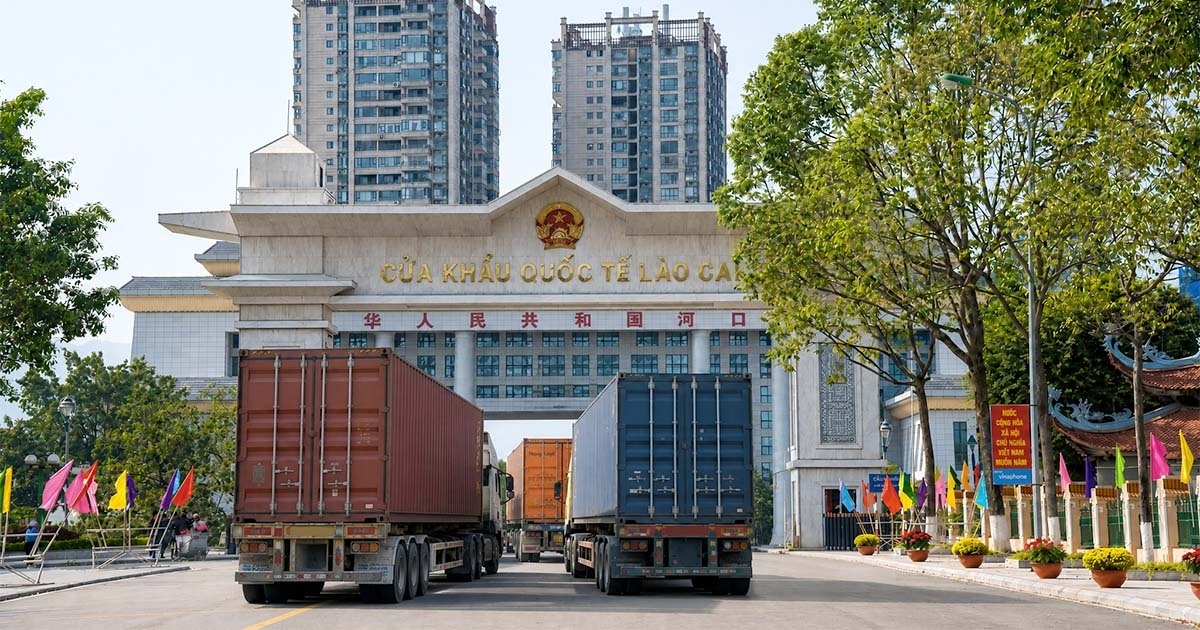
Third, economic corridors and cross-border cooperation. The two sides should make better use of their extensive shared border to develop logistics hubs, smart border gates, and integrated border-gate economic zones. Vietnam also proposed stronger customs cooperation and mutual recognition of Authorised Economic Operator programmes to reduce logistics costs and improve business competitiveness.
Fourth, broader financial cooperation and resource mobilisation. The MoF deputy minister expressed Vietnam's sincere appreciation for the grants and technical assistance provided by the Chinese government in recent years. She also called on major Chinese financial institutions to actively participate in the development of the international financial centres in Ho Chi Minh City and Danang, helping attract medium- and long-term capital for infrastructure, energy, and green transition projects.
Fifth, concrete mechanisms for implementation. Vietnam was working with Chinese agencies to consolidate the Financial Cooperation Working Group and the Strategic Infrastructure Working Group. Deputy Minister Ngoc urged the Chinese side to designate focal points as soon as possible to facilitate the swift implementation of action programmes and deliver tangible results.
Fan Bi praised the comprehensive and strategic proposals put forward by Deputy Minister Nguyen. He noted that the Research Office of China's State Council had a dedicated unit providing policy advice on financial matters, creating significant potential for the two agencies to expand professional exchanges and cooperation, with the Chinese Embassy in Vietnam serving as a bridge.
The delegation would fully take on board the proposals and report them to the leadership of China's State Council and relevant Chinese ministries and agencies for consideration and implementation, Bi said.
 | China spends nearly $1 billion on Vietnamese durian Vietnam’s durian exports to China generated nearly $988 million in the first half of the year, up 43.4 per cent on-year. |
 | China Eximbank prioritises financing for Lao Cai-Haiphong railway On August 27, Deputy Minister of Finance Nguyen Duc Chi held talks with a delegation from the Export-Import Bank of China (China Eximbank) on financing options for the Lao Cai-Haiphong railway and opportunities to expand financial cooperation between the two sides. |
 | Vietnam and China discuss policies to support private-sector growth On September 21, at the Ministry of Finance headquarters in Hanoi, Deputy Minister Nguyen Duc Chi held talks with a delegation from the Central Social Work Department of the Communist Party of China Central Committee, led by Zhao Shitang, Deputy Minister of the department. |
What the stars mean:
★ Poor ★ ★ Promising ★★★ Good ★★★★ Very good ★★★★★ Exceptional
 Tag:
Related Contents




More News
- Vietnam and Denmark hold sixth intergovernmental committee session (October 28, 2026 | 12:35)
- Ho Chi Minh City announces first 10 official members of VIFC-HCMC (October 28, 2026 | 12:27)
- Science and tech funding disbursement set to accelerate (October 28, 2026 | 12:23)
- Vietnam and Poland target $6 billion in bilateral trade (October 27, 2026 | 10:03)
- Vua Nem's profit jumps 127 per cent in first nine months of 2026 (October 27, 2026 | 08:30)
- Vietnam and Belgium to expand trade and investment projects (October 26, 2026 | 17:11)
- Autumn Economic Forum 2026 highlightes cooperation in a new era (October 26, 2026 | 12:49)
- DKSH to bring GNT plant-based food colouring to Vietnam (October 23, 2026 | 18:37)
- Omnichannel distribution helps Vietnamese businesses expand market reach (October 23, 2026 | 18:22)
- AEON Vietnam steps up recruitment (October 23, 2026 | 18:16)





 Mobile Version