
Vietnam accelerates 5G utilisation and prepares for 6G

On October 29, the MST hosted the 7th ASEAN Conference on 5G in Quang Ninh province, as part of Vietnam International Digital Week 2026.
The event was attended by representatives from regulatory bodies, international organisations, technology associations, and telecommunications enterprises from the ASEAN region and partner countries. They exchanged experiences regarding 5G commercialisation, the development of applications, and preparations for the next generation of mobile networks.
In his opening remarks, Deputy Minister of Science and Technology Pham Duc Long said that following the initial phase of investment and network deployment, the greatest challenge for 5G lies in transforming connectivity capabilities into economic and social value. Network coverage and quality are essential conditions, but they are not sufficient on their own.
“The effectiveness of this technology should be demonstrated through its ability to boost productivity, improve service quality, and create new production and business models. The focus of 5G development needs to shift more decisively towards applications in industry, logistics, transportation, agriculture, and healthcare. This requires coordination among telecommunications companies, technology firms, and various economic sectors,” he said.
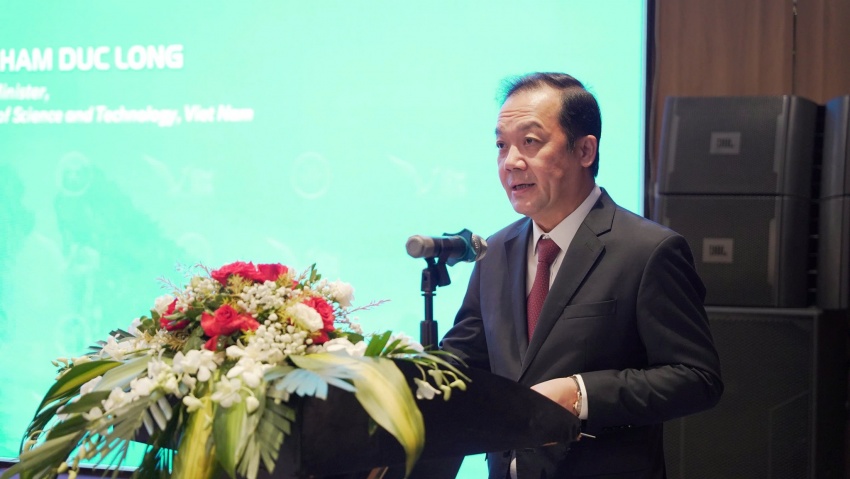 |
| Deputy Minister of Science and Technology Pham Duc Long. Photo: MST |
Network operators should go beyond merely providing connectivity; they need to participate in developing specific solutions for their customers. Regulatory authorities, meanwhile, should create a favourable environment for experimentation and innovation.
In addition to leveraging 5G, the deputy minister suggested that the sector should prepare for 5G-Advanced–an enhanced version of 5G–as well as 6G networks. Key tasks include conducting technological research, developing human resources, carrying out trials, preparing spectrum, and participating in the establishment of international standards.
According to the deputy minister, ASEAN can strengthen cooperation in research, experience sharing, human resource training, and the connecting of businesses with universities and research institutes. Vietnam stands ready to collaborate with ASEAN member states, Japan, and other international partners for mutual benefit.
At the event, the MST’s Authority of Telecommunications said that Vietnam has moved from the 5G trial phase to large-scale deployment.
During 2027–2030, Vietnam will focus on generating added value from 5G through its application in industrial production, smart cities, transportation, agriculture, healthcare, and education.
The models mentioned include private 5G networks for factories, connectivity at ports and smart border crossings, as well as applications that support agricultural production.
Experience from Thailand also demonstrates that 5G development is aligned with specific needs of individual sectors. In Thailand, 5G coverage had reached 98 per cent of the population by June 2026.
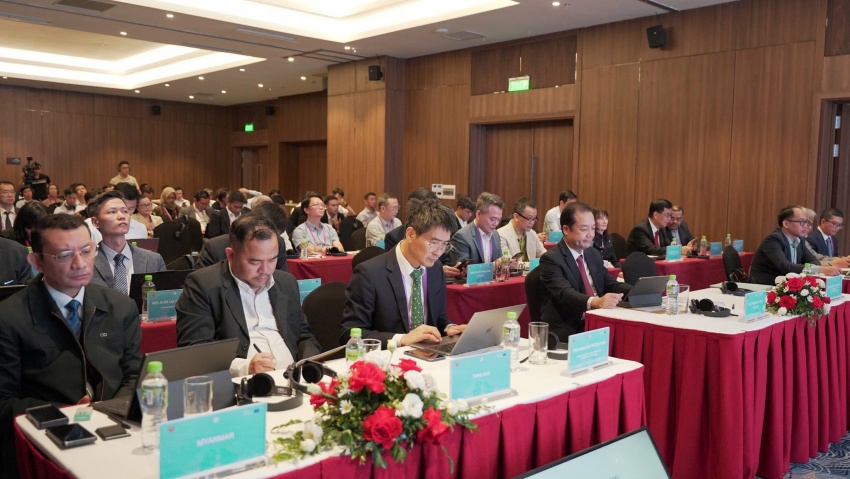 |
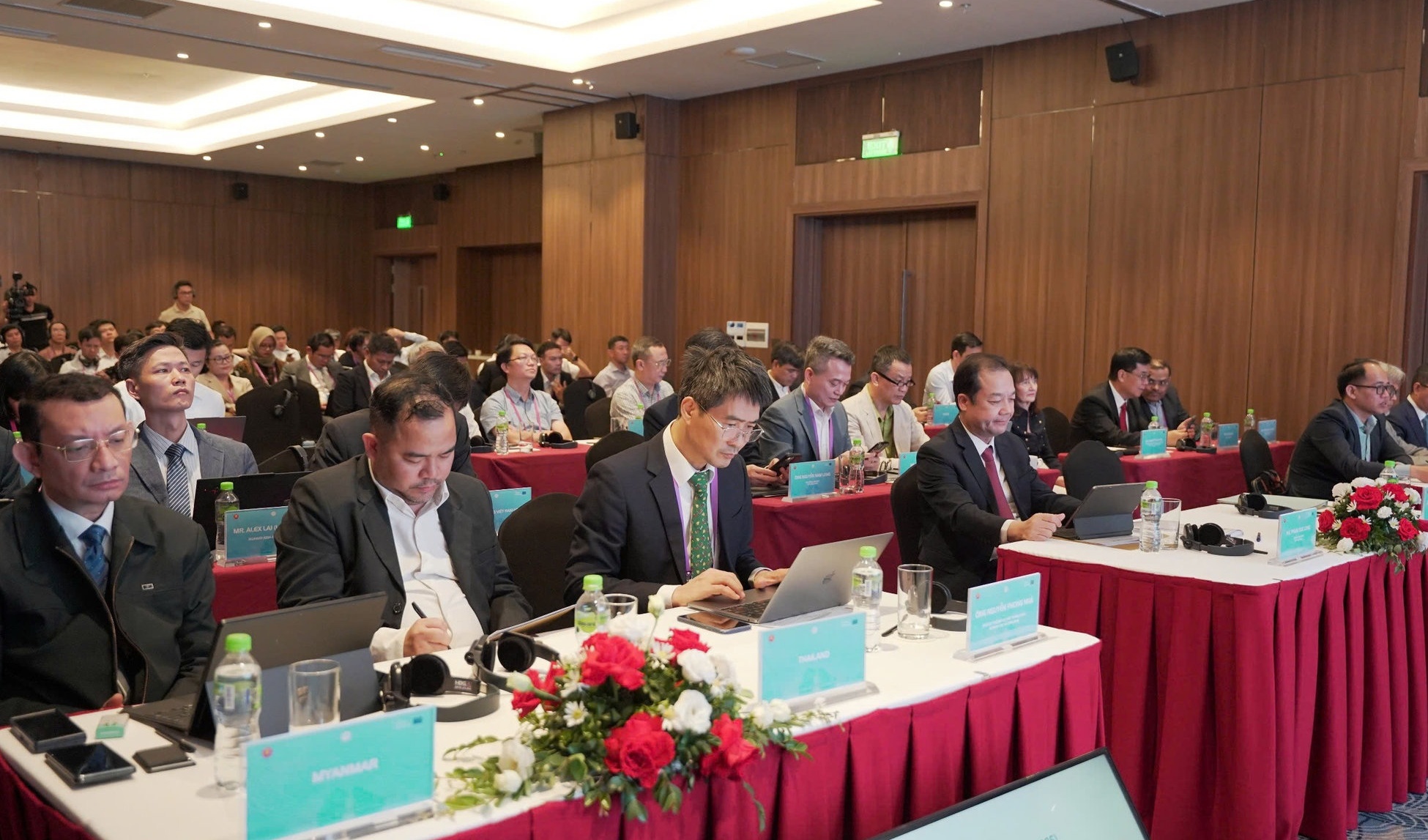
| The 7th ASEAN Conference on 5G in Quang Ninh province. Photo: MST |
Thailand is implementing initiatives such as the Siriraj 5G Smart Hospital, which integrates AI, smart ambulances, and autonomous vehicles; at the same time, it is deploying technology across automation centres and utilising robotics within industrial estates.
Meanwhile, Cambodia is prioritising the deployment of 5G in its capital city, tourist cities, industrial zones, and economic gateways. The country aims to extend 5G coverage to 70–80 per cent of its population by 2030.
At the event, the Ministry of Internal Affairs and Communications, Japan, shared strategic direction for the development of fibre optics, the expansion of 5G, optical technologies, and the distribution of data centres nationwide.
Japan is also developing non-terrestrial networks, including satellite communications, to support smart agriculture and disaster response. Given the rising data traffic in the age of AI, the country has proposed a "Digital Corridor Initiative," aimed at establishing a secure and reliable communications infrastructure.
The Global System for Mobile Communications Association (GSMA) suggested that ASEAN needs policies tailored to each individual market, rather than applying a single, uniform 5G model.
The GSMA recommended that countries make their spectrum roadmaps public, optimise licensing costs, simplify procedures for deploying base stations, and boost infrastructure sharing.
In addition to expanding its network, the organisation noted the need to build digital trust. According to a survey cited by the GSMA at the conference, 96 per cent of users polled across six ASEAN markets expressed concern about online fraud.
The GSMA recommended strengthening coordination among governments, mobile operators, and banks to leverage mobile data-based verification tools, thereby protecting consumers as they use digital services.
What the stars mean:
★ Poor ★ ★ Promising ★★★ Good ★★★★ Very good ★★★★★ Exceptional
 Tag:
Themes: Digital Transformation
- Vietnam accelerates 5G utilisation and prepares for 6G
- Vietnam strengthens inter-regional cooperation on enhancing AI capabilities
- Science and tech funding disbursement set to accelerate
- Vietnam transforming AI ambitions into business impact
- Work on digital technology building begins in Hanoi
Related Contents







Latest News
More News
- Vietnam and Cambodia customs agree 2027–2028 cooperation plan (October 30, 2026 | 13:46)
- Vietnam strengthens inter-regional cooperation on enhancing AI capabilities (October 29, 2026 | 15:32)
- First zero-direct-emission electric barge operates in Vietnam (October 29, 2026 | 14:41)
- Deputy Finance Minister meets Chinese State Council research delegation (October 29, 2026 | 14:25)
- Vietnam and Denmark hold sixth intergovernmental committee session (October 28, 2026 | 12:35)
- Ho Chi Minh City announces first 10 official members of VIFC-HCMC (October 28, 2026 | 12:27)
- Science and tech funding disbursement set to accelerate (October 28, 2026 | 12:23)
- Geleximco and Chery forge strategic partnership to advance high-tech industrial development (October 28, 2026 | 10:00)
- Vietnam and Poland target $6 billion in bilateral trade (October 27, 2026 | 10:03)
- Vua Nem's profit jumps 127 per cent in first nine months of 2026 (October 27, 2026 | 08:30)






 Mobile Version