

Vietnam enhances SME ecosystem through digital and green transition training

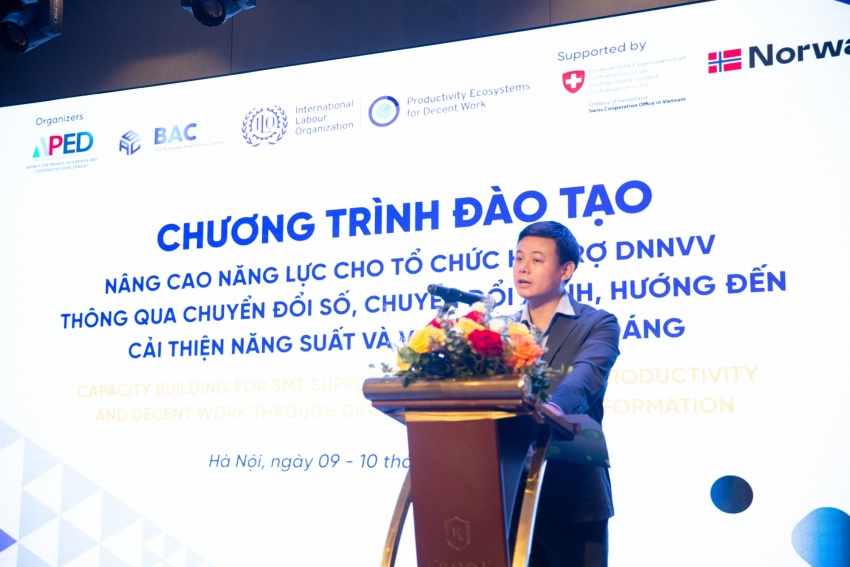 |
| Nguyen Xuan Tho, deputy director general of the APED |
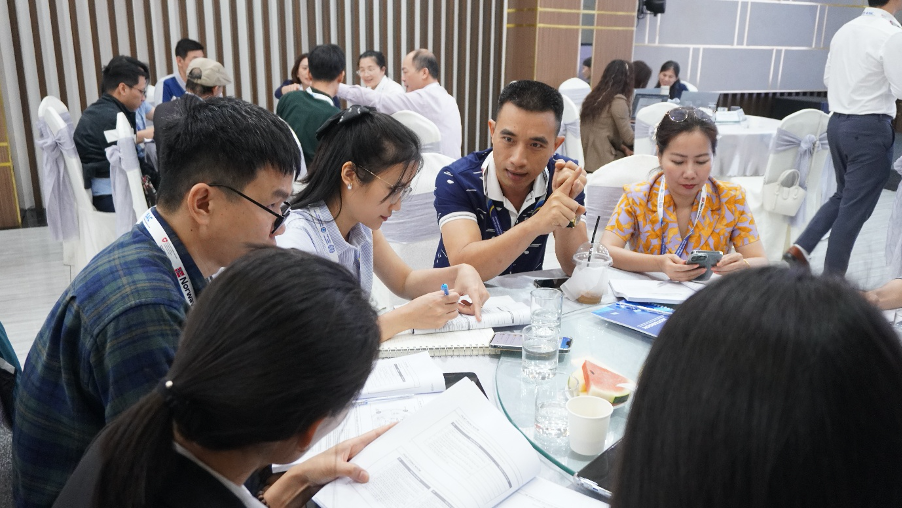
The programme, jointly organised by the Agency for Private Enterprise and Collective Economy Development (APED) under the Ministry of Finance and the International Labour Organization (ILO) in Vietnam, seeks to enhance the capacity of small- and medium-sized enterprise (SME) and support institutions to boost productivity improvements and decent work.
Hanoi, home to more than 210,800 active SMEs, accounting for roughly one-fifth of the country’s total, was selected as the venue given its role as Vietnam’s political, economic, and cultural centre, as well as a hub for dynamic manufacturing firms.
The training focuses on equipping participants with practical tools, knowledge, and advisory skills to help SMEs adapt to evolving market demands, particularly in the context of sustainability and global integration.
Key topics include the interlinkages between productivity, digital transformation, green transition, and working conditions; the importance of needs assessments in designing SME support programmes; and the introduction of assessment toolkits.
Participants are also being introduced to emerging market trends and new requirements related to green growth and sustainable development, including compliance with legal frameworks, supply chain standards, and international integration commitments.
In addition, the programme highlights practical and feasible green transition solutions that can help enterprises optimise resource use, reduce waste, improve energy efficiency, and adopt cleaner production practices.
The training also presented the ILO’s Sustaining Competitive and Responsible Enterprises methodology, along with guidance on mobilising resources, ranging from finance and human capital to technology, and addressing challenges in building local enterprise networks.
Beyond technical content, the programme provides a platform for dialogue and networking among business support organisations, enterprises, and experts, fostering greater collaboration within the SME ecosystem.
 |
Speaking at the opening session, Nguyen Xuan Tho, deputy director general of the APED, underscored the comprehensive scope of the training.
He noted that the programme covered critical areas such as enterprise diagnostics and needs assessment; sustainable market trends and “greening” requirements for manufacturing firms; and impact assessment and advisory solutions for dual transformation through the application of environmental, social, and governance reporting frameworks and tools such as the Basic Sustainability Assessment Tool.
“These tools will help enterprises enhance transparency, accountability, and strategic orientation in their sustainable development efforts,” he said.
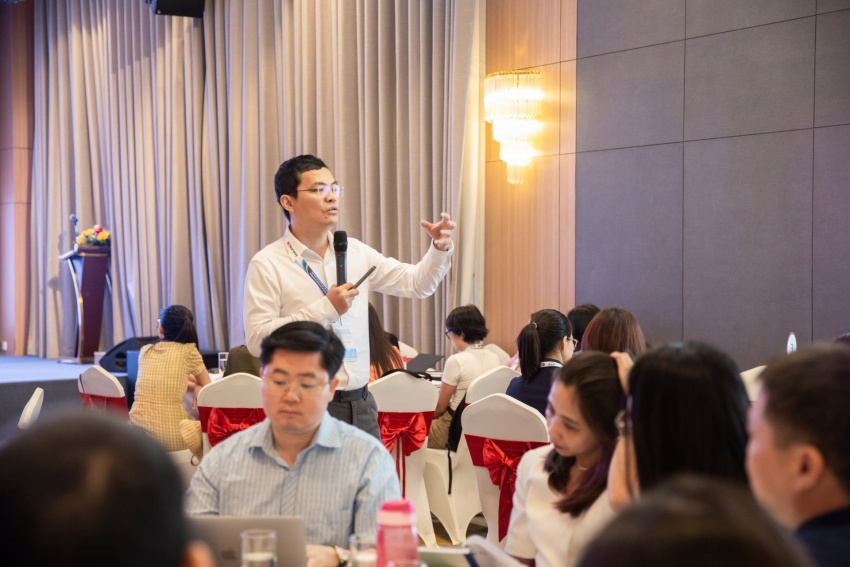
Tho added that the training adopts flexible and interactive delivery methods, including moderated discussions, case study analysis, and multi-stakeholder exchanges among enterprises, experts, and local support organisations.
The programme also serves as a channel to disseminate key policies and resolutions issued by the Politburo and the National Assembly on private sector development, as well as information on available resources to support SMEs.
“We hope the training will help address practical challenges faced by participants and enable them to better support enterprises,” he said.
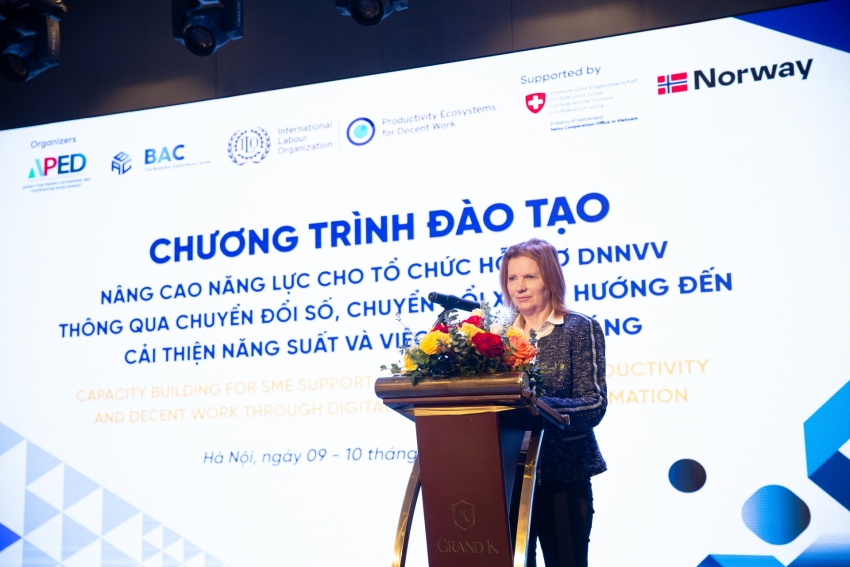 |
| Mette Møglestue, Deputy Ambassador of Norway to Vietnam |
Sharing international perspectives, Mette Møglestue, Deputy Ambassador of Norway to Vietnam, highlighted the importance of cross-sector and cross-institutional dialogue.
“From Norway’s experience, strong collaboration across stakeholders is essential,” she said. “This programme brings together the right ecosystem, government agencies, experts, business associations, and enterprises, to generate meaningful progress.”
She emphasised that such cooperation was key to scaling up digital and green transitions effectively, while ensuring they are tailored to local conditions.
Meanwhile, Sinwon Park, ILO country director in Vietnam, stressed that transformation processes must remain people-centred.
“Technology and greener production methods should not be seen as ends in themselves,” she said. “They must help enterprises improve competitiveness while enhancing working conditions, occupational safety and health, workplace cooperation, and development opportunities for both workers and managers.”
This approach reflects the ILO’s Productivity Ecosystems for Decent Work framework, which links productivity gains with improved working conditions and responsible business practices.
The Hanoi training is part of a broader series of five capacity-building programmes being rolled out across northern provinces. The initiative targets hundreds of participants, including officials from business support organisations, consultants, and representatives of manufacturing SMEs.
These activities fall under the Productivity Ecosystems for Decent Work project, an ILO initiative funded by the Swiss State Secretariat for Economic Affairs and the government of Norway. The initiative aims to support Vietnam in achieving sustainable productivity growth alongside the promotion of decent work, with the APED serving as the implementing agency.
Through such collaborative efforts, stakeholders expect to strengthen Vietnam’s SME support ecosystem and accelerate the transition towards a more inclusive growth model.
 | New tax incentives to benefit startups and SMEs Newly-issued Decree 20 introduces a package of tax exemptions and reductions, creating a more favourable legal and financial environment for startups and small and medium-sized businesses. |
 | Haiphong training programme targets productivity and growth On April 2–3, the Department of Private Enterprise and Collective Economy Development under the Ministry of Finance, in collaboration with the Haiphong Union of Science and Technology Associations, held its first training course in Haiphong. |
What the stars mean:
★ Poor ★ ★ Promising ★★★ Good ★★★★ Very good ★★★★★ Exceptional
 Tag:
Tag:Related Contents









Latest News



More News
- Expanding education partnerships to drive mutual growth (October 06, 2026 | 16:04)
- VTG 2026 to showcase textile and footwear innovation in Ho Chi Minh City (October 06, 2026 | 16:00)
- Infineon boosts Vietnam footprint with Ho Chi Minh City office (October 06, 2026 | 10:02)
- Vietnam Customs expands priority enterprise scheme to 74 firms (October 03, 2026 | 08:00)
- ASL Law opens Danang office (October 02, 2026 | 22:12)
- Project ACTIVE 2.0 launches in Vietnam to boost cervical cancer care (October 02, 2026 | 22:02)
- Vietnam launches first embodied AI conference to advance robotics ecosystem (October 02, 2026 | 17:00)
- DKSH Performance Materials – A trusted partner in Vietnam’s evolving personal care landscape (October 02, 2026 | 14:28)
- Ghanaian delegation reviews PSL Machinery’s cashew factory-management and implementation roadmap (October 02, 2026 | 10:18)
- People living with chronic kidney disease and diabetes should be aware of infectious disease risks (September 30, 2026 | 18:00)


Latest News



 Mobile Version