

New tax incentives to benefit startups and SMEs

At a time when the SME community continues to face mounting pressure related to capital constraints and operating costs, tax policy is widely expected to be an important lever to help the sector accelerate.
Decree No.20/2026/ND-CP, which takes effect from January 15, details and provides guidance on the implementation of a number of provisions under Resolution No.198/2025/QH15 from May 2025, presenting several special policies for the development of the private sector
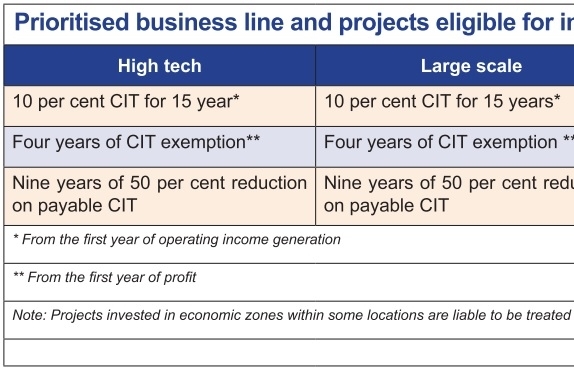
Under Decree 20, SMEs that embrace business registration for the first time are eligible for a tax exemption for three years from the date they are granted their registration certificate. This preferential period is calculated continuously from the first year of operation.
 |
In cases where a business registration certificate was issued before the effective date of Resolution 198 and the business is still entitled to incentives under previous regulations, it may continue to enjoy those incentives for the remaining period, ensuring policy stability and consistency.
However, to prevent abuse of the policy, newly established businesses formed through mergers, consolidations, divisions, separations, changes in ownership, or conversions of enterprise type are not eligible.
Notably, for innovative startups and startup support organisations, the incentive framework is designed to be even more robust.
Accordingly, entities are granted a corporate income tax exemption for the first two years, followed by a 50 per cent reduction in the amount of tax payable over the subsequent four years.
Businesses are required to separately account for the income eligible for incentives, or allocate it proportionally based on revenue and expenses, as a basis for applying the policy, thereby ensuring transparency and compliance.
Alongside tax incentives, startups are also allowed to set aside up to 20 per cent of taxable income to establish a Science, Technology, Innovation and Digital Transformation Development Fund.
In addition, the state provides free access to shared digital platforms and accounting software for small and micro enterprises, household businesses and individual business operators, thereby supporting standardised governance practices and reducing operating costs.
Assessing Decree 20 implications, many observers believe that the policy not only helps ease cost pressures and improve cash flow for newly established enterprises, but is also expected to create a strong impetus for the private sector, encouraging startups and nurturing businesses during their early, high-risk stages.
Trinh Thi Ngan, head of the Advisory Board of the Hanoi Small and Medium Enterprises Association, noted that the provision on corporate income tax exemption during the first three years was of great significance, helping firms reduce capital pressure and gain additional resources to invest in machinery, equipment, technological upgrades and product innovation.
“This is not only a policy to encourage startups, but also contributes to expanding the formal enterprise sector, supporting household businesses in transitioning to the enterprise model, towards the goal of reaching two million businesses by 2030 and two million by 2045,” she said.
According to Hoang Van Cuong, member of the PM Policy Advisory Council, the tax exemptions under the new decree represent an important step, demonstrating the firming up major guidelines on private sector development, and laying a long-term foundation for the sustainable growth of private enterprises.
“Reducing the tax burden in the early stages will help firms accumulate more resources, create opportunities to expand their operations, enhance their resilience to risks, and confidently invest in innovation and production expansion,” he said.
Expert assume that tax exemptions and reductions are practical when implemented in parallel with policies supporting access to land and production and business premises. The corporate income tax exemption during the first three years is critical for newly established companies.
In addition, the state’s clear prioritisation of leasing houses and land, along with reduced rental prices for SMEs and innovative startups, helps create stable and long-term working facilities and environments for businesses. While encouraging household businesses to scale up, the implementation of concrete support policies will enable people to operate with greater confidence and initiative.
 | Special tax incentives for National Innovation Centre from early October Research and development and investment activities in the National Innovation Centre will enjoy special tax incentives from October 5, 2020. |
 | ASEAN-wide tax analysis urged Establishing rules for the good governance of tax incentives in ASEAN member states is being raised as one of the main solutions to prevent a race to the bottom on taxation. |
 | Nation urged to prepare for tax overhaul Tax incentives have always been a key factor in attracting foreign direct investment into Vietnam. However, concerns are arising as a global minimum tax agreement threatens to shake up the entire system and, therefore, foreign funding prospects. |
What the stars mean:
★ Poor ★ ★ Promising ★★★ Good ★★★★ Very good ★★★★★ Exceptional
 Tag:
Tag:
Related Contents





Latest News



More News
- Vietnam emerging as an industrial location of choice (October 05, 2026 | 16:21)
- Vietnam hospitality shifts towards integrated mixed-use developments (October 03, 2026 | 10:00)
- Vietnam climbs Global Innovation Index (October 01, 2026 | 08:00)
- Phu My Hung to demolish Lawrence S. Ting Building for new development (September 30, 2026 | 17:43)
- Industrial investors prioritise execution and infrastructure over cost (September 30, 2026 | 12:00)
- A competitive advantage for next-generation industrial parks (September 30, 2026 | 08:57)
- Vietnam faces sharper competition in global manufacturing reshuffle (September 29, 2026 | 15:00)
- Phu My Hung launches Triton Crown luxury apartments at Crescent Lake (September 28, 2026 | 15:00)
- Vietnam Industrial Property Forum 2026: 'Opportunity Amid Uncertainty' (September 28, 2026 | 14:02)
- Vietnam-US trade talks near final outcome (September 23, 2026 | 08:45)


Latest News




 Mobile Version