
Vietnam and Thailand finance ministers meet for 50th diplomatic anniversary

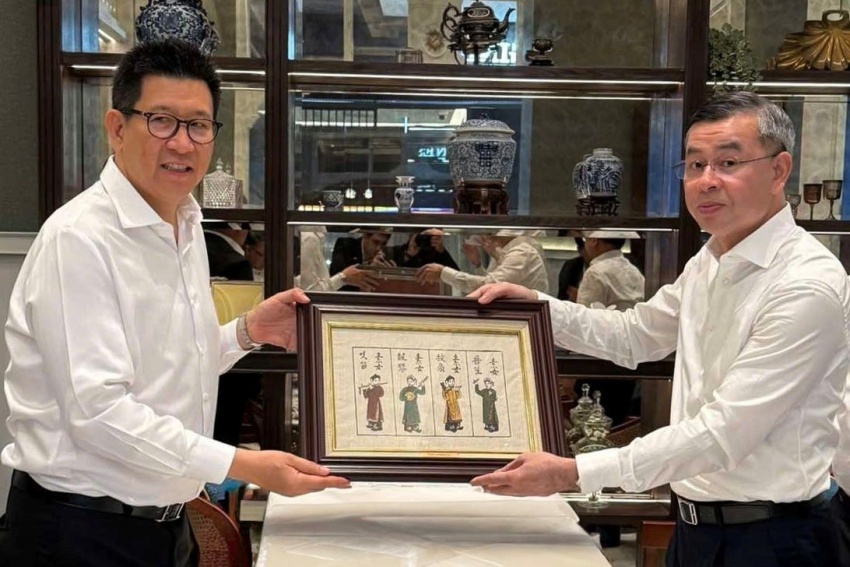 |
The meeting took place on May 28 between Minister Tuan and Thailand's Deputy Prime Minister and Finance Minister Ekniti Nitithanprapas. The talks come as Vietnam and Thailand mark the 50th anniversary of diplomatic relations, having upgraded ties to a Comprehensive Strategic Partnership in 2025 and begun formulating an action programme for the 2026-2031 period.
The two sides had an opportunity to exchange views on macroeconomic conditions, fiscal policy directions, administrative reforms, public investment, foreign investment attraction, and bilateral economic cooperation.
Minister Tuan said Vietnam is accelerating administrative reforms, streamlining government structures, and building a more efficient tax system. Vietnam is targeting double-digit economic growth in 2026 and the years ahead, requiring significant investment mobilisation. Total social investment is projected to reach around 40 per cent of GDP, with public investment accounting for roughly 20-22 per cent of total investment.
However, Vietnam’s economy has recently been affected by geopolitical volatility and tensions in the Middle East. Although GDP growth reached 7.83 per cent in the first quarter of 2026, stronger growth in the remaining quarters will be needed to achieve the annual target of around 9 per cent.
Minister Tuan noted that Vietnam’s economic scale is now approaching that of Thailand, with Vietnam’s GDP estimated at $514 billion in 2025, compared to Thailand’s roughly $570 billion.
He also explained that both Vietnam and Thailand are highly open economies with strong inflows of overseas investment, making energy security a critical factor for economic development. According to Vietnam’s calculations, a $10-per-barrel increase in oil prices could push inflation up by around 0.5 percentage points while reducing GDP growth by approximately 0.4 percentage points.
Vietnam is currently supporting consumers through its petroleum price stabilisation fund while reducing various fuel-related taxes to minimise the impact on the broader economy. In the long term, Vietnam plans to study mechanisms for direct support to low-income groups and promote energy-saving measures.
Minister Tuan added that Vietnam is currently self-sufficient in around 70 per cent of its petroleum supply, with the remainder imported from multiple sources. Kuwait remains an important partner due to its compatibility with the refining technologies used at Vietnam’s two major refineries, Dung Quat and Nghi Son.
On economic cooperation, the minister said Vietnam and Thailand are both competitors and potential partners in agricultural exports, particularly durian and rice. He proposed that the two countries strengthen coordination to more effectively tap export markets together.
Regarding investment attraction, he said Vietnam is prioritising the power sector and manufacturing industries, while appreciating the strong presence of major Thai enterprises in Vietnam.
The minister also stressed that ASEAN should deepen supply chain integration, with each country specialising in areas aligned with its comparative strengths. For example, Vietnam could focus on electric vehicles while Thailand leverages its strengths in manufacturing and processing industries.
Speaking about supporting industries, Minister Tuan noted that Thailand has already developed a strong supplier ecosystem with around 3,000 supporting enterprises, while Vietnam is still at an early stage of development in this sector.
He also shared that Vietnam is building a National Data Centre while finalising regulations on data storage and implementing the global minimum tax (GMT) in a way that ensures compliance with international commitments while maintaining the attractiveness of the investment environment.
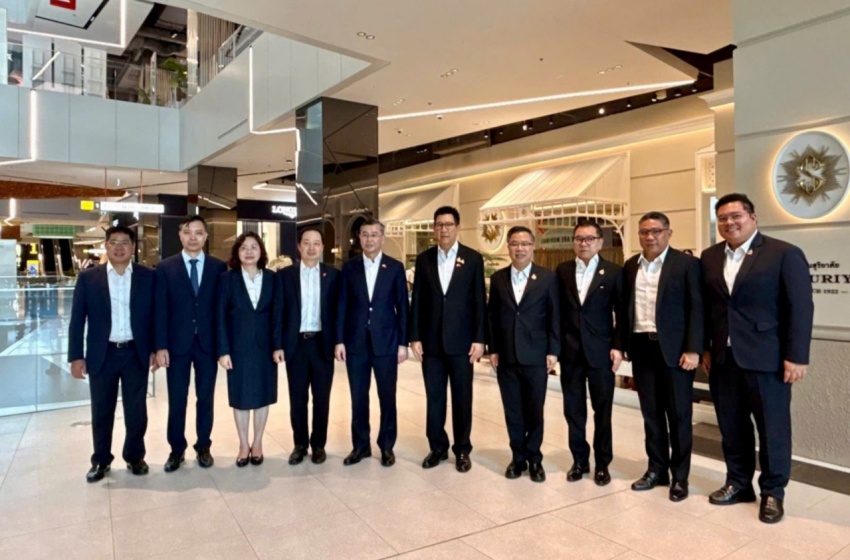 |
During the talks, Thailand’s Deputy Prime Minister and Finance Minister Ekniti Nitithanprapas shared Thailand’s experience in evaluating public ventures. He said Thailand uses the 'Economic Internal Rate of Return' indicator to assess project effectiveness, rather than relying solely on financial returns or interest rates.
Thai representatives also shared their experience in reforming tax incentives to adapt to the GMT through a 'qualified tax credits' mechanism currently being revised in Thai legislation.
In the industrial sector, the Thai side noted that many Japanese and Chinese corporations have established household appliance manufacturing bases in Thailand, including brands such as Toshiba and Midea. Thai companies are also supplying components and spare parts for Vietnamese EV maker VinFast.
The Thai DPM said foreign investment into Southeast Asia is accelerating amid instability in the Middle East, creating major opportunities for ASEAN economies such as Vietnam, Thailand, and Singapore.
Thailand also highly valued Vietnam’s success in attracting Samsung’s semiconductor investments and stressed that ASEAN countries need to strengthen supply chain connectivity to enhance the region’s position in global value chains.
Concluding the talks, both sides agreed that beyond promoting bilateral cooperation, Vietnam and Thailand should foster deeper and more substantive economic connectivity in the coming years. The two countries should leverage their respective strengths to enhance ASEAN’s collective position in regional and global value chains.
As ASEAN members, Vietnam and Thailand share many similarities in climate, environment, and economic development models.
Both countries are highly trade-dependent economies, deeply integrated into global supply chains. In 2025, Vietnam’s total import-export turnover was estimated at $910 billion, equivalent to nearly 177 per cent of GDP. Thailand, meanwhile, maintained its position as a major regional manufacturing and logistics hub, with merchandise trade turnover exceeding $600 billion, equivalent to around 110-120 per cent of GDP.
These figures highlight that both economies continue to pursue export-oriented growth models driven by manufacturing and foreign investment attraction.
Vietnam and Thailand have also maintained strong trade and investment ties. In 2025, bilateral trade reached around $22.1 billion, while Thailand remained one of Vietnam’s largest foreign investors with hundreds of active projects and total registered capital of approximately $14.9-15.4 billion.
 | CPF presents food innovations at THAIFEX – Anuga Asia 2026 to cement Thailand's regional hub status Charoen Pokphand Foods is showcasing its latest product innovations at THAIFEX – Anuga Asia 2026 in Bangkok, reinforcing Thailand's positioning as a food innovation hub and expanding the reach of Thai agro-industrial expertise to global consumers. |
 | Vietnam enhances cooperation in digital economy and AI with regional partners Vietnam will increase cooperation in digital economy, AI and innovation with Thailand and Singapore as part of efforts to strengthen bilateral ties. |
 | Vietjet and Muang Thai Insurance join hands on community development and Vietnam–Thailand friendship On May 28, Vietjet and Muang Thai Insurance, Thailand’s leading insurance company, signed a strategic cooperation agreement to boost insurance, sports, cultural exchange, and community development initiatives in Vietnam, Thailand and the wider region. |
What the stars mean:
★ Poor ★ ★ Promising ★★★ Good ★★★★ Very good ★★★★★ Exceptional
 Tag:
Tag:Related Contents







Latest News
More News
- From loans to women’s economic empowerment (October 06, 2026 | 17:58)
- VIB named Outstanding Retail Bank 2026, targets transaction banking (October 06, 2026 | 10:52)
- FTSE upgrade paves way for stronger stock market development (October 05, 2026 | 18:44)
- coLoan to empower women through inclusive green finance (October 05, 2026 | 18:42)
- Techcombank CEO: AI no longer a tool but a new operating foundation (October 05, 2026 | 18:11)
- Banks sustain profit growth as funding costs squeeze margins (October 02, 2026 | 22:22)
- Nam A Bank delivers strong breakthrough in 2026 (October 02, 2026 | 19:00)
- Policy credit builds sustainable livelihoods from the grassroots (September 29, 2026 | 07:48)
- VIB deploys Front Arena treasury and foreign exchange trading system on AWS (September 28, 2026 | 16:46)
- Nam A Bank receives $60 million loan from FMO (September 28, 2026 | 12:37)


Latest News




 Mobile Version