
Hong Hac City event to explore Bac Ninh's urban transformation

The event, titled 'Hong Hac City – Multi-level Connectivity, Seizing New Opportunities', takes place on October 10 at Hong Hac City in Bac Ninh city, organised by Phu My Hung Development Corporation and Nomura Real Estate Vietnam.
A key highlight will be a presentation by Dr. Nguyen Van Dinh, vice chairman of the Vietnam Real Estate Association and chairman of the Vietnam Association of Realtors, focusing on Bac Ninh’s growth drivers, the role of planning and infrastructure in shaping the real estate market, and the factors to consider when assessing opportunities in a new urban development cycle.
For many years, the value of a real estate project has typically been assessed first and foremost based on its location, products, and on-site amenities. However, as urban areas continue to expand, infrastructure and connectivity with major economic hubs are increasingly becoming important factors in shaping long-term value.
Bac Ninh is a notable example of this shift. From being known primarily as an industrial and manufacturing hub, the province is gradually expanding its urban, commercial, service, and logistics functions while strengthening connectivity with Hanoi and other major economic centres in northern Vietnam.
Against this backdrop, a new urban development needs to demonstrate how it connects to surrounding areas, which economic ecosystems it links with, and how those connections translate into quality of life. Hong Hac City is positioned within this broader picture, not simply as a real estate project but as a potential component in the emergence of new living centres at the northeastern gateway to Hanoi.
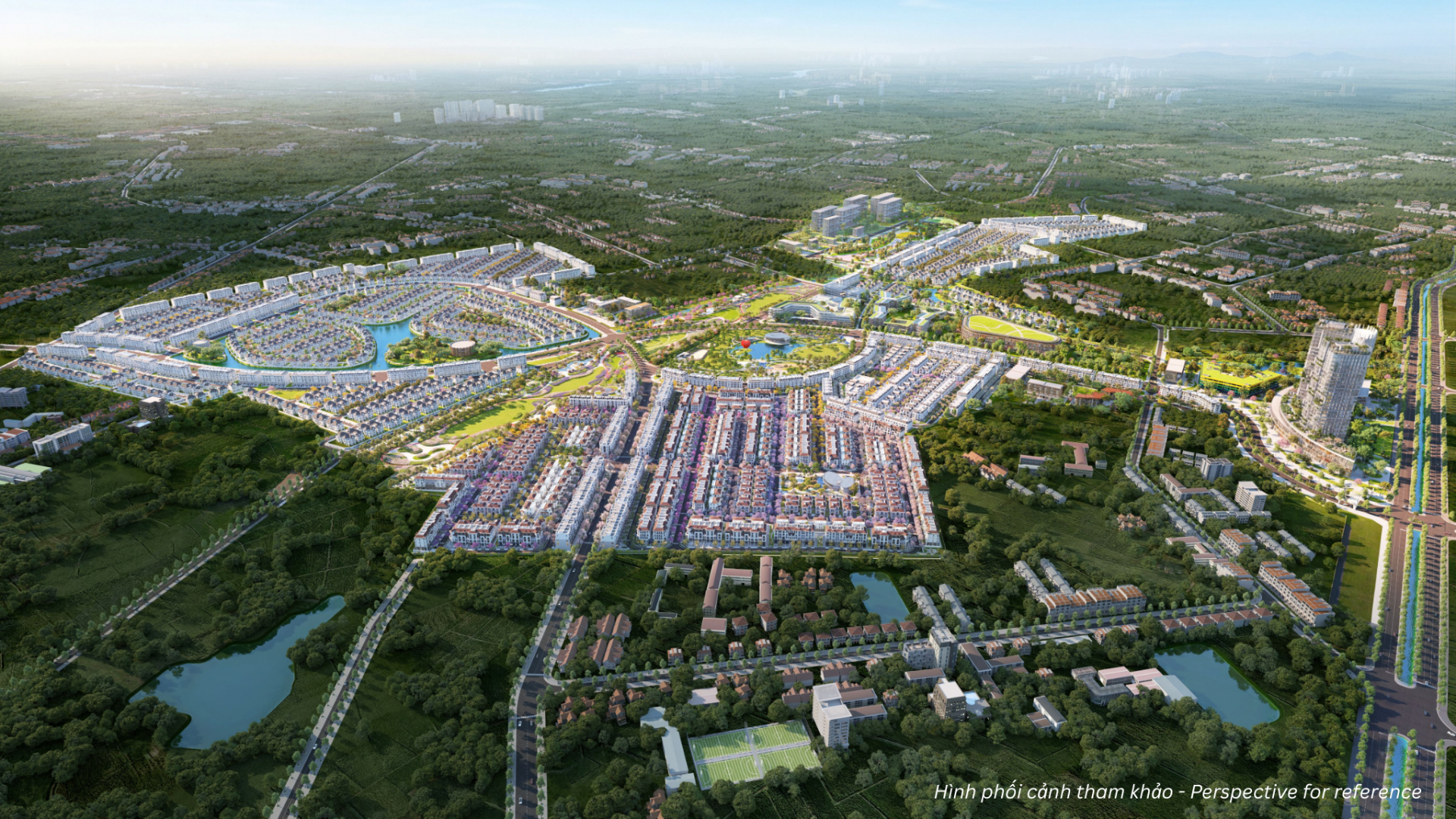 |
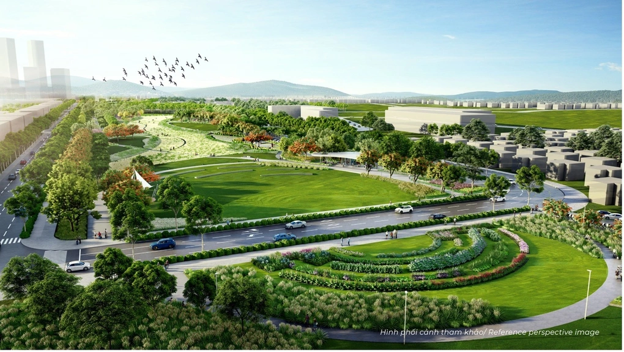
| Overview perspective for reference of Hong Hac City. Photo: Phu My Hung |
Located in Song Lieu ward, Bac Ninh city, Hong Hac City covers 197.76 hectares, with a construction density of almost 28 per cent and a projected population of approximately 27,700. The project is designed around an 'All-in-One' model, integrating housing, education, healthcare, retail, sports, culture, landscaping, and essential services within a unified urban development.
The concept of 'multi-level connectivity' at Hong Hac City is reflected across five dimensions. These include regional connectivity linking Hanoi, Bac Ninh, and major economic centres across northern Vietnam; infrastructure connectivity through inter-regional transport networks and strategic transport hubs; economic connectivity linking residents with industrial, commercial, service, and logistics centres; amenity connectivity integrating education, healthcare, retail, sports, landscaping, and services within a single urban structure; and community connectivity creating a foundation for a stable, sustainable residential community over the long term.
One of the notable features of Hong Hac City is its focus on developing an integrated urban ecosystem, rather than concentrating solely on residential products. The master plan comprises three low-rise residential subdivisions of Hong Phat, Hong Thinh, and Hong Phuc - alongside mixed-use commercial areas and high-rise residential developments.
Green and water spaces are incorporated into the project’s structure, including a 17.8-ha central park, as well as internal parks, a water-regulation lake, sports facilities, and community amenities.
In July, Hong Hac City also partnered with EQuest Education Group to develop an education system within the urban development, with plans for an education complex serving approximately 2,500 students.
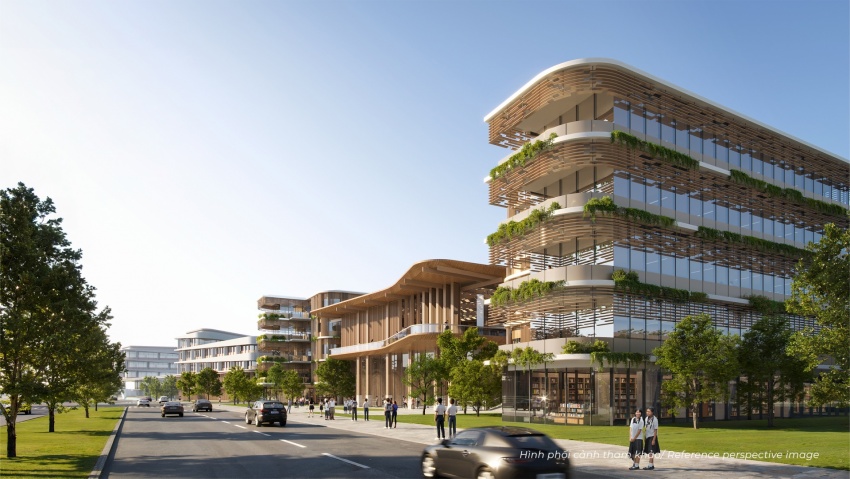 |
| An artist's impression of the education facility at Hong Hac City. Photo: Phu My Hung |
Within the overall Hong Hac City development, Hong Phat is the first low-rise residential subdivision to be developed. Its architecture draws inspiration from Kinh Bac culture, combining Modern Classical and Indochine design languages with understated references to the distinctive identity of the region, creating a distinctive character for the neighbourhood.
Zone F1-2 comprises 397 units, including townhouses, shophouses, and semi-detached villas, with access to the wider development’s network of parks and education, healthcare, and commercial amenities.
According to the developer, all 1,047 villas and townhouses in the Hong Phat subdivision have been issued certificates of land use rights and ownership of assets attached to land. The first handover of homes in Zone F1-1 is expected to take place towards the end of 2026.
In a real estate market that increasingly places greater emphasis on transparency and genuine quality, legal status, infrastructure, development progress, planning quality, and the ability to build a community are becoming key factors in assessing an urban development.
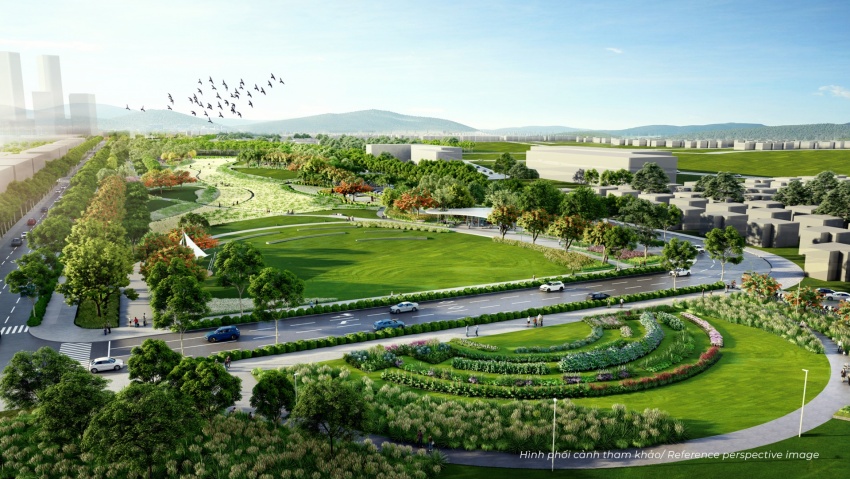 |
| An artist's impression of the central park at Hong Hac City. Photo: Phu My Hung |
For Hong Hac City, therefore, 'Multi-level Connectivity – Seizing New Opportunities' is more than just the theme of an event. It reflects how the project is positioned within the long-term development of Bac Ninh and the Hanoi region – where infrastructure enables connectivity, economic growth generates demand, and a quality urban ecosystem provides the foundation for building a community.
Hong Hac City also marks the expansion of Phu My Hung’s development footprint into northern Vietnam after more than three decades of urban development in Ho Chi Minh City, alongside Nomura Real Estate Vietnam, one of the top real estate developers from Japan.
The two partners share a people-centred approach, seeking to create an urban model that goes beyond providing homes to foster an environment for living, working, learning, healthcare, recreation, and community engagement.
From Bac Ninh’s transformation to the emergence of a new centre of living, Hong Hac City is positioning itself within a broader, long-term story of urban development, people, and value created over time.
As the development space of the Hanoi region continues to expand, Bac Ninh is entering an important period of economic and urban transformation.
Notably, on September 20, Bac Ninh officially became Vietnam’s ninth centrally governed city. This milestone marks a new phase of development, with the city aiming to become a high-tech industrial, innovation-driven, green, smart, and modern urban centre, while strengthening connectivity with Hanoi and other northern growth poles.
In the first nine months of the year, Bac Ninh granted investment licences to 264 new foreign-invested projects, with total registered capital of $1.67 billion, while 222 existing projects registered additional capital of $2.3 billion. With these results, Bac Ninh currently ranks third nationwide in overseas investment attraction, after Ho Chi Minh City and Thai Nguyen province.
The change in administrative status is taking place alongside rapid development in infrastructure, industry, logistics, commerce, and urban areas, creating new drivers for the movement of capital, businesses, and population across the region.
Against this backdrop, the value of real estate is increasingly being viewed from a broader perspective: not simply in terms of a project’s location, but its position within the wider development trajectory of the region.
 | Hong Hac City sets benchmark for integrated urban living Vietnam's real estate market is undergoing a transformation as a new generation of buyers looks beyond homeownership, seeking a lifestyle that embodies their social identity and provides a lasting legacy. |
 | Hong Hac City approved for foreign homeownership The Bac Ninh People's Committee has issued an official document publicly announcing the eligibility of foreign organisations and individuals to own residential properties within the Hong Hac–Xuan Lam Eco-Urban Area development. |
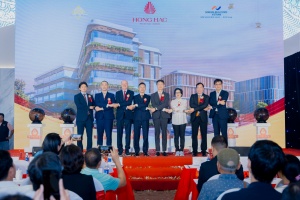 | Hong Hac City partners with EQuest, opens show home in Bac Ninh Hong Hac City has marked a significant milestone with the signing of a strategic partnership with EQuest Education Group and the opening of the Bespoke Collection show home, underscoring the project's progress and long-term development strategy. |
What the stars mean:
★ Poor ★ ★ Promising ★★★ Good ★★★★ Very good ★★★★★ Exceptional
 Tag:
Tag:Related Contents

Latest News
More News
- Onsen in the heart of the city: a new experience at the shopping mall (October 08, 2026 | 08:00)
- Enterprises honoured as Outstanding Provider of Green Industrial Solutions (October 06, 2026 | 18:03)
- MIK Group launches House of MIK in Ho Chi Minh City (October 03, 2026 | 17:00)
- Vietnam hospitality shifts towards integrated mixed-use developments (October 03, 2026 | 10:00)
- Stavian IP accelerates its modern expansion (October 02, 2026 | 14:00)
- ESG for future-ready industrial success (October 02, 2026 | 09:00)
- Green Future Awards honour five leading industrial park developers (October 01, 2026 | 22:20)
- Green transition leaders honoured at Green Future Awards 2026 (October 01, 2026 | 22:10)
- Six developers honoured as Emerging Green Industrial Property Developers (October 01, 2026 | 22:00)
- Why logistics will define the next phase of growth (October 01, 2026 | 09:00)



Latest News






 Mobile Version