

Government launches regular health checks alongside food safety crackdown

Addressing the National Assembly on April 21, Deputy PM Thang said the health check-up initiative is based on the Politburo's Resolution No.72-NQ/TW from last September on strengthening the protection, care, and improvement of people's health. It has been institutionalised by the Law on Medical Examination and Treatment, passed by the National Assembly at its 10th session last December.
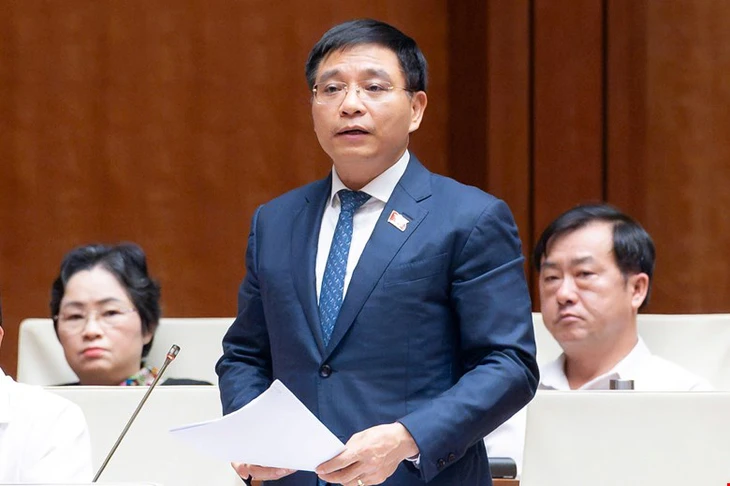 |
| Deputy Prime Minister Nguyen Van Thang. Photo: quochoi.vn |
Immediately afterwards, the government and the prime minister directed the Ministry of Health (MoH) to issue specific guidelines on regular health check-ups suitable for each target group. These guidelines included comprehensive monitoring of physical and mental development, nutrition, and immunisation for children under six years old; clinical examinations and screening for risk factors for students; and in addition to clinical examinations, adults undergoing basic paraclinical tests to detect diseases early, especially non-communicable diseases.
"These initiatives aim to facilitate early detection, consulting, and long-term health monitoring for the population, thereby improving the quality of healthcare," DPM Thang said.
Regarding resources for implementation, funding is allocated from the state budget, health insurance fund, and other legal sources. For groups not covered by health insurance, localities develop plans and allocate funds to organise free screening examinations.
According to the DPM, the organisation of regular health check-ups is being implemented according to a roadmap, gradually improving both the professional mechanisms and implementation, contributing to a strong shift from treating diseases to preventing diseases, early detection, and regular health management for the people.
Currently, the government is directing the MoH to urgently finalise the legal framework so that localities can implement the scheme more synchronously and effectively in the future.
Regarding food safety issues, he stated that in recent times, the Party, the state, and the entire political system have taken decisive action and fight against violations.
This National Assembly session coincides with the 'Month of Action for Food Safety'; therefore the government is directing ministries, sectors, and localities to strengthen inspections, checks, and strictly handle violations.
In fact, every year authorities inspect more than 300,000 food production and business establishments and handle many violations. The Ministry of Public Security has also launched many special operations from the central to local levels to combat crimes related to food safety.
In addition, the government is directing the MoH to finalise the amended draft Law on Food Safety, which is expected to be submitted to the National Assembly’s upcoming session in October. Simultaneously, a plan to establish a unified food safety management agency is also being implemented.
According to DPM Thang, the facts prove that food safety management involves many ministries and agencies, sometimes leading to overlaps or gaps. Establishing a unified focal agency will contribute to improving management efficiency.
The government also focuses on protecting legitimate businesses – those significantly affected by the recent surge in counterfeit and substandard food products.
In addition to management solutions, the government also requires intensified communication to raise awareness among the public and businesses, thereby encouraging their participation in detecting, combating, and preventing counterfeit and substandard food. This aims to build a safe food environment and sustainably protect public health.
 | Regular health check-ups prevent potential disease While a growing Vietnamese economy is rapidly improving the quality of modern life, new risks of diseases continue emerging, threatening our health. Regular health check-ups are recommended by experts to help identify potential diseases and health issues at an early stage. |
 | Healthcare sector accelerates administrative reform and digital transformation Vietnam’s Ministry of Health is moving to accelerate administrative reform and digital transformation to improve operational efficiency. |
 | Vietnam's health sector tightens control over GMP standardisation The healthcare sector is tightening standardisation for health supplements, with a new evaluation checklist of nearly 170 criteria covering everything from raw materials to finished products. |
 | MoH urges hospitals to accelerate electronic medical records Minister of Health Dao Hong Lan has requested medical facilities nationwide accelerate the rollout of electronic medical records and phase out paper records. |
What the stars mean:
★ Poor ★ ★ Promising ★★★ Good ★★★★ Very good ★★★★★ Exceptional
 Tag:
Tag:Themes: Healthcare Platform
- Ho Chi Minh City Oncology Hospital signs MoU with Novartis Vietnam
- Driving early detection and integrated liver disease management
- Vaccinology training programme launched to boost preventive care capacity
- Opella and Hoan My Academy partner to advance medical education
- AstraZeneca Vietnam upgrades logistics system to support growing operations
Related Contents






Latest News



More News
- HER2+ breast cancer carries $3.71 billion productivity burden in Vietnam (July 30, 2026 | 14:32)
- Party Resolution charts Vietnam’s development model through 2045 and beyond (July 30, 2026 | 12:29)
- STEM education evolves for AI era (July 21, 2026 | 09:38)
- Vietnam’s workforce ready for AI era (June 26, 2026 | 16:04)
- Why child online safety is now a business imperative (June 24, 2026 | 11:00)
- Hybrid work is reshaping Vietnam’s labour market (June 17, 2026 | 16:24)
- World's children exposed to at least three overlapping climate threats (June 17, 2026 | 15:54)
- Thai Nguyen event promotes safer food systems for World Food Safety Day (June 11, 2026 | 14:08)
- Vietnam emerges as rising hub for wealth creation (June 02, 2026 | 18:31)
- Danang launches DIFF 2026 with world-class performances (May 31, 2026 | 08:00)


Latest News






 Mobile Version