

Banks accelerate AI adoption

According to Hoang Minh Tien, deputy director general of the Information Technology Department under the State Bank of Vietnam (SBV), more than 70 per cent of credit institutions in Vietnam have adopted AI and machine learning technologies to optimise business processes, enhance operational efficiency, improve service quality and elevate customer experience.
“What is noteworthy is no longer the fact that AI has entered the banking sector, but rather that it is evolving from isolated pilot projects into a new operational infrastructure layer. While digital banking previously focused on digitising traditional processes, AI is now beginning to reshape how banks operate and create value,” Tien said.
According to Tien, the AI wave sweeping through the banking industry is unfolding simultaneously across three layers.
 |
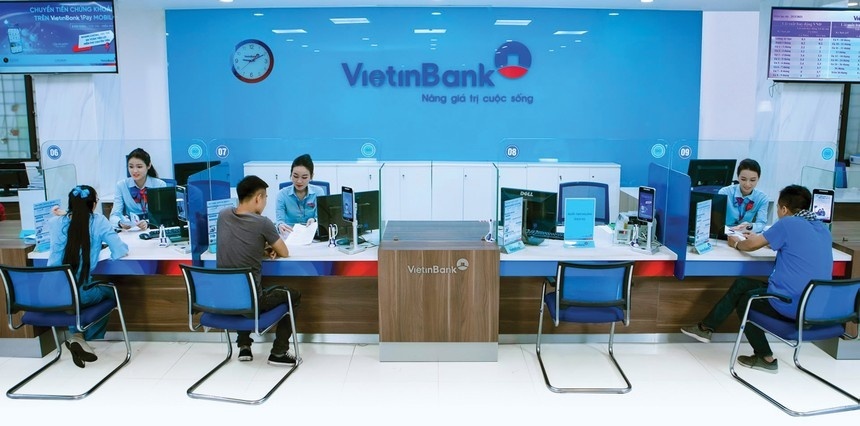
| AI is reshaping how banks interact with customers |
First, AI serves customers through chatbots, virtual assistants, personalised products and automated advisory services.
Second, AI supports operations through applications such as process automation, document processing, data analytics and cost optimisation.
Third, AI strengthens risk management, ranging from fraud detection and anti-money laundering to abnormal transaction identification, credit scoring and early risk warning systems.
In practice, many Vietnamese banks have already achieved exceptionally high rates of digital-channel transactions. Some have developed financial super-apps integrating hundreds of products and services while connecting with payment ecosystems, e-wallets and digital platforms.
Nguyen Hung, CEO of TPBank, said that at many banks, including TPBank, transactions conducted through digital channels now account for between 95 per cent and 99.5 per cent of total transactions.
“This demonstrates that Vietnam’s banking industry has moved beyond the stage of basic digitalisation and is entering a phase of intelligent digitalisation,” he said.
One of the most visible transformations can be seen in customer service. In the past, most support activities relied on call centres and customer service teams.
Today, AI chatbots, AI agents and digital financial assistants have begun replacing a significant portion of traditional tasks.
“TPBank has deployed AI chatbots, AI agents and digital financial assistants to take over the majority of conventional support functions, enabling customer requests to be addressed almost instantly,” Hung said.
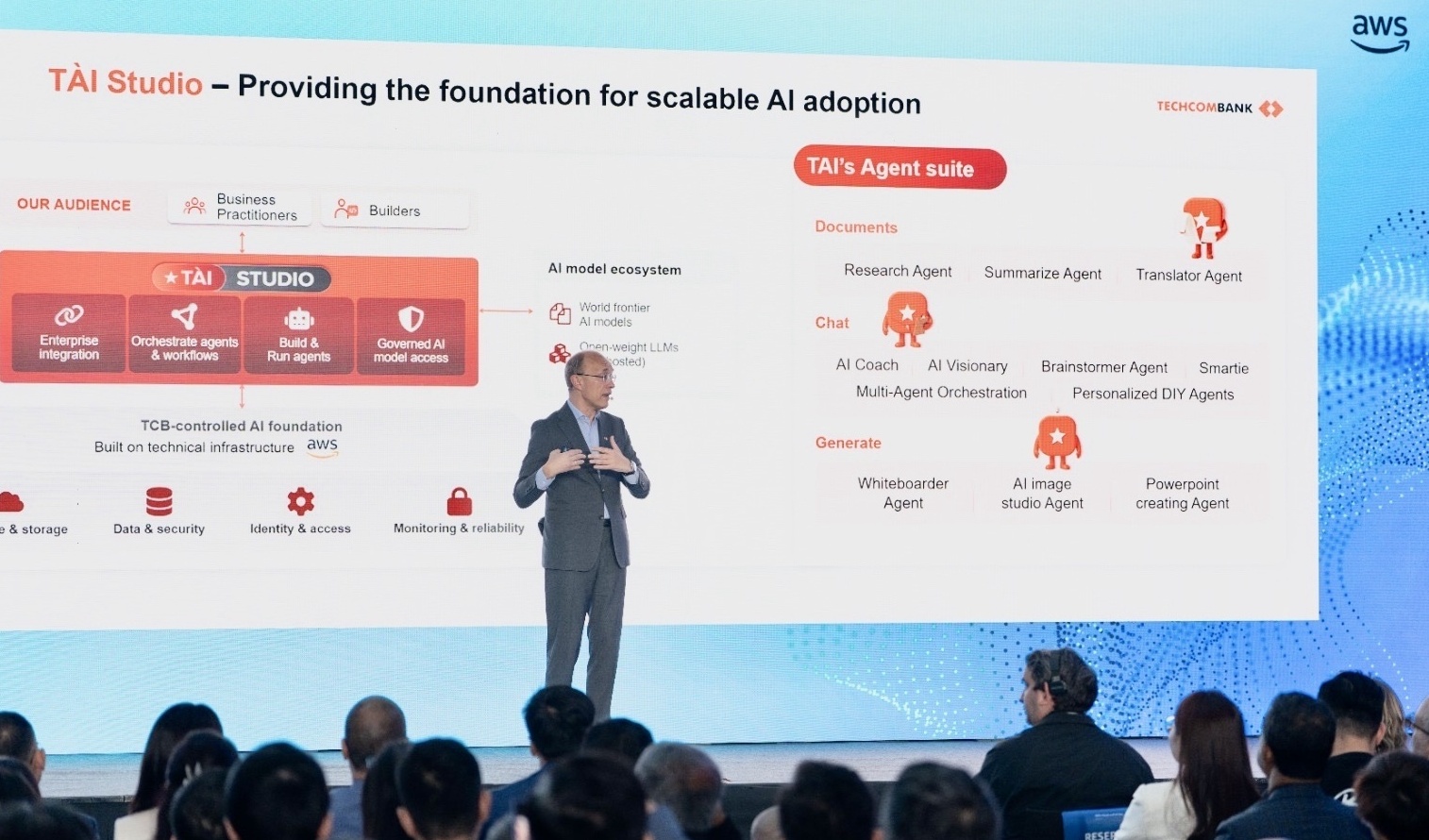
According to Jens Lottner, CEO of Techcombank, the more profound shift lies in the way AI is changing the very nature of banking operations.
“Within the next two to five years, the concept of a bank may look very different from today, as many tasks will no longer be performed entirely by humans but instead by task-specific AI systems,” he said.
Under its roadmap, Techcombank plans to complete an integrated technology platform in the third quarter of 2026, enabling companies across its ecosystem to share a common data and operational infrastructure.
The initiative is regarded as a critical foundation that will allow AI to move beyond isolated touchpoints and become a pervasive infrastructure layer across the entire ecosystem.
Today, virtually every bank is talking about AI, from chatbots, digital financial assistants and AI-powered call centres to AI-driven scoring models, fraud prevention systems and sales-support tools.
However, relatively few banks have disclosed how much AI has reduced operating costs, improved productivity or generated additional revenue.
In reality, deploying AI at scale requires banks to invest simultaneously in data, technology infrastructure, computing capacity, cybersecurity, model governance and workforce re-skilling. As a result, AI may increase costs in the short term before delivering clear and measurable benefits over the longer term.
According to Nguyen Ngoc Lan Anh, chief technology and operations officer of Standard Chartered Vietnam, AI is being adopted increasingly across the banking sector, but deploying it at scale to generate tangible value remains a significant challenge.
“The obstacle does not lie in the technology itself, but in execution discipline and governance,” she said.
According to Lan Anh, AI can only deliver meaningful results when it is guided by clear business objectives, embedded into day-to-day decision-making processes and supported by appropriate control mechanisms.
This underscores the fact that AI is not a ‘magic wand’ capable of instantly transforming a bank’s performance. If input data is inadequate, operational processes remain inefficient or governance capabilities are weak, AI may even amplify an organisation’s existing shortcomings.
In reality, as banks become increasingly dependent on data and AI models, the challenge is no longer simply about investing in technology.
It is rapidly becoming a race to build superior data capabilities, stronger governance frameworks and greater organisational agility. In that race, the advantage is likely to favour banks with large ecosystems, rich data resources and sufficient financial capacity to invest in technology infrastructure at scale.
 | Vietnamese enterprises race towards AI adoption Vietnamese enterprises are increasingly adopting AI to boost efficiency and competitiveness, but they remain mindful of the technology's potential risks. |
 | Vietnam ranks 38th in global AI adoption Vietnam is making steady progress in AI adoption, though it continues to trail more advanced economies in the global rankings. |
 | C.P. Vietnam enhances AI adoption in agri-food chains C.P. Vietnam will work with FPT to explore AI and digital solutions across its Feed-Farm-Food value chain, supporting smart farms, lower costs, and advanced food safety traceability. |
What the stars mean:
★ Poor ★ ★ Promising ★★★ Good ★★★★ Very good ★★★★★ Exceptional
 Tag:
Tag:
Related Contents








Latest News






More News
- From loans to women’s economic empowerment (October 06, 2026 | 17:58)
- VIB named Outstanding Retail Bank 2026, targets transaction banking (October 06, 2026 | 10:52)
- FTSE upgrade paves way for stronger stock market development (October 05, 2026 | 18:44)
- coLoan to empower women through inclusive green finance (October 05, 2026 | 18:42)
- Techcombank CEO: AI no longer a tool but a new operating foundation (October 05, 2026 | 18:11)
- Banks sustain profit growth as funding costs squeeze margins (October 02, 2026 | 22:22)
- Nam A Bank delivers strong breakthrough in 2026 (October 02, 2026 | 19:00)
- Policy credit builds sustainable livelihoods from the grassroots (September 29, 2026 | 07:48)
- VIB deploys Front Arena treasury and foreign exchange trading system on AWS (September 28, 2026 | 16:46)
- Nam A Bank receives $60 million loan from FMO (September 28, 2026 | 12:37)


Latest News







 Mobile Version