
Digital transformation shifts focus to added value

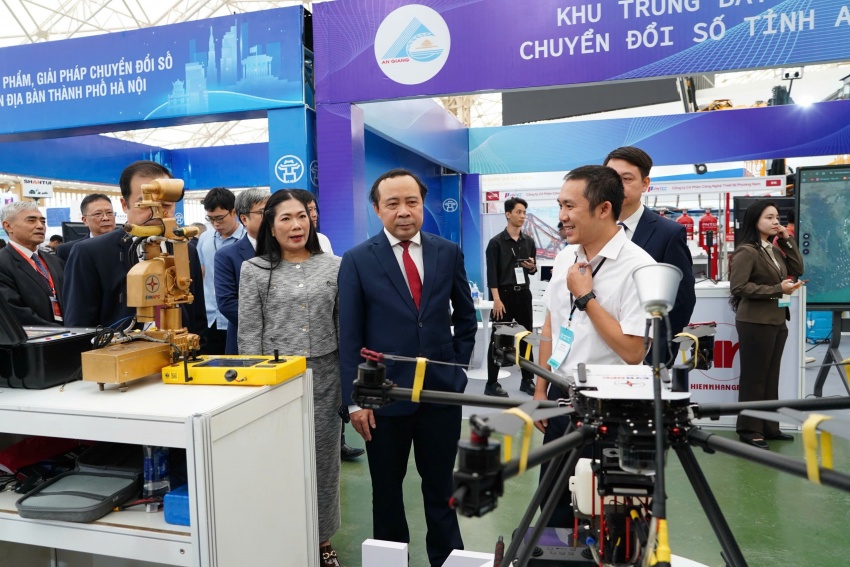
The Ministry of Science and Technology (MST) celebrated National Digital Transformation Day on September 9 under the theme "From Architecture, Platforms, and Data to Tangible Results and Enhanced National Governance Efficiency."
According to the ministry, national digital transformation has achieved results across various sectors, from refining institutional frameworks and developing digital infrastructure to deploying online public services and promoting technology applications in production and business.
 |
| Photo: MST |
Regarding digital government, public services are now being processed in the digital environment. The digital economy currently accounts for nearly 72 per cent of GDP, gradually becoming a key driver of economic growth. Meanwhile, the digital society continues to expand, with digital citizenship and digital technologies progressively reaching villages, hamlets, and households.
As of September 2026, the 5G network covered 91.99 per cent of the population, and fibre-optic cables had reached 100 per cent of communes and wards. The digital economy currently comprises 81,600 digital technology enterprises.
The year 2026 marks a significant milestone as the Law on Digital Transformation came into effect. A system of guiding regulations is being progressively finalised, creating a legal framework for the national digital transformation. The national digital architecture framework has been issued as a master blueprint, guiding the digital architecture of agencies across the entire system towards uniformity, connectivity, interoperability, and shared use.
These results demonstrate that the directives outlined in the Politburo’s Resolution No.57-NQ/TW, focusing on breakthroughs in science, technology, innovation, and national digital transformation, are gradually being translated into practice. Digital transformation is more than the application of technology to management and operational activities. It serves as a driving force for innovating national governance, boosting labour productivity, improving the quality of public services, and accelerating the development of the digital economy.
Speaking at the event, Minister of Science and Technology Vu Hai Quan said, "Digital transformation must therefore be measured by tangible results: higher productivity, lower costs, more convenient services, and significantly enhanced competitiveness. In recent times, platforms supporting national digital transformation have been further strengthened, while the legal framework, the national digital architecture, and shared digital platforms have been progressively refined."
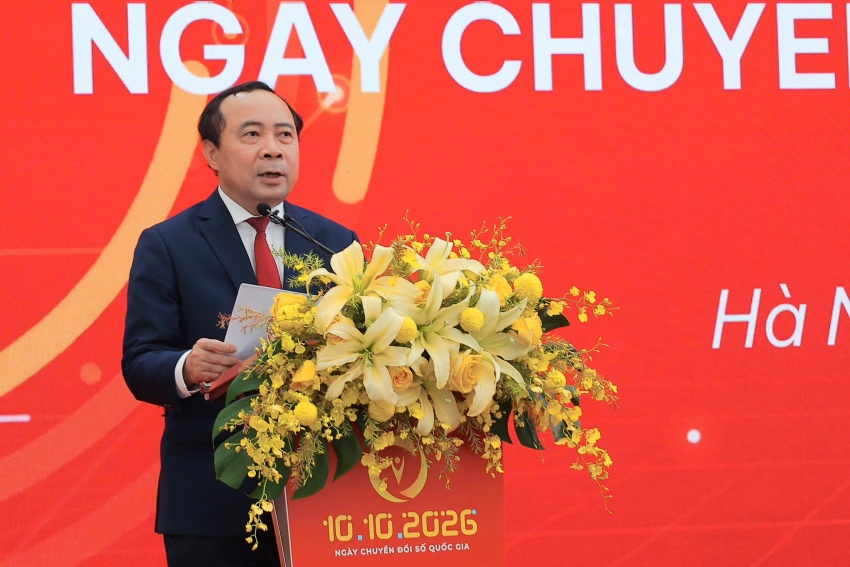 |
| Minister of Science and Technology Vu Hai Quan. Photo: MST |
He, however, said that five major challenges regarding digital transformation remain. The first challenge concerns data. He explained that while numerous regulations have been issued and significant results achieved in developing and building databases, the pace of data development in certain sectors, ministries, and agencies remains slow.
The second challenge concerns platforms. “While we already have numerous platforms, their development remains uneven and slow, and in some cases, they still follow the specific approaches of specific ministries and sectors,” he said.
The third challenge concerns infrastructure. This encompasses digital infrastructure, high-performance computing infrastructure to support AI and data research, and infrastructure in areas with poor signal coverage that remain unaddressed across the country.
The fourth challenge lies in the fact that while many enterprises wish to implement AI, the process is not moving as quickly as desired. Although AI is advancing rapidly, its practical application, particularly among small and medium-sized enterprises, has not yet progressed at the expected pace.
The fifth challenge, and the most critical one, concerns human resources. Currently, there is a shortage of personnel dedicated to digital transformation across ministries, sectors, and localities, particularly at the commune level. The country still lacks individuals with deep expertise in digital transformation who need to provide systematic training and capacity building to prepare a workforce capable of handling future tasks.
"From these five challenges, we identify a critical issue: the pace of fund disbursement for digital transformation remains very slow. Among the sectors characterised by sluggish disbursement, science, technology, and digital transformation is the slowest of all," the minister explained.
The MST shared that the future tasks will focus on refining institutional frameworks, enhancing effectiveness, and innovating management methods; developing digital infrastructure, digital platforms, and synchronised, shared data systems; and building a digital government centred on citizens and businesses.
What the stars mean:
★ Poor ★ ★ Promising ★★★ Good ★★★★ Very good ★★★★★ Exceptional
 Tag:
Tag:Themes: Digital Transformation
- Vietnam-Australia forum boosts AI and digital technology cooperation
- Digital transformation shifts focus to added value
- Amazon Kuiper licensed for private satellite telecommunications network in Vietnam
- AWS ramps up security tools amid growing AI risks
- Machine vision and 3D: How logistics and warehousing are catching up with manufacturing
Related Contents











Latest News
More News
- Vietnam-Australia forum boosts AI and digital technology cooperation (October 13, 2026 | 11:30)
- Melatec Dental Clinic - accompanying international clients on their smile care journey (October 09, 2026 | 17:25)
- 12 localities achieve double-digit growth in first nine months (October 09, 2026 | 17:00)
- CYE 2026 announces top 5 finalists (October 09, 2026 | 16:55)
- Robotics inspires Vietnam’s next generation of engineers (October 08, 2026 | 15:18)
- Vietnam among fastest AI adopters, Pearson-AWS study finds (October 07, 2026 | 12:26)
- Ho Chi Minh City Oncology Hospital signs MoU with Novartis Vietnam (October 07, 2026 | 10:36)
- Expanding education partnerships to drive mutual growth (October 06, 2026 | 16:04)
- VTG 2026 to showcase textile and footwear innovation in Ho Chi Minh City (October 06, 2026 | 16:00)
- Infineon boosts Vietnam footprint with Ho Chi Minh City office (October 06, 2026 | 10:02)







 Mobile Version