
Banks unlock foreign ownership headroom to attract strategic investors

Southern lender ACB said it it was ready to cooperate with partners capable of creating synergies in finance, technology, governance, and products, with a commitment to transparent development.
The bank has currently capped foreign ownership at the maximum permitted level of 30 per cent. Although it is among the banks without a strategic shareholder but with the highest foreign ownership ratio, ACB still has approximately 7 per cent of headroom available for strategic investors sharing its long-term vision.
Meanwhile, Eximbank has recently taken steps to broaden access for foreign investors.
 |
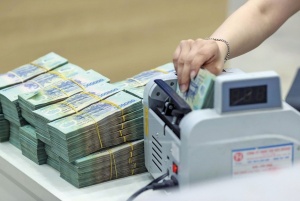
| Banks are stepping up efforts to entice foreign strategic investors. Photo: baodautu.vn |
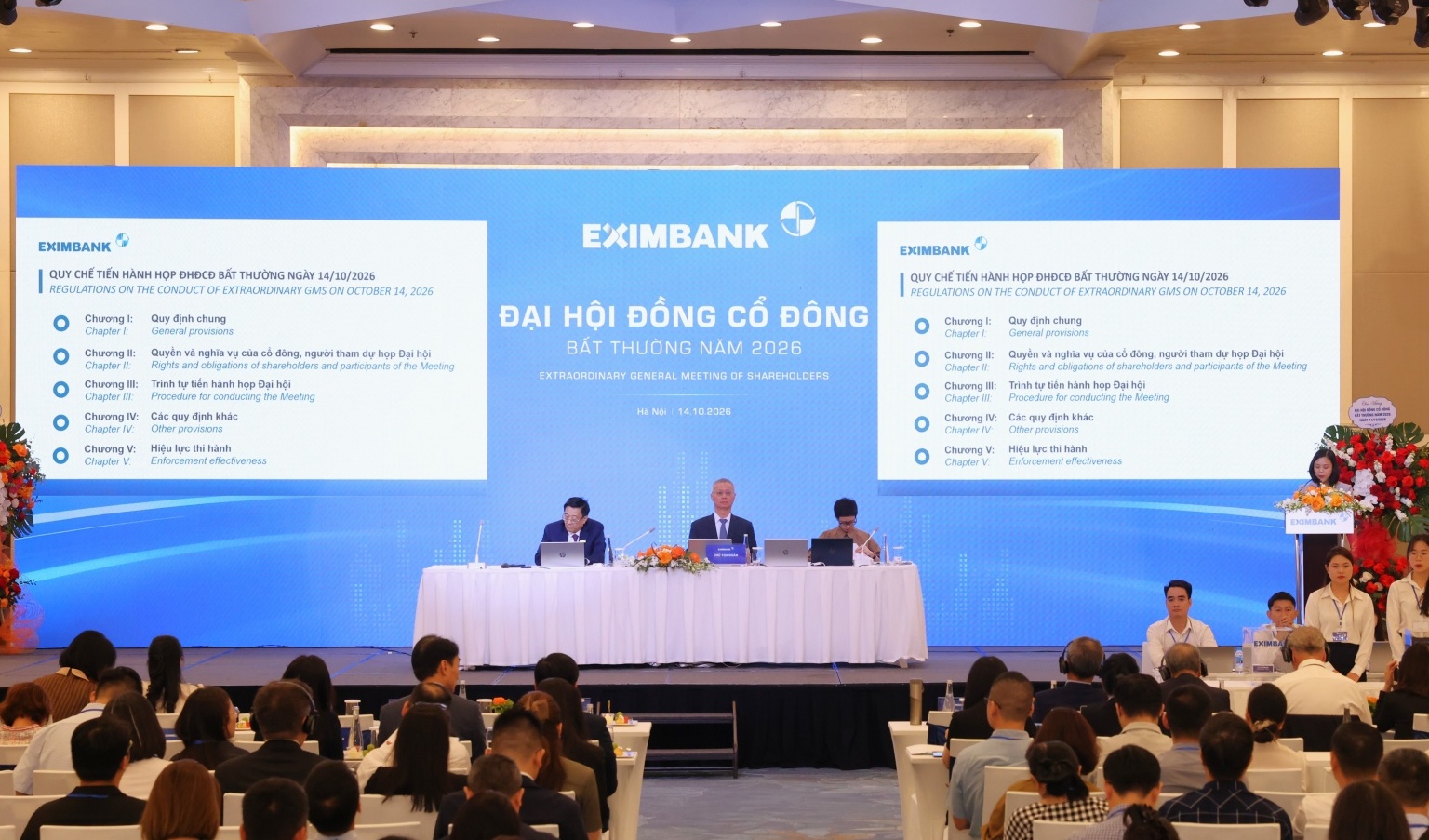
At its third extraordinary general meeting of shareholders in 2026, held on October 14, the bank approved the removal of its charter provision capping foreign ownership at 6 per cent of charter capital. Foreign ownership will henceforth be governed by Article 63 of the Law on Credit Institutions.
Eximbank’s chairman Nguyen Le Quoc Anh said the change would have a positive impact on the bank's valuation, enabling foreign investors to assign it a higher market value.
According to chairman Quoc Anh, the adjustment was made at the request of the State Bank of Vietnam and would not affect shareholders' rights.
Removing the bank's separate charter-based cap gives Eximbank greater room to engage foreign investors considering equity stakes.
However, easing ownership restrictions only creates the necessary legal conditions; the bank's ability to attract actual capital inflows will also depend on its valuation, profitability outlook, risk profile and the partnership opportunities it can offer.
Developments at VPBank, however, illustrate how differences between desired ownership stakes and price expectations can become an obstacle to a transaction.
In late September, Japan's Sumitomo Mitsui Financial Group was reportedly seeking to increase its stake in VPBank to 20 per cent, but the two sides had yet to agree on a price, renowned newswire Reuters reported.
In 2023, SMBC paid approximately $1.5 billion for a 15 per cent stake in VPBank, at a price around 40 per cent above the market level at the time of the transaction.
However, according to Reuters the Japanese side was unwilling to accept a similar premium this time and was holding internal discussions on the possibility of increasing its stake through on-market purchases rather than a private placement.
An additional investment in VPBank is reportedly expected to help SMBC expand its access to Vietnamese consumers and businesses.
Earlier, at its 2026 AGM held in April, VPBank approved a plan to privately place more than 624.3 million shares with a foreign investor.
The offering price will be determined through direct negotiations with the investor, but must not be lower than the latest book value per share, based on the consolidated financial statements for the quarter immediately preceding the offering. The issuance is expected to take place in the third or fourth quarter of 2026.
Beyond adjusting ownership limits and preparing share issuance plans, many banks are also actively seeking foreign partners with strong financial resources and international experience.
According to Reuters, France's BNP Paribas and South Korea's KB Kookmin Bank are holding separate negotiations to acquire at least 15 per cent of Techcombank as strategic investors.
The deal is reportedly worth approximately $2 billion, although the parties involved have yet to comment on the information.
Previously, Techcombank CEO Jens Lottner said the bank was considering selling up to 15 per cent of its shares to a suitable long-term strategic investor, while also seeking capable partners, particularly in technology.
Taking a different approach, HDBank announced its strategic direction of strengthening international cooperation at its 2026 AGM in April, and recently unveiled a plan to privately place up to 700 million shares with domestic and foreign professional securities investors.
Opportunities to entice foreign capital at some banks have also been expanded by a mechanism allowing the foreign ownership ceiling to rise to 49 per cent for institutions participating in the restructuring of weak banks. The institutions include HDBank, MB, and VPBank.
Alongside banks actively seeking strategic partners, several other lenders also have plans to increase capital or retain significant headroom to attract foreign investors. However, not every capital-raising plan necessarily entails the entry of a new strategic shareholder.
For instance, OCB plans to issue 399.46 million shares, equivalent to 15 per cent of its charter capital, to existing shareholders through a bonus share issuance funded by its equity.
Upon completion, the bank's charter capital will increase from $1.065 billion to $1.225 billion. Following the issuance, Aozora Bank, Ltd. is expected to remain OCB's sole major shareholder, with a 15 per cent stake, unchanged from previous years.
For VIB, after Commonwealth Bank of Australia (CBA) completed its divestment of its remaining stake in March 2025 in line with its roadmap, the bank's management said it had engaged with several banks and investment funds to seek suitable partners.
More broadly, plans to ease foreign ownership limits, issue shares, and seek strategic partners are unfolding amid growing market interest in M&A in the banking sector.
Alongside changes to the regulatory framework and capital-raising pressure arising from Basel III standards, the need to strengthen financial capacity is providing further impetus for banks to seek external resources.
 | Nam A Bank named in top 10 largest listed banks in Southeast Asia Nam A Bank has been recognised for the first time in the list of the 50 largest publicly listed banks in Southeast Asia based on financial performance, ranking 10th across the region. The ranking by S&P Global Market Intelligence is based on fiscal year 2025. |
 | Banks poised for Q3 profit growth amid margin pressure Many banks are forecast to continue growing profits in the third quarter of 2026, supported by credit expansion. However, rising funding costs and narrowing net interest margins are putting pressure on the earnings outlook for some lenders. |
 | Banks face three-way test as AI reshapes digital finance With Vietnam’s banking system processing around 100 million payment transactions a day, the next phase of digital transformation hinges on whether banks can turn AI and data into tangible gains while strengthening customer trust and cyber resilience. |
What the stars mean:
★ Poor ★ ★ Promising ★★★ Good ★★★★ Very good ★★★★★ Exceptional
 Tag:
Related Contents







More News
- VBSP loans help Bat Trang farmers expand high-value agriculture (November 02, 2026 | 13:48)
- SeABank unveils Sustainable Finance Framework (October 30, 2026 | 18:30)
- Implementation key to Vietnam’s post-upgrade capital inflows (October 30, 2026 | 18:26)
- Experts outline ways to sustain interest rate cuts (October 29, 2026 | 17:10)
- VIB reports nearly $294 million pre-tax profit in first nine months (October 28, 2026 | 14:09)
- Vietnam's stock market upgrade puts focus on corporate governance (October 28, 2026 | 12:37)
- Transparency and disclosure key to sustaining Vietnam's market upgrade (October 28, 2026 | 12:21)
- HCMC financial centre to issue investment fund regulations in November (October 27, 2026 | 17:40)
- AI helps pave way for autonomous banking (October 27, 2026 | 15:53)
- HSBC arranges EVNNPC's debut $105 million green loan (October 27, 2026 | 12:59)








 Mobile Version