
Banks scale back bond exposure amid rising real estate lending

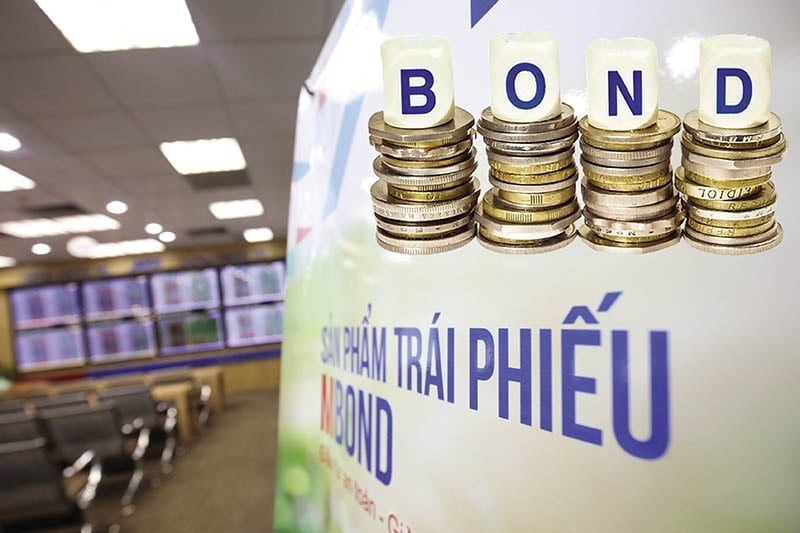
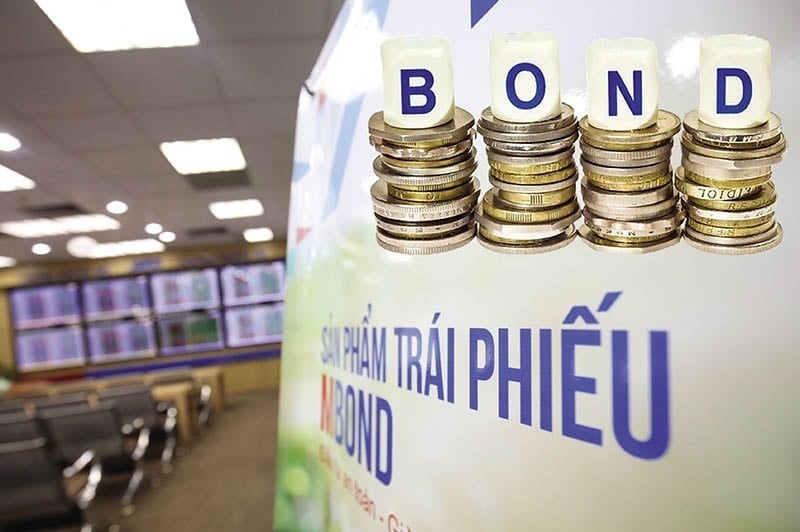
According to Techcom Securities (TCBS) Research's latest banking sector report released on November 16, the corporate bond holdings of 26 listed banks stood at $9.6 billion at the end of the third quarter, down 6.2 per cent from Q2, but up 30.1 per cent from the outset of the year. Corporate bonds' share of total credit outstanding also narrowed from 1.7 per cent to 1.5 per cent during the quarter.
Notably, the decline in corporate bond holdings during Q3 was mainly attributable to several banks with large portfolios. Techcombank (TCB) reduced its corporate bond holdings by $364 million, while BIDV cut its holdings by $200 million.
The two banks accounted for most of the $636 million decline in the overall portfolio during the quarter. In contrast, SHB increased its corporate bond holdings by $144 million, while SeABank added $132 million.
 |
| Photo: baodautu.vn |
TCBS said corporate bond holdings at state-owned banks accounted for less than 0.5 per cent of their total credit outstanding. Meanwhile, around 75 per cent of the combined corporate bond holdings of the 26 listed banks were concentrated in the five banks with the largest portfolios.
According to the Vietnam Bond Market Association, the total value of primary corporate bond issuances exceeded $17.1 billion in the first nine months of 2026, with approximately half of the bonds issued by banks themselves.
TCBS believes corporate bonds will remain a relatively minor supplementary channel to bank lending in Q4. However, issuer quality remains a factor requiring close monitoring, particularly amid the State Bank of Vietnam's Official Dispatch No.9608/NHNN-CSTT, which calls on banks to closely monitor corporate bond issuance activities.
One notable development was Vietcombank's proactive provisioning in Q3, bringing its provision coverage to 97.7 per cent of its unlisted corporate bond portfolio, valued at approximately $260 million.
With corporate bonds accounting for just 1.5 per cent of total credit outstanding, their impact on listed banks remains limited. Nevertheless, around $2.8 billion worth of corporate bonds across the market are due to mature in Q4, making this a key development to watch.
Meanwhile, lending growth in Q3 continued to be driven primarily by corporate customers. Demand for corporate credit was underpinned by large enterprises and major infrastructure projects, while individual lending slowed amid high interest rates and a subdued housing market.
Most banks recorded a shift in their Q3 lending structure towards corporate borrowers, including both state-owned banks and those traditionally focused on retail banking. TCBS considers corporate lending likely to remain the main pillar of credit growth in Q4, although it will come with lower yields.
By economic sector, trade and services continued to account for the largest share of lending, while real estate and construction recorded the fastest growth in the first nine months of the year.
Under the revised industry classification, trade and services accounted for 35.8 per cent of the combined outstanding loans of the 26 listed banks, followed by real estate and construction at 15.9 per cent, and industry at 14.8 per cent.
Among the 16 banks with Q3 data, lending to real estate and construction rose 22.7 per cent from the beginning of the year, around 1.5 times the 14.7 per cent growth in total outstanding loans.
Trade and services lending increased 17.2 per cent, accounting for nearly two-fifths of the total additional lending. Industry grew 14.4 per cent, transportation and telecommunications 10.8 per cent, while agriculture and forestry remained almost flat, edging up just 1 per cent.
System-wide data also pointed to a similar trend in construction lending. At individual banks, construction accounted for 91.8 per cent of LPBank's Q3 lending increase, while service-related sectors contributed 72 per cent of BIDV's increase from the beginning of the year.
Real estate business lending has emerged as a major growth driver, although it remains concentrated in a handful of banks. Pure real estate business loans accounted for 8.7 per cent of the combined outstanding loans of the 26 listed banks and increased 21.3 per cent from the outset of the year among the 16 banks with Q3 data.
The four banks with the highest exposure – SHB, BVBank, VPBank and TCB – held approximately $29.7 billion in such loans, equivalent to 55 per cent of the disclosed outstanding balance for real estate business lending.
TCBS expects real estate business lending to continue growing faster than total outstanding loans in Q4. Against the backdrop of rising housing inventories and Official Dispatch No.9608's requirement for banks to reassess collateral values in line with market prices, the quality of newly extended loans will be an important factor to monitor.
 | Reshaping capital flows to unlock Vietnam's next growth engine As Vietnam pursues double-digit economic growth, restructuring capital channels beyond bank credit, spanning the equity market, corporate bonds and institutional investors, will be essential to building a more balanced and resilient financial system. |
 | Overhaul aims to secure Vietnam’s bond market As Vietnam’s corporate bond market braces for over $5.26 billion in maturing debt in the second half of 2025, more than half of which stems from the real estate sector, policymakers are accelerating legal reforms to fortify market stability and investor confidence. |
 | Corporate bonds take on sharper focus Vietnam’s growing demand for long-term capital is bringing renewed attention to the role of the corporate bond market, with policymakers and market participants seeking to rebalance the country’s financial structure. |
What the stars mean:
★ Poor ★ ★ Promising ★★★ Good ★★★★ Very good ★★★★★ Exceptional
 Tag:
Related Contents









Latest News
More News
- Bank of China proposes Panda and Dim Sum bond options for Vietnam's capital mobilisation (November 20, 2026 | 12:06)
- Vietnam is a key market for Citi's social finance growth (November 20, 2026 | 10:31)
- OmniHub: Technology delivers speed, but financial experts steer model (November 19, 2026 | 13:00)
- VIB seizes opportunities to optimise liquidity through the SBV’s FX swap facility (November 19, 2026 | 09:54)
- Samsung and ShopeePay deepen payment partnership in Vietnam (November 16, 2026 | 17:44)
- Which financial plan should you consider? Key criteria to guide your decision (November 16, 2026 | 15:33)
- MB launches partnership to attract international cultural and entertainment events (November 16, 2026 | 12:00)
- Vietnam approves securities regulatory sandbox from March 2027 (November 15, 2026 | 20:43)
- Vietnam, Japan ministers of finance chart next phase of cooperation (November 12, 2026 | 11:07)
- Strive Women unlocks $1 billion in credit for small businesses (November 11, 2026 | 14:28)



Latest News





 Mobile Version