
Banks face growing bad debt risks amid rising funding costs

According to data compiled by WiGroup from banks’ second-quarter 2026 financial statements, as of the end of June, only a handful of banks had a non-performing loan (NPL) coverage ratio above 100 per cent.
State major Vietcombank continued to lead the entire banking system with a coverage ratio of 279 per cent, followed by Agribank at 150 per cent. Banks with NPL coverage ratios above 100 per cent also encompassed VietinBank (134 per cent), Techcombank (125.5 per cent), and ACB (105 per cent).
Some banks that had NPL coverage ratios above 100 per cent at the end of 2025 have had to accept a thinner provisioning buffer as NPL growth outpaced the growth in their risk provisioning.
 |
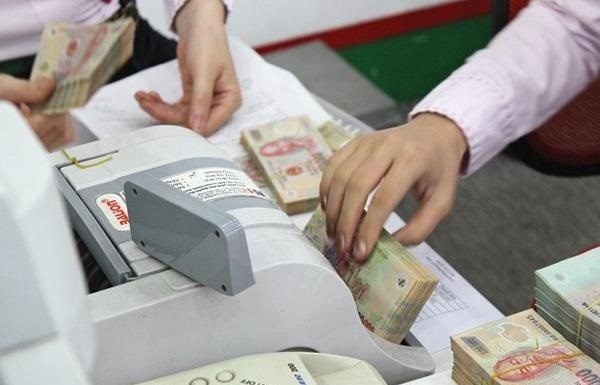
| Photo: baodautu.vn |
Specifically, BIDV’s NPL coverage ratio stood at 109 per cent at the end of 2025 but had fallen to just 76 per cent as of June 30.
ABBank’s NPL coverage ratio also declined to 87 per cent from 120 per cent at the end of last year. This was because BIDV’s NPLs increased by 31 per cent, while its risk provisions rose by only 6 per cent. Similarly, ABBank’s NPLs surged by 62 per cent, while its risk provisions increased by just 17 per cent.
Apart from the banks mentioned above, the average NPL coverage ratio was only around 50-60 per cent. Except for Vietcombank, which recorded a sharp increase in its NPL coverage ratio, most banks either saw the ratio decline or remain broadly flat.
According to the Q2/2026 business performance update by Rong Viet Securities Corporation, on-balance-sheet NPLs at listed banks, excluding Agribank, reached approximately $12.4 billion at the end of Q2. The NPL ratio edged up from 1.99 per cent at the end of Q1 to 2.01 per cent.
Net NPL formation alone reached nearly $2 billion in Q2, while credit risk provisioning expenses at banks amounted to just over $1.72 billion.
The total volume of newly formed NPLs exceeded new credit risk provisioning expenses, meaning that the system-wide NPL coverage ratio would continue to decline in Q2 from more than 80 per cent at the end of Q1.
Of particular concern, the NPL ratio is at risk of rising sharply in the second half of the year, meaning that NPL coverage ratios will continue to be eroded unless banks step up risk provisioning accordingly.
As of the end of Q2/2026, outstanding special-mention loans, or Group 2 loans, had risen to more than $8.48 billion. Net formation of Group 2 loans alone reached nearly $3.24 billion during the quarter, the highest level since Q1/2023.
This pressure has emerged as recoveries from loans previously written off as risk losses have begun to slow, amid signs of cooling liquidity in the real estate market – one of the key channels for the disposal of collateral – as interest rates remain high.
Therefore, although an increase in Group 2 loans does not necessarily mean that NPLs will rise, the risk is very high given current market conditions.
If NPLs continue to rise in the second half of the year, banks will face significant pressure to increase risk provisioning.
In particular, banks with low NPL coverage ratios will have to grapple with balancing their profit targets against the need to strengthen their provisioning buffers.
According to analysts, the sharp increase in NPLs and special-mention loans in Q2/2026 resulted from a rapid rise in lending rates, which in turn affected customers’ debt payment capacity, particularly in the retail segment.
Nevertheless, cutting lending rates is not easy when credit growth is running ahead of deposit growth and banks’ funding costs are becoming increasingly expensive.
VPBank’s separate Q1/2026 financial statements show that the bank’s credit growth reached nearly 25 per cent in the first half of this year, while deposits increased by only 15.8 per cent.
Its current account savings account (CASA) ratio – the proportion of non-term deposits in total customer deposits – fell to just 12.5 per cent from 14.6 per cent at the end of last year.
Similarly, at LPBank, credit had grown by 9.8 per cent as of the end of June 2026, while customer deposits increased by only 4.7 per cent. Its CASA ratio also declined from 8.45 per cent at the end of last year to 6.3 per cent as of June 30.
At ABBank, loan balances increased by more than 15 per cent in Q2/2026 alone compared with Q1, while deposits actually fell by 3 per cent, leaving the bank heavily dependent on the interbank market for funding.
Looking beyond VPBank, LPBank and ABBank, the financial statements of 28 commercial banks show that nearly all banks recorded slower deposit growth and a sharp decline in CASA ratios.
The proportion of short-term deposits, with maturities of one to six months, also fell sharply, while long-term deposits increased. The shift of funds from short to longer maturities in pursuit of higher interest rates is leaving banks increasingly short of low-cost funding.
Alongside higher deposit rates, the shift in the maturity structure of deposits is also pushing up lending rates, negatively affecting NPLs. Therefore, reducing lending rates is currently the most urgent solution to ease pressure from bad debts.
At the conclusion of the government’s regular July meeting on August 3, Prime Minister Le Minh Hung asked the State Bank of Vietnam (SBV) to focus on measures to stabilise interest rates, ensure liquidity, strive to lower lending rates, reduce costs for the economy, and stabilise the monetary and foreign exchange markets.
The PM also instructed the SBV to strictly deal with unhealthy interest rate competition; manage credit growth in line with macroeconomic developments and the economy’s absorption capacity; facilitate access to capital for key national projects; tighten credit controls over potentially risky sectors; step up the resolution of bad debts; and accelerate the restructuring of credit institutions.
 | Banks see NPL relief as credit rebounds and Resolution 42 takes effect The banking sector is seeing signs of relief in non-performing loans (NPLs), with expectations of further improvement by year-end thanks to stronger credit growth and the formal legalisation of Resolution 42 to aid debt recovery. |
 | Banks boost provisions as bad debt eases towards year-end The banking system is reinforcing risk buffers as bad debt trends downwards and credit accelerates, signalling a more stable phase marked by stronger asset quality and improving profitability. |
 | Banks step up debt recovery to support earnings Banks are accelerating debt recovery and collateral liquidation efforts, helping stabilise non-performing loans and support profit growth amid narrowing net interest margins and improving credit conditions. |
 | Banks strengthen provisions as bad debt risks re-emerge Vietnamese banks are strengthening risk management and provisioning buffers as rising bad debt signals prompt the sector to focus more closely on asset quality and long-term financial resilience. |
What the stars mean:
★ Poor ★ ★ Promising ★★★ Good ★★★★ Very good ★★★★★ Exceptional
 Tag:
Tag:
Related Contents










Latest News






More News
- From loans to women’s economic empowerment (October 06, 2026 | 17:58)
- VIB named Outstanding Retail Bank 2026, targets transaction banking (October 06, 2026 | 10:52)
- FTSE upgrade paves way for stronger stock market development (October 05, 2026 | 18:44)
- coLoan to empower women through inclusive green finance (October 05, 2026 | 18:42)
- Techcombank CEO: AI no longer a tool but a new operating foundation (October 05, 2026 | 18:11)
- Banks sustain profit growth as funding costs squeeze margins (October 02, 2026 | 22:22)
- Nam A Bank delivers strong breakthrough in 2026 (October 02, 2026 | 19:00)
- Policy credit builds sustainable livelihoods from the grassroots (September 29, 2026 | 07:48)
- VIB deploys Front Arena treasury and foreign exchange trading system on AWS (September 28, 2026 | 16:46)
- Nam A Bank receives $60 million loan from FMO (September 28, 2026 | 12:37)


Latest News







 Mobile Version