

IMF supports Vietnam's growth outlook after review

 |
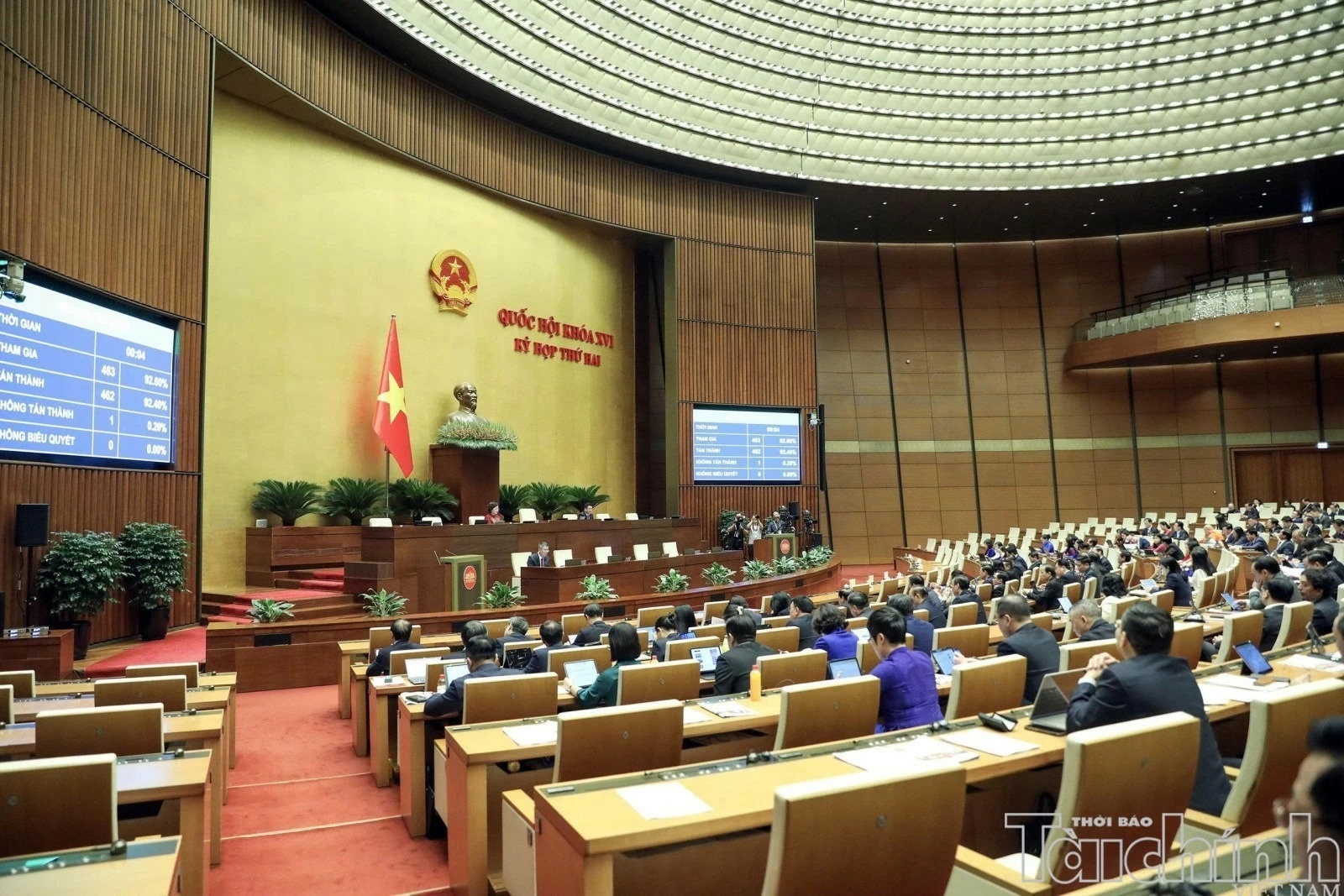
| Photo: Le Toan |
The team, led by Martin Sommer, held discussions in Hanoi and Ho Chi Minh City from November 3 to 13 and issued a statement at the end of the mission. Vietnam's real GDP grew 9 per cent on-year in the first three quarters of 2026. Inflation eased to 5.1 per cent in October, though the January–October average remained slightly above the authorities' 4.5 per cent annual target.
The current account balance moved into deficit amid higher oil and semiconductor prices, although the exchange rate and foreign exchange reserves have remained broadly stable, supported by robust foreign direct investment inflows and higher interest rates. Bank funding pressures amid rapid credit growth have put upward pressure on interest rates, prompting the State Bank of Vietnam (SBV) to provide liquidity support through multiple instruments.
Growth is projected at 9.2 per cent in 2026 and 8.9 per cent in 2027, with activity exceeding its estimated potential level. Inflation is forecast to remain above the authorities’ target in both years. Risks are tilted towards weaker growth and higher inflation, including from prolonged tensions in the Middle East, a potential reassessment of AI prospects, trade policy uncertainty, public investment outpacing absorptive capacity, rapid credit growth, and extreme weather events.
A broadly neutral fiscal stance in 2027 would support macro-financial stability. A well-calibrated rollout of the planned public investment and the prioritisation of high-return projects would reduce overheating risks, while ensuring investment efficiency. Fiscal policy will need to be nimble in the period ahead and spending should be scaled back if overheating risks materialise.
With global oil prices easing, the broad energy price support should be phased out as planned, with targeted transfers protecting vulnerable groups. Stronger public investment management, greater transparency, and close oversight of risks from public-private partnerships and state-owned enterprises would help safeguard public finances.
According to the IMF, monetary policy should prioritise price stability. The SBV should continue to aim for year-end credit growth of around 15 per cent. Monetary policy tightening would be warranted if underlying inflation intensifies. Modernising the policy framework, reducing reliance on administrative measures, allowing greater exchange rate flexibility, and gradually bolstering foreign exchange reserves over time would help strengthen resilience.
It is important to press ahead with plans to strengthen banks’ capital and liquidity buffers. Faster transition towards the recently introduced Basel III standards should be encouraged. Lending should be aligned with banks’ capital and stable funding capacity, and further regulatory easing should be avoided. Careful monitoring and management of asset quality, sectoral exposures, and concentration risks would be helpful. Over time, transition to a modern macroprudential framework for managing risks would help support financial stability.
Recent institutional restructuring, administrative streamlining, and social insurance reforms provide a foundation for further progress. Priorities include raising productivity by further improving the business environment, reducing skill mismatches, levelling the playing field among businesses, and facilitating stronger linkages between domestic and foreign-invested enterprises.
Deeper domestic capital markets and more diversified trade and investment would strengthen resilience, while broader social protection and reduced labour market informality would support household consumption. Local authorities’ plan to establish a comprehensive multi-tier social security system by 2030 will be helpful in this regard. Further strengthening economic and financial statistics is an urgent priority for effective policymaking and risk management.
 | IMF mission in Hanoi for policy talks with MoF Deputy Minister of Finance Tran Quoc Phuong has met with an International Monetary Fund mission to review macroeconomic developments and discuss fiscal policy directions. |
 | Vietnam seeks closer policy cooperation with IMF On July 28, Minister of Finance Ngo Van Tuan met with the IMF’s outgoing resident representative for Vietnam, Cambodia, and Laos, Jochen Schmittmann, and his successor, Fazurin Jamaludin, who will take office on August 23. |
 | Tax administration for large enterprises requires different approach Compliance risks for large enterprises go beyond tax registration, filing and payment, with greater challenges arising from tax liability determination, related-party transactions and transfer pricing. Improving tax administration for large taxpayers is an urgent priority that requires a tailored approach. |
What the stars mean:
★ Poor ★ ★ Promising ★★★ Good ★★★★ Very good ★★★★★ Exceptional
 Tag:
Related Contents




Latest News
More News
- TCP Group champions youth ties as Vietnam–Thailand relations turn 50 (November 12, 2026 | 15:39)
- Tan Hiep Phat strengthens commitment to science and technology talent (November 11, 2026 | 17:04)
- Petrolimex deepens strategic cooperation with Japan’s ENEOS (November 11, 2026 | 15:05)
- UK trade preferences come with strict requirements (November 11, 2026 | 14:42)
- Nestlé Vietnam won big at MMA SMARTIES Vietnam 2026 with 17 awards (November 11, 2026 | 14:36)
- Stavian and Midas Capital team up on digital infrastructure (November 10, 2026 | 18:48)
- Vietnam Airlines and ANA deepen decade-long ties with joint venture (November 10, 2026 | 11:17)
- Vietstock 2026 solidifies position as premier hub for innovation and technology in livestock industry (November 10, 2026 | 10:00)
- PAN Group expands agricultural cooperation with Japan, from research to market development (November 10, 2026 | 09:23)
- GC Food rectifies Financial Statement Information [3nd Repost] (November 08, 2026 | 23:00)








 Mobile Version