
Banks roll out lower-cost credit to boost businesses and priority sectors

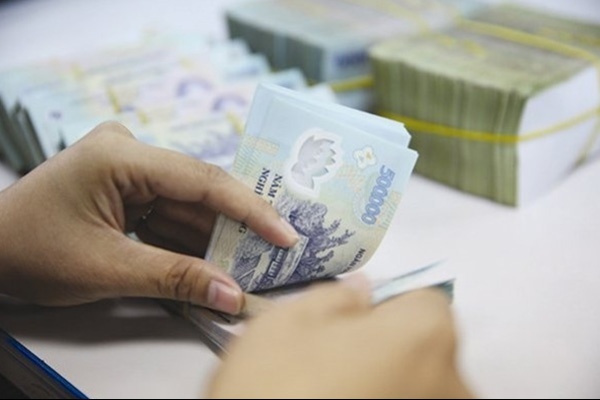
On August 12, a number of banks cut lending rates by 0.5-1 per cent per year for both individual and corporate customers. Specifically, at Nam A Bank, lending rates for individual customers taking out loans for production, business and agricultural activities were reduced by 0.5-0.7 per cent, per year.
For home loans and consumer loans for personal needs, customers are offered rate reductions of 0.1-0.3 per cent, per year.
For corporate customers, Nam A Bank has cut its maximum listed lending rates by 0.5 per cent, per year.
 |
The bank is also stepping up its support for the business community through dedicated preferential programmes targeting key sectors of the economy.
The total credit limit under these programmes amounts to $1 billion, with lending rates reduced by 1-1.8 per cent, per year from the listed rates.
The largest programme, worth $600 million, is targeted at the agriculture, forestry and fisheries sectors. A $160 million credit package is available for infrastructure and digital technology, while a $144 million package supports seafood and fruit exporters.
In addition, Nam A Bank has allocated $56 million to businesses expanding production and operations in industrial parks and $40 million to support small and medium-sized enterprises (SMEs/MSMEs).
To facilitate lower lending rates, Nam A Bank has also cut deposit rates by up to 0.3 per cent per year.
Meanwhile, BVBank has launched a preferential lending package with a total limit of $100 million to support SMEs, offering rates at least 1 per cent, per year below the prevailing market level.
After the reduction, lending rates start from 9.7 per cent, per year, providing timely support for businesses and household businesses seeking to optimise operating costs.
Alongside its preferential interest-rate policy, BVBank continues to proactively streamline its credit assessment process and reduce administrative procedures to accelerate disbursements.
Similarly, NCB has cut lending rates by 0.5 per cent, per year for all individual and corporate customers.
For individual customers, preferential rates now start from 8.49 per cent, per year and apply to various borrowing needs, including collateral-backed loans, production and business activities, purchases of individual houses and secured consumer loans.
For SMEs, NCB has reduced lending rates by 0.5 per cent, per year across all loan tenors, with short-term rates starting from 10 per cent, per year during the first three months.
For large enterprises operating under supply chains and ecosystems, NCB has also cut lending rates by 0.5 per cent, per year, with rates starting from 10.45 per cent, per year.
Among state-owned banks, Agribank has announced a preferential credit programme worth $2.8 billion, to be implemented from August 2026 through 2028.
Preferential lending rates will be 1-2 per cent, per year below the average lending rate for loans of the same tenor. The programme applies to SMEs, businesses and individual business households operating in priority sectors and areas identified as key drivers of economic growth.
BIDV has announced a $2 billion low-interest credit package, available from August 2026 through the end of December 2028 or until the package has been fully disbursed.
Businesses borrowing for production and business activities will receive lending rates at least 1 per cent, per year below the bank's prevailing average lending rate for loans of the same tenor.
VietinBank has also announced a $2 billion credit programme running through the end of 2028, with preferential lending rates 1 per cent, per year below its regular lending rates for loans of the same tenor. For medium- and long-term loans, the preferential rates may apply for up to 12 months.
 | Carbon credit push gathers pace among Vietnamese firms Vietnamese businesses are accelerating efforts to develop carbon credits for international trading as the country's regulatory framework for cross-border transactions continues to take shape. |
 | BIDV, VietinBank sign $281-million credit deal for O Mon IV power plant BIDV, VietinBank, and Petrovietnam have signed a credit agreement to finance the O Mon IV Thermal Power Plant. |
 | Lenders turn to high-yield certificates of deposit to shore up liquidity Banks are offering certificates of deposit with yields of up to 9 per cent as funding competition intensifies, with robust credit growth outpacing deposit mobilisation and keeping liquidity pressures elevated. |
 | Banks face growing bad debt risks amid rising funding costs Banks are facing rising bad debt risks as non-performing and special-mention loans increase, while thinner provisioning buffers and higher funding costs threaten to put pressure on asset quality. |
What the stars mean:
★ Poor ★ ★ Promising ★★★ Good ★★★★ Very good ★★★★★ Exceptional
 Tag:
Tag:
Related Contents











Latest News




More News
- Policy loans open new paths for people rebuilding their lives (October 07, 2026 | 17:24)
- FTSE upgrade opens door to $2 billion in passive fund inflows (October 07, 2026 | 12:12)
- VIB raises $1 billion from international markets in record funding plan (October 07, 2026 | 10:28)
- From loans to women’s economic empowerment (October 06, 2026 | 17:58)
- VIB named Outstanding Retail Bank 2026, targets transaction banking (October 06, 2026 | 10:52)
- FTSE upgrade paves way for stronger stock market development (October 05, 2026 | 18:44)
- coLoan to empower women through inclusive green finance (October 05, 2026 | 18:42)
- Techcombank CEO: AI no longer a tool but a new operating foundation (October 05, 2026 | 18:11)
- Banks sustain profit growth as funding costs squeeze margins (October 02, 2026 | 22:22)
- Nam A Bank delivers strong breakthrough in 2026 (October 02, 2026 | 19:00)








 Mobile Version