

AstraZeneca chief on Vietnam's healthcare financing shift

Why are technology transfer, digital transformation, early cancer detection, and healthcare financing emerging as priority areas for collaboration?
 |
These priorities reflect where Vietnam itself is heading. The Politburo's Resolution 57 and Resolution 72 have made it clear: Vietnam is building a healthcare system powered by science, technology, and innovation – one that prioritises prevention, early detection and timely intervention, while strengthening domestic capability in support of national healthcare priorities and foster partnerships that enable Vietnam to participate more deeply in global value chains.
That is precisely the direction we have been investing in, and it gives us confidence that our long-term commitment here is well-placed.
Over the years, we have partnered to deliver more than 1.2 million AI-assisted screenings across the country, showing that population-scale prevention is both feasible and effective. However, its true value depends on what follows. Patients identified at risk must be connected to timely confirmatory diagnosis and treatment aligned with clinical guidelines. Our focus therefore is not only on detecting disease early, but on strengthening coordinated, guideline-directed care so patients receive the right treatment at the right time, regardless of where they enter the system.
Digital transformation is what connects these efforts. AI, electronic medical records, and standardised clinical pathways allow a large and diverse health system to function as one – improving decision-making, reducing variation, and enabling continuity of care from primary facilities to tertiary hospitals. This is the kind of structural streamlining that both Resolutions call for.
Technology transfer addresses a more structural dimension. Vietnam has set a clear ambition to enhance national drug supply security and research capability. We are actively contributing to that through our manufacturing partnerships and research collaborations because we believe that local capability and long-term access must go hand in hand.
Ultimately, the true measure of any health system transformation is whether patients can actually access it. That is the element that holds all of this together: sustainable financing. It ensures that innovation reaches people equitably, not just those who can afford it. Healthcare financing is what translates national ambition into real access, where policy meets patient outcomes.
So when we speak about these priorities, it is not about separate initiatives. It is about a coherent transformation agenda that Vietnam has clearly defined, and one that we have been committed to supporting for many years. The alignment is not coincidental. It reflects a shared conviction that a more proactive, integrated, and innovation-driven healthcare system is both achievable and necessary.
Which healthcare financing mechanisms could help patients gain faster and more effective access to innovative treatments in Vietnam?
From AstraZeneca’s perspective, expanding patient access to innovative treatments requires a reconsideration of how healthcare is financed, particularly in a system where national health insurance remains the primary source of funding.
While this foundation has enabled significant progress, there is growing recognition that diversifying healthcare financing sources will be essential to meeting future needs. We fully support the policy direction of the government and the Ministry of Health on diversifying health insurance benefit packages and strengthening both private health insurance and supplementary health insurance.
In addition, several new healthcare financing mechanisms have already been implemented in many countries, and we believe some of these may also be well suited to Vietnam’s current context. AstraZeneca is currently working with partners to explore Innovative Value Solutions, focusing on the development of more flexible and outcome-oriented financing approaches. These may include models such as patient support programmes, and risk-sharing agreements. Patient support programmes, in particular, can help reduce financial barriers and enable more timely access to treatment, while also supporting clinical adoption and strengthening healthcare system readiness as broader financing mechanisms continue to evolve.
Importantly, these solutions are not intended to replace the role of national health insurance, but rather to complement and strengthen the overall system, helping patients access innovative treatments earlier and more consistently.
We believe that by combining public funding with complementary financing mechanisms, and by encouraging collaboration among the government, insurers, healthcare providers, and the pharmaceutical industry, Vietnam can build a more inclusive healthcare system. Such a system would ensure that access to innovative treatments is driven by patient need.
How does AstraZeneca align its investment and partnership strategy with Vietnam’s healthcare development goals?
AstraZeneca’s investment and partnership strategy in Vietnam is closely aligned with the country’s long-term healthcare development agenda, particularly the priorities around prevention, early diagnosis, digital transformation, and system sustainability.
For us, this alignment reflects a long-term commitment to invest in the same direction as Vietnam’s healthcare transformation. Over more than 30 years, we have consistently focused on strengthening the system in ways that support both immediate needs and future resilience.
Our investments are designed to reinforce key system pillars, including advancing clinical research, which sits at the heart of the broader innovation platform. It is where scientific discovery is translated into real-world patient outcomes. Strengthening clinical research not only enables earlier access to advanced therapies, but also builds local scientific capacity and supports long-term system advancement.
At the same time, we contribute to local manufacturing and innovation through technology transfer and research collaboration, helping to build domestic capability that supports long-term access.
Our partnership with Hanoi University of Science and Technology through the Health Innovation Hub is one example of this approach, supporting the development of locally relevant, AI-driven solutions in line with Vietnam’s ambition to advance science and innovation.
At the system level, initiatives such as the Partnership for Health System Sustainability and Resilience contribute to strengthening the evidence base for policymaking, enabling more effective and scalable healthcare solutions.
What connects these efforts is a consistent approach. We combine global scientific expertise with strong local partnerships to help accelerate a healthcare system that is not only effective today, but also resilient for the future and capable of delivering equitable outcomes for all patients.
What the stars mean:
★ Poor ★ ★ Promising ★★★ Good ★★★★ Very good ★★★★★ Exceptional
 Tag:
Tag:Themes: Healthcare Platform
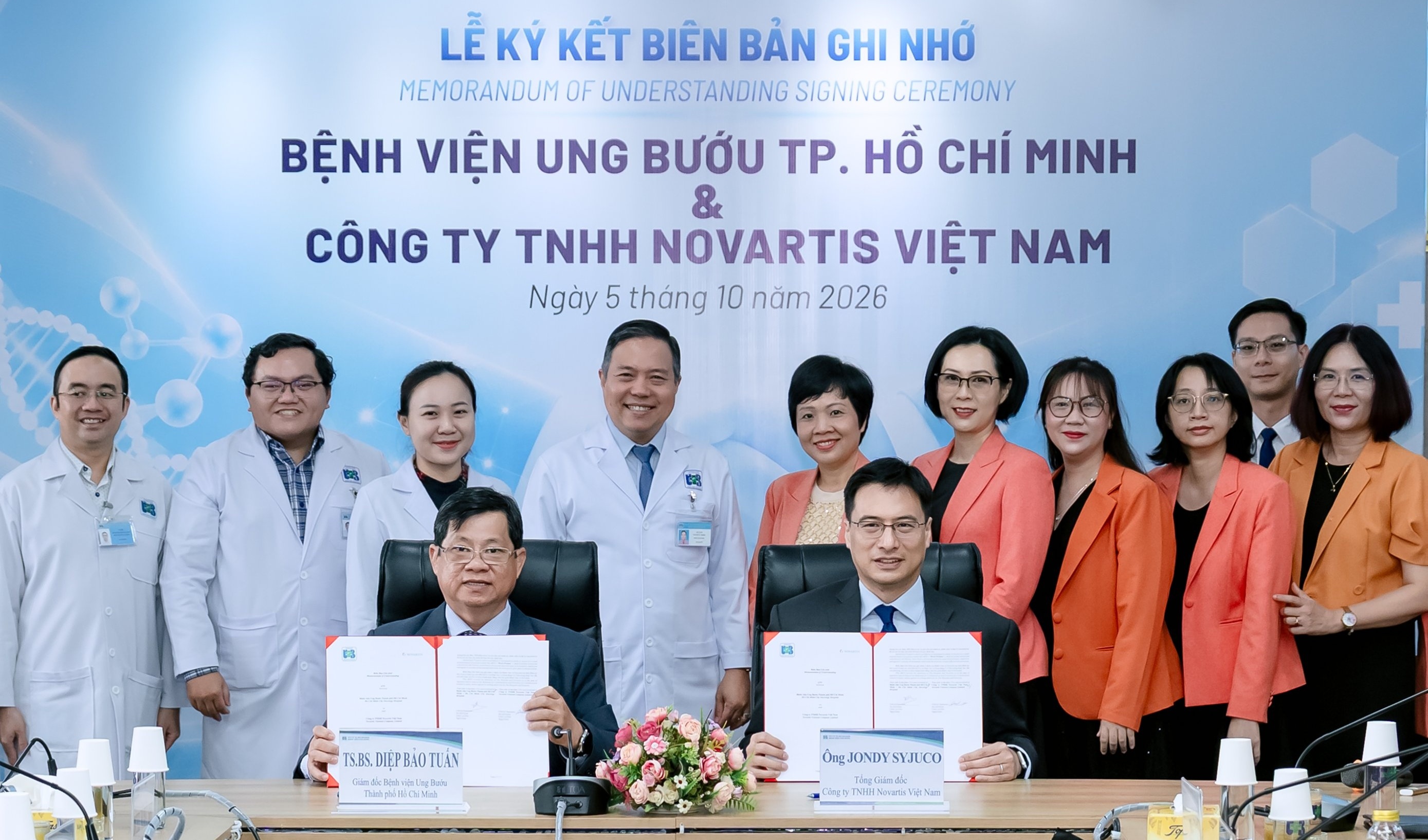
- Ho Chi Minh City Oncology Hospital signs MoU with Novartis Vietnam
- Driving early detection and integrated liver disease management
- Vaccinology training programme launched to boost preventive care capacity
- Opella and Hoan My Academy partner to advance medical education
- AstraZeneca Vietnam upgrades logistics system to support growing operations
Related Contents










Latest News





More News
- DSV backs Vietnam's push for more sustainable logistics (August 04, 2026 | 17:10)
- Roche Pharma Vietnam appoints new general manager, reinforcing commitment to Vietnam healthcare (July 23, 2026 | 15:41)
- Constant Energy on Vietnam solar power and policy hurdles (July 22, 2026 | 08:00)
- Key points when drafting a company charter to reduce disputes in Vietnam (July 20, 2026 | 08:00)
- AkzoNobel executive on sustainability as a manufacturing growth driver (July 10, 2026 | 14:53)
- LivWell expands holistic health ecosystem for businesses and communities in Vietnam (July 09, 2026 | 16:43)
- Thai beverage group sees Vietnam as long-term growth partner (July 02, 2026 | 08:30)
- Vietnam emerges as one of VistaJet’s fastest-growing markets (June 18, 2026 | 16:21)
- Goldwind Asia chief on driving quality growth in wind sector (June 15, 2026 | 17:54)
- Karpowership on floating LNG as a bridge for Vietnam's energy needs (June 15, 2026 | 12:56)


Latest News






 Mobile Version