

Karpowership on floating LNG as a bridge for Vietnam's energy needs

How can floating liquefied natural gas (LNG) and Powership solutions help Vietnam implement Power Development Plan VIII (PDP8) and meet rising electricity demand?
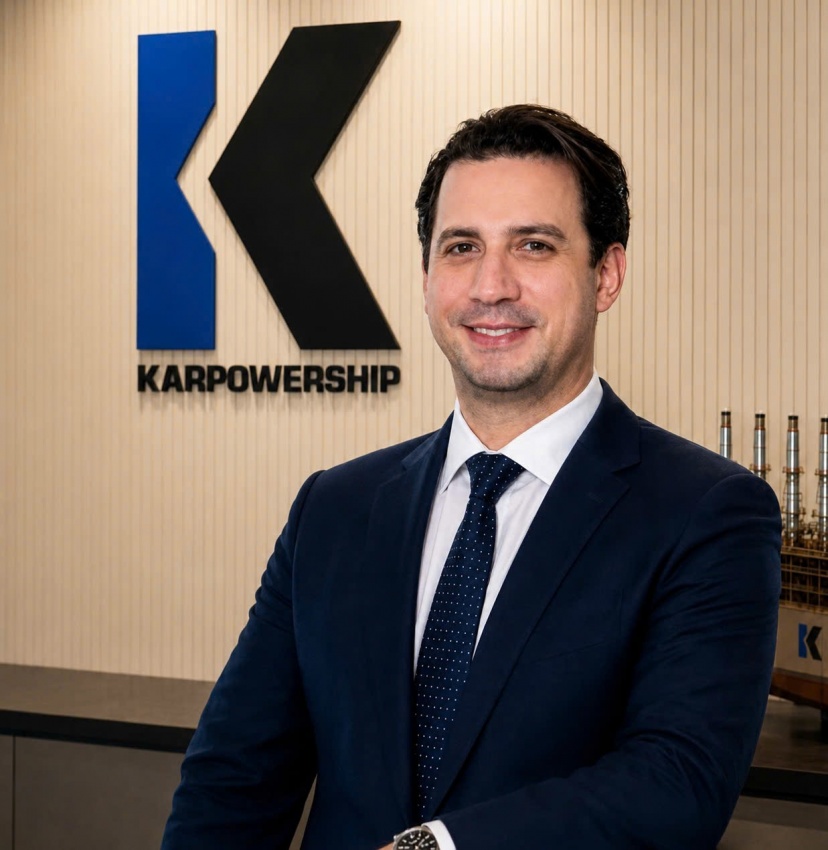 |
In mid-May, we had a substantive and productive working session with Vietnam’s Ministry of Industry and Trade to discuss how Karpowership could support PDP8, particularly by addressing rising short-term electricity demand to sustain economic growth momentum. Following the discussion, the ministry assigned relevant agencies to coordinate with Petrovietnam, Vietnam Petroleum Institute (VPI), Vietnam Electricity (EVN) and Karpowership to further evaluate flexible floating LNG regasification solutions and rapidly deployable power generation capacity that could help provide additional system flexibility during peak periods of electricity demand while other long-term LNG-to-power projects are completed.
We position ourselves as a provider of flexible, complementary bridge solutions rather than a replacement for permanent infrastructure. Under the proposed model, Petrovietnam would supply fuel, while Karpowership would provide floating LNG infrastructure, including storage and regasification units, and power generation capacity tailored to operational demand.
This model enhances grid reliability, improve system flexibility, and enable rapid deployment using our pre-manufactured and class-certified floating assets, including combined-cycle Powerships and Floating Storage and Regasification Units (FSRUs). Our FSRUs can import LNG at a scale without requiring lengthy construction timelines or significant upfront capital expenditure required by conventional LNG terminals. We look forward to strengthening cooperation with the Ministry of Industry and Trade, VPI, Petrovietnam, EVN, and other stakeholders as technical and commercial discussions continue over the next few weeks.
What energy solution is Karpowership proposing to help Vietnam address its short-term power needs while supporting long-term energy goals?
Vietnam is targeting double-digit GDP growth, and sustaining that ambition requires power solutions that can be deployed at the same speed. We have already deployed similar solutions across multiple markets seeking flexible and rapidly deployable energy infrastructure to support economic growth and evolving energy requirements. In Brazil, for example, we deployed a scheme in Rio de Janeiro within just two to three months, delivering 560MW immediately alongside an LNG carrier functioning as an FSRU, eliminating the need for onshore LNG terminal construction.
Today, Karpowership operates in more than 20 countries, with a fleet of 45 Powerships and 11 FSRUs currently in operation and around 10 additional assets in the growth pipeline. This existing fleet allows us to deliver 1–2GW of electricity to Vietnam in less than two months post-contract.
Globally, around seven out of every 1,000 people receive electricity supplied by Karpowership. Our key competitive advantage is that we invest in advance, rather than waiting for individual projects to be awarded. As a privately held company, we are willing and able to make decisions and commit Powership projects to Vietnam worth over $1billion faster than other listed competitors.
We help countries like Vietnam implement energy plans over a two-to-three-year period while permanent, large-scale LNG-to-power projects are being developed. Looking ahead, we see strong potential for deeper cooperation, including co-investment and shipbuilding partnerships with local firms. We are confident that our model is highly competitive, particularly when considering the elimination of construction delays, upfront capital expenditure, and the economic cost of power shortages.
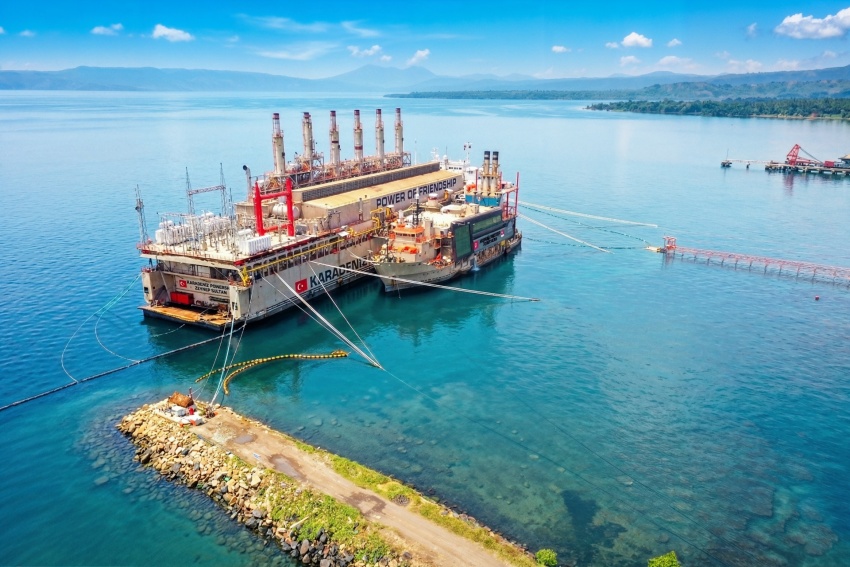 |
| Indonesia is host to Karpowership’s first project in Southeast Asia |
How feasible is a Powership project marketed as deployable in just 30 days, and what regulatory and technical support would be required to make it work?
Vietnam is an ideal market for Powerships. While long-term infrastructure development plans are essential, utility-grade turbines currently face five-to-seven-year supply chain backlogs due to global AI-driven demand. PDP8 aims to increase installed capacity from 80-85GW to 180GW within five years, a significant challenge. Our fleet of FSRUs and Powerships offer the only viable, near-term, complementary solution alongside Vietnam’s broader energy development plans. They are highly efficient, combined-cycle assets that can be deployed together, which is a capability few providers offer at this scale.
Regulatory support is moving in the right direction, with the prime minister and the Ministry of Industry and Trade actively simplifying processes. EVN is already collaborating with us on grid interconnection feasibility studies. We believe our first location would be in the north, where demand from manufacturing is highest. Following the necessary commercial, legal, and regulatory approvals, we can mobilise and deliver capacity within approximately 60 days.
What specific grid support functions can Powerships provide, and how do they help stabilise the grid?
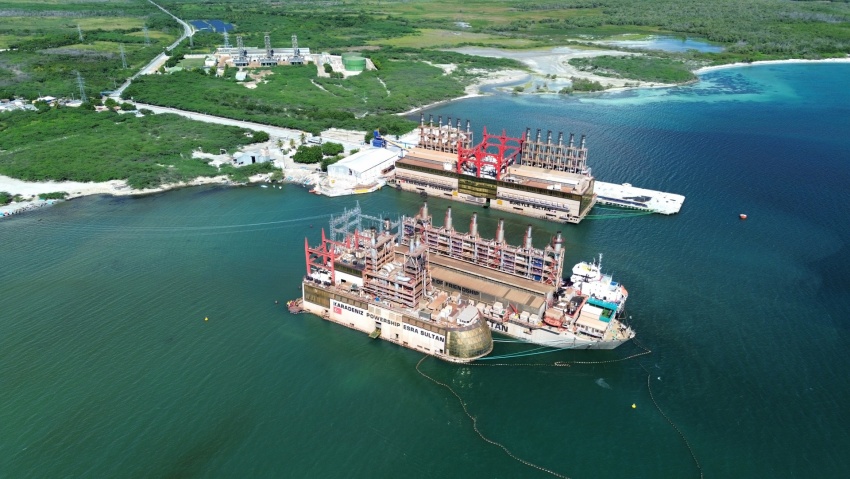 |
| Karpowership’s first Dominican Republic project delivers affordable and reliable power to the national grid |
Our Powerships can operate in multiple modes, including base load, peaking power, and spinning reserve. They provide crucial voltage and frequency regulation to stabilise the grid and feature "black start" capability, allowing them to restore power independently of the grid in under two minutes.
Our systems are designed for high redundancy and efficiency. For example, our 450 MW Powership utilises 24 Wärtsilä gas engines, each with 18MW output, and two steam turbines in combined-cycle mode. Each engine functions independently, allowing the plant to maintain continuous generation and high availability even while individual units undergo maintenance, ensuring the reliability the grid demands.
How competitive is the cost of electricity from Powerships compared to traditional onshore plants, especially given LNG price volatility?
Our solution eliminates construction risk, long development timelines, and large upfront capital expenditure (CapEx). We operate on a rental model: you pay for electricity as you consume it, with an all-inclusive price and no surprise costs. We do not require the long-term 25-year power purchase agreements (PPA) standard in traditional LNG projects; instead, we operate on a two-to-three-year basis, allowing countries to start with 40MW and scale as needed. When considering the total lifecycle costs and the economic value of preventing power shortages, our solution is highly competitive.
It is important to consider not only the cost of electricity, but also the value of maintaining sufficient reserve capacity, operational flexibility, and reliable infrastructure to support Vietnam's continued economic growth and industrial development. Preventing such losses is more valuable than focusing only on electricity price. Overall, when comparing total lifecycle costs, including CapEx and long-term PPA, our solution is often more competitive.
With geopolitical tensions affecting global energy security, how can Karpowership help Vietnam strengthen supply resilience and avoid potential energy disruptions?
We source LNG from multiple origins and maintain long-term contracts with over 15 countries. If one supply route is disrupted, we have the flexibility to redirect LNG from others, such as the United States. Because our assets are already built and globally mobile, fuel supply is highly adaptable.
Currently, we have operations across four continents with around 8,5 GW of capacity including LNG to Power projects in different geographies ranging from Indonesia to Brazil and Senegal. LNG can be provided through our global network or sourced locally from Petrovietnam. As we do not generate profit from the fuel itself, it is a pass-through cost, this creates a stable, low-risk operational environment that helps insulate Vietnam from geopolitical supply shocks.
 | Vietnam’s power sector poised to trigger a new investment cycle Vietnam’s power sector is undergoing a critical reform phase aimed at reactivating a new investment cycle in generation capacity, ensuring the dual objectives of meeting energy demand for development while fulfilling strong environmental commitments. |
What the stars mean:
★ Poor ★ ★ Promising ★★★ Good ★★★★ Very good ★★★★★ Exceptional
 Tag:
Tag:
Latest News

More News
- Constant Energy on Vietnam solar power and policy hurdles (July 22, 2026 | 08:00)
- Key points when drafting a company charter to reduce disputes in Vietnam (July 20, 2026 | 08:00)
- AkzoNobel executive on sustainability as a manufacturing growth driver (July 10, 2026 | 14:53)
- LivWell expands holistic health ecosystem for businesses and communities in Vietnam (July 09, 2026 | 16:43)
- Thai beverage group sees Vietnam as long-term growth partner (July 02, 2026 | 08:30)
- AstraZeneca chief on Vietnam's healthcare financing shift (June 30, 2026 | 16:47)
- Vietnam emerges as one of VistaJet’s fastest-growing markets (June 18, 2026 | 16:21)
- Goldwind Asia chief on driving quality growth in wind sector (June 15, 2026 | 17:54)
- Vietnam SuperPort CEO on security and resilience in global trade (June 10, 2026 | 00:00)
- Qualcomm sees Vietnam moving beyond manufacturing towards innovation (May 27, 2026 | 12:19)








 Mobile Version