
Experts urge stronger maternal care to protect infants from RSV

The event took place on July 26, bringing together leading experts in obstetrics, gynaecology, and paediatrics to discuss protection gaps during an infant's first six months, particularly against respiratory syncytial virus (RSV), and the role of proactive antenatal care.
The roundtable took place following clinical guidance on proactive RSV prevention to support early protection for infants through birth through proactive pregnancy care from the Vietnam Association of Gynaecology and Obstetrics (VAGO).
At the same time, the Administration of Maternal and Children’s Affairs under the Ministry of Health has continued to update the national guidelines on reproductive healthcare services – preconception and antenatal care, which emphasise the importance of antenatal care, including proactive prevention of infectious diseases such as RSV disease, influenza, pertussis, measles, and tetanus. These developments further strengthen the professional guidance for maternal and child healthcare in Vietnam.
In his opening remarks, Prof. Nguyen Viet Tien, president of VAGO and former deputy minister of Health, explained, "In recent years, antenatal care has evolved beyond monitoring fetal development to increasingly focus on preventing health risks that may affect children after birth, including those associated with RSV. This approach is also reflected in newly updated professional guidelines, which aim to standardise clinical practice and support healthcare professionals in delivering proactive, preventive antenatal care for the long-term health and wellbeing of both mothers and their babies."
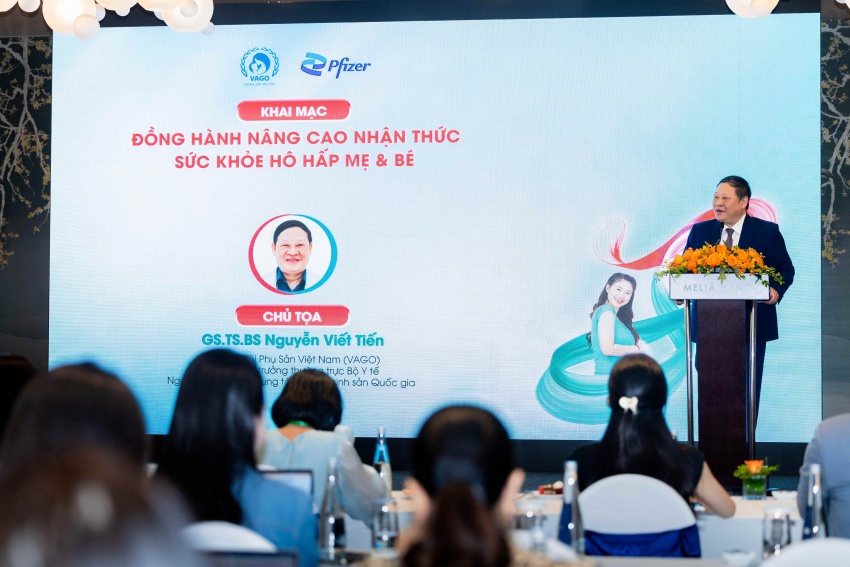 |
| Prof. Nguyen Viet Tien, president of VAGO. Photo: Pfizer Vietnam |
RSV is one of the leading causes of lower respiratory tract infections in children, associated with 1.4 million hospitalisations and 27,300 deaths in infants under six months. In Vietnam, RSV accounts for approximately 24–48 per cent of lower respiratory tract infections in children. In particular, research conducted at the Vietnam National Children's Hospital indicates that the disease burden is mainly concentrated in infants under three months (42.7 per cent), followed by those aged 3–6 months.
This period creates an 'immunity gap' during the first six months of life because infants' immune systems are not fully developed, and their airways are small. Additionally, small airways make infants more susceptible to inflammation, oedema, and obstruction caused by RSV, while their bodies lack sufficient antibodies to fight off the virus, leading to a higher risk of being severely affected by RSV.
Preterm infants and those with congenital heart disease, chronic lung disease, or weakened immune systems are recognised as being at higher risk of developing severe RSV disease. However, experts note that concern should not be limited only to these high-risk groups alone, as RSV can still cause severe illness in all young children.
Assoc. Prof. Nguyen Thi Dieu Thuy, head of the Department of Paediatrics, Hanoi Medical University, and head of the Department of Paediatrics, Hanoi Medical University Hospital, said that the majority of infants requiring treatment in intensive care units (ICUs) for RSV-associated lower respiratory tract infections were born at term and were previously healthy. Data show that approximately 8 in 10 infants requiring ICU treatment due to RSV had no underlying medical conditions.
“Being healthy does not mean a child is safe from RSV. Many children may initially present with just a cough, runny nose, or shortness of breath, but their conditions can rapidly progress to bronchiolitis and respiratory failure, requiring respiratory interventions such as mechanical ventilation or endotracheal intubation,” she explained.
“Data shows that approximately 23.8 per cent of children hospitalised in emergency or ICUs due to RSV require invasive mechanical ventilation, reflecting the severity of the disease in young children. Therefore, parents should not be complacent and need to take early preventive measures rather than waiting until the child falls ill,” added Thuy.
 |
| A discussion on healthcare strategies for mothers with infants with RSV. Photo: Pfizer Vietnam |
Currently, the management of RSV disease remains primarily supportive, focusing on symptom control and respiratory support. Therefore, experts stressed the need to shift the focus towards early prevention through a comprehensive approach that begins during pregnancy.
Ngo Thi Yen, executive committee member of the Vietnam Society of Sexual Medicine and former head of the Prenatal Care Department at Tu Du Hospital, said, "During the final months of pregnancy, a mother passes on part of her antibodies to her baby, so that from the baby's very first breath, he or she already carries a degree of protection against RSV. It is this protection passed from mother to child during this critical period that helps narrow the protection gap in the first six months of life, when a baby's immune system is still immature and not yet able to protect itself."
This mechanism has been incorporated into antenatal care for many years. In Vietnam, maternal immunisation strategies to prevent tetanus in both mothers and infants have been widely implemented. Globally, maternal immunisation has also been adopted to help protect both mothers and infants against diseases such as influenza and pertussis. With advances in scientific research, the application of maternal immunisation continues to expand to additional pathogens, including respiratory pathogens such as RSV.
According to Assoc. Prof. Luu Thi Hong, Specialist II, former director general of the Maternal and Child Health Department (Ministry of Health), maternal and child healthcare has been one of the cornerstones of Vietnam's healthcare system. Proactive prevention during pregnancy, in accordance with established clinical practice guidelines, represents a significant advancement in perinatal care.
“This approach safeguards each infant from the earliest days of life while alleviating the burden on the healthcare system and enhancing the quality of antenatal and obstetric care at both individual and national levels. Such a strategy aligns with the reproductive health agenda that Vietnam's health sector has consistently pursued over decades,” she added.
Through the roundtable, experts expressed their hope that pregnant women and their families will gain a more comprehensive, evidence-based understanding of respiratory health risks in young children, particularly RSV and the immunity protection gap during the first six months of life, thereby enabling them to engage in informed discussions with their doctors about appropriate care options during pregnancy and after childbirth.
Nguyen Huu Ngoc Tuan, senior medical lead of Pfizer Vietnam, explained that accurate medical information provides an essential foundation for expectant mothers to make informed decisions about the health of both themselves and their babies.
“With this commitment, Pfizer Vietnam is honoured to collaborate with the Vietnam Association of Gynaecology and Obstetrics and leading medical experts to share the latest scientific evidence on RSV and its burden among infants. We believe that continued collaboration among healthcare professionals, the media, and the press will help disseminate practical, evidence-based medical information, empowering expectant mothers and their families to build a proactive pregnancy, ready to welcome their babies into the world safely and healthily,” he noted.
What the stars mean:
★ Poor ★ ★ Promising ★★★ Good ★★★★ Very good ★★★★★ Exceptional
 Tag:
Tag:Themes: Healthcare Platform
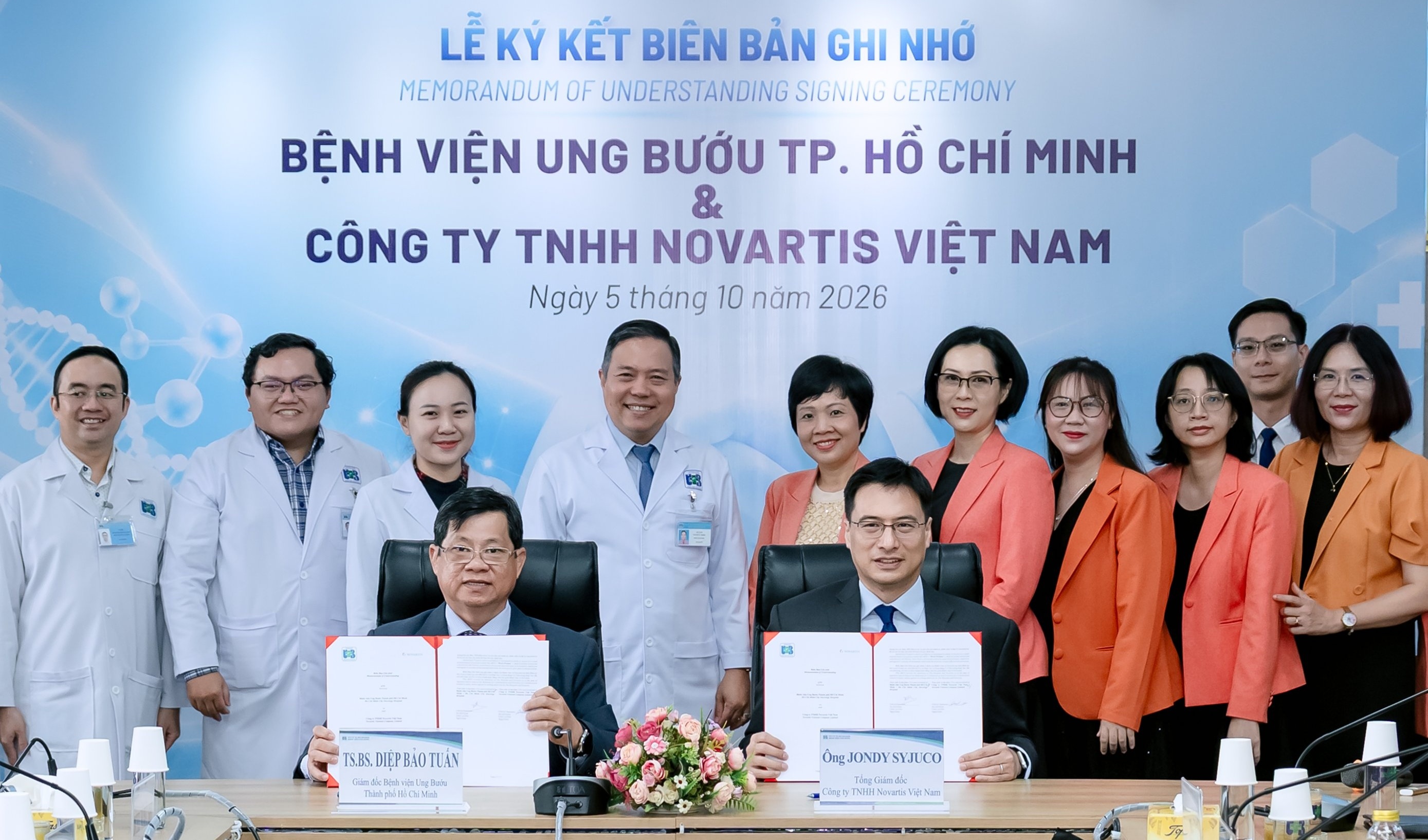
- Ho Chi Minh City Oncology Hospital signs MoU with Novartis Vietnam
- Driving early detection and integrated liver disease management
- GSK supports medical community in raising awareness of severe asthma in Vietnam
- Vaccinology training programme launched to boost preventive care capacity
- Opella and Hoan My Academy partner to advance medical education
Related Contents





Latest News




More News
- Vietnam and Denmark sign MoUs to strengthen bilateral ties (October 21, 2026 | 08:00)
- Vietnam and Liechtenstein sign double taxation avoidance agreement (October 19, 2026 | 18:08)
- Creative Young Entrepreneur 2026 showcases five young businesses (October 19, 2026 | 17:59)
- IEAE Hanoi 2026 to spotlight smart electronics trends (October 19, 2026 | 17:44)
- Vietnam and EFTA member states sign free trade agreement (October 19, 2026 | 13:10)
- TC-HICT handles over 8.2 million TEUs since 2018 launch (October 17, 2026 | 16:56)
- Vietnam transforming AI ambitions into business impact (October 16, 2026 | 18:01)
- A broader platform for France-Vietnam cooperation (October 16, 2026 | 17:51)
- AEON to open 13th general merchandise store in Vietnam (October 14, 2026 | 17:56)
- Three international exhibitions open to boost industrial supply chain links (October 14, 2026 | 17:37)







 Mobile Version