
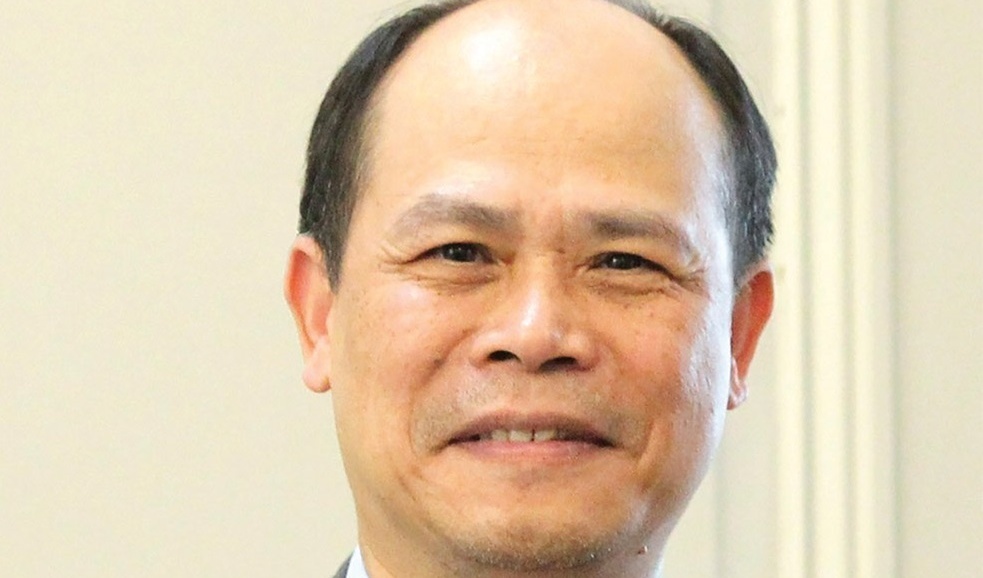
Vietnam SuperPort CEO on security and resilience in global trade

 |
How are shifting global supply chains affecting logistics providers and exporters in Vietnam?
I think the key word today is 'crisis'. Geopolitical developments are driving significant changes in global supply chains, prompting companies to diversify manufacturing, storage, transportation, and distribution activities across different countries and regions.
For Vietnam, this presents both opportunities and risks. As companies shift operations and supply chains, logistics providers must adapt quickly. New business models, new markets, and new partnerships require companies to review their operating procedures, conduct fresh risk assessments, and develop a more profound understanding of unfamiliar operating environments.
Every time a business changes the way it operates, it introduces new forms of risk. Companies may need to work with new partners, navigate different regulatory environments, and manage more complex supply chain networks. Vietnamese logistics providers and exporters will need to address these challenges while maintaining service quality and security.
At the same time, the opportunities are substantial. Businesses can establish new partnerships, enter new markets, develop new service offerings, and create additional revenue streams. However, these opportunities can only be realised if risks are managed effectively. Ultimately, resilience is not about luck. It depends on having strong systems, effective leadership, and high-performing teams. Organisations must be able to contain crises when they arise, while also executing their business strategies and serving customers throughout periods of disruption.
What security standards should Vietnam's logistics sector focus on to meet the expectations of multinational companies?
Vietnam’s logistics sector needs to align with internationally recognised standards across security, safety, and sustainability.
Vietnam SuperPort has adopted standards developed by the Transported Asset Protection Association, widely recognised by multinational companies, particularly in aviation logistics and the movement of high-value goods. We have also adopted C-TPAT standards, which are highly valued by many international customers, especially those connected to the US market.
These standards are no longer simply about compliance. Increasingly, they are becoming prerequisites for market access and commercial partnerships. Many multinational companies expect logistics providers and supply chain partners to demonstrate recognised security credentials before they are considered for business opportunities.
At the same time, these standards provide practical value beyond certification itself. They establish clear frameworks for risk management, operational discipline, cargo protection, and business continuity. They help organisations identify vulnerabilities, strengthen governance, and improve consistency across operations.
That is why we view international standards not as business requirements, but as tools that help build stronger, safer, and more resilient supply chains. Ultimately, they enhance both credibility and operational performance.
What do resilient supply chains mean in today's operating environment?
Resilience is often described as the ability to recover from disruption or adverse events. In today's environment, where geopolitical tensions, cyber risks, climate-related disruptions, and supply chain shocks have become increasingly common, resilience is no longer optional. It has become a core capability for businesses and economies alike.
Vietnam's development journey demonstrates the importance of resilience. The country and its people have repeatedly shown an ability to adapt, recover, and continue growing despite external challenges. That resilience is one of Vietnam's greatest strengths and one reason why the concept remains central to our discussions.
Trust is equally important, but it is becoming more complex in the digital era. Traditionally, trust was built between people and organisations. Today, we must also consider trust in data, digital platforms, and technology systems.
As supply chains become increasingly digitalised, questions around data integrity, cybersecurity, interoperability, and system reliability are becoming critical. Businesses need confidence that their information is secure, their systems are reliable, and their digital partners can be trusted.
This was one of the reasons we brought together technology companies, logistics operators, and ecosystem partners at the conference. Discussions about data integration, interoperability, workflow visibility, and digital trust are becoming increasingly important because vulnerabilities often emerge where systems are disconnected.
Ultimately, trusted supply chains require more than trusted people. They require trusted systems, trusted data, and strong governance frameworks that can help organisations manage risks and respond effectively to future threats.
How is Vietnam SuperPort using technologies such as real-time tracking, data analytics, and AI to enhance shipment security across its operations?
Technology and digitalisation are embedded throughout our logistics ecosystem.
We have carefully examined every stage of the workflow, from cargo screening and security inspections to cargo consolidation, transportation, and final delivery. Our objective is to ensure visibility, traceability, and security throughout the entire journey.
This starts with physical infrastructure and security systems, but increasingly it is being enhanced through digital technologies. We have invested in intelligent monitoring systems and are integrating AI into our operational processes to improve both efficiency and risk management.
AI can support shipment screening, identify potentially risky objects, improve monitoring capabilities, and provide predictive insights that help operators respond more effectively to potential threats. Rather than relying solely on human intervention, intelligent systems can analyse large volumes of data and identify patterns that may otherwise go unnoticed.
However, we see AI as more than a standalone technology. We are exploring how it can support the entire workflow, from planning and operations to security management and customer service. This is where concepts such as agentic AI become increasingly relevant because they allow businesses to optimise entire processes rather than individual tasks.
At the same time, technology transformation must serve multiple stakeholders. It must create value for customers, improve the experience of frontline workers, support business objectives, and enhance productivity. Ultimately, the goal is to improve throughput, increase efficiency, strengthen security, reduce costs, and deliver better outcomes across the supply chain.
How can stronger shipment security and trusted supply chain standards help Vietnam pull in high-quality investment?
Vietnam is entering an important stage of development, and strategic infrastructure particularly airports and seaports will play a growing role in supporting trade, investment, and economic growth.
However, infrastructure alone is not enough. Building an airport or port is relatively straightforward. The greater challenge is creating an ecosystem around it. Investment is driven not by a single facility, but by the ability to integrate air cargo, sea cargo, inland logistics, customs, digital systems, and supporting services into a seamless network.
Singapore’s experience illustrates this clearly. The country succeeded not because of abundant natural resources, but because it built strong connectivity, efficient logistics systems, and integrated ecosystems that facilitate the movement of goods, capital, and people.
Vietnam holds many of the same advantages. It is both a maritime nation and a gateway to neighbouring markets such as Laos and Cambodia. Through stronger connectivity and closer integration between transport modes, Vietnam has the potential to become a major regional logistics hub.
Trusted shipment security and supply chain standards will also be critical. As multinational companies place greater emphasis on resilience, transparency, and risk management, countries capable of providing secure and reliable logistics ecosystems will be better positioned to engage high-quality investment and integrate more deeply into global supply chains.
In the long term, the opportunity extends beyond transportation itself. By building trusted logistics ecosystems that facilitate the movement of goods, capital, and investment, Vietnam can strengthen both its economic competitiveness and the strategic value of its infrastructure within regional supply chains.
What the stars mean:
★ Poor ★ ★ Promising ★★★ Good ★★★★ Very good ★★★★★ Exceptional
 Tag:
Tag:Related Contents

Latest News

More News
- DSV backs Vietnam's push for more sustainable logistics (August 04, 2026 | 17:10)
- Roche Pharma Vietnam appoints new general manager, reinforcing commitment to Vietnam healthcare (July 23, 2026 | 15:41)
- Constant Energy on Vietnam solar power and policy hurdles (July 22, 2026 | 08:00)
- Key points when drafting a company charter to reduce disputes in Vietnam (July 20, 2026 | 08:00)
- AkzoNobel executive on sustainability as a manufacturing growth driver (July 10, 2026 | 14:53)
- LivWell expands holistic health ecosystem for businesses and communities in Vietnam (July 09, 2026 | 16:43)
- Thai beverage group sees Vietnam as long-term growth partner (July 02, 2026 | 08:30)
- AstraZeneca chief on Vietnam's healthcare financing shift (June 30, 2026 | 16:47)
- Vietnam emerges as one of VistaJet’s fastest-growing markets (June 18, 2026 | 16:21)
- Goldwind Asia chief on driving quality growth in wind sector (June 15, 2026 | 17:54)


Latest News




 Mobile Version