
AkzoNobel executive on sustainability as a manufacturing growth driver

What are the most critical sustainability and regulatory shifts you are observing globally and within the South APAC region?
 |
Sustainability is becoming an increasingly important factor in determining manufacturing competitiveness worldwide. One of the clearest examples is the tightening of chemical management standards, particularly in Europe, where evolving regulations such as PFAS restrictions are already influencing market access for exporters across Vietnam and South APAC.
For manufacturers serving international markets, compliance with local regulations alone is no longer sufficient, as products must also meet the requirements of increasingly demanding export destinations.
A second major trend is the growing pressure to decarbonise and improve resource efficiency. Customers are under constant pressure to reduce scope emissions, lower energy consumption, and minimise waste. Although coatings represent only a relatively small proportion of overall production costs, they can have a significant impact through longer durability, fewer repainting cycles, reduced waste generation, and more efficient application processes.
Third, there is an increasing focus on supply chain resilience and transparency on environmental, social, and governance (ESG) issues. Regulators, investors, and particularly global brand owners want to understand what is contained in a product and how and where it was manufactured, how resilient the supply chain is, and whether it is future-proofed against emerging risks.
These developments are raising the standards expected of coatings suppliers across South APAC. This is why we are investing in PFAS NI technologies, expanding efficient local manufacturing hubs such as our facility in Bac Ninh, and strengthening technical support in the field. Our objective is to help customers stay ahead of these changes rather than constantly react to them.
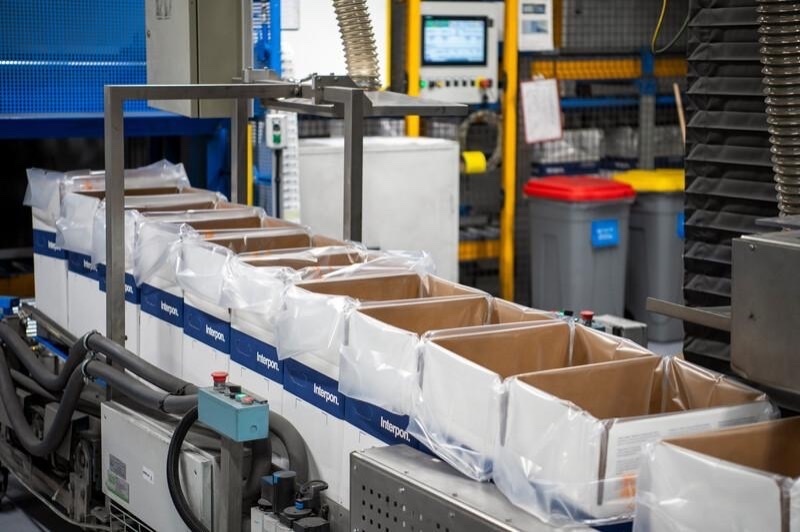 |
| Sustainability is embedded in the way AkzoNobel manufactures, innovates, develops products, and creates long-term value for customers |
In the face of evolving global standards, how has AkzoNobel adjusted manufacturing and business models to stay aligned with the group’s ESG commitments?
Within our South APAC powder coatings business, sustainability is embedded not only in how we manufacture, but also in how we innovate, develop products, and create long-term value for customers.
On the manufacturing side, we are upgrading facilities to improve energy efficiency and reduce carbon intensity through better process control, advanced equipment, and the gradual adoption of renewable electricity. We also monitor energy use and carbon emissions per tonne of powder as key performance indicators.
From a commercial and product perspective, we are increasingly leveraging the inherent ESG advantages of powder coatings over liquid coatings. Powder coatings contain no solvents, generate very low VOC emissions, and achieve high material utilisation rates. We are expanding our portfolio of durable, compliance-focused solutions, particularly in the architectural and industrial segments, helping customers extend asset lifecycles and reduce the need for repainting.
Within our innovation pipeline, we are developing powder coating technologies that anticipate future regulations and help manufacturers in Vietnam and across the region compete more effectively in export markets through lower-impact, future-proof coating solutions. This is where ESG becomes a genuine strategic differentiator rather than simply a reporting requirement.
Equally important is our collaboration with customers. Our technical service teams work directly on production lines to improve transfer efficiency, reduce waste, optimise curing processes, and lower energy consumption. In some cases, this may even mean customers use less powder coating, but we believe that delivering better environmental and operational outcomes creates stronger long-term partnerships.
We are also working more closely with suppliers through our code of conduct and increasingly incorporating carbon and ESG data into our sourcing processes to strengthen transparency across the value chain.
Finally, ESG is embedded directly into how we manage the business, it is not just a side project for us. It is fundamental to how we operate the South APAC powder coatings business and how we differentiate ourselves in the market.
Regarding differences across markets, Vietnam stands out as one of the fastest-growing markets in the region, both domestically and from an export perspective. Compared with countries such as Australia, which is relatively self-sufficient, Vietnam is much more export-oriented and therefore more exposed to international regulatory developments.
Vietnam is probably our fastest-growing market today, with India following closely behind. However, India’s growth is driven largely by domestic demand, whereas Vietnam’s distinctive strength lies in its export sector. This is one of the key reasons why we continue to invest heavily in the country. Our investments are intended not only to support local demand, but also to reinforce Vietnam’s position as an important export manufacturing base.
How do AkzoNobel’s ESG-driven operations and partnerships help strengthen Vietnam’s reputation as a high-standard and resilient export base?
Vietnam is rapidly becoming one of the world’s most important manufacturing hubs, and our objective is to ensure that coatings are never the weak link in that success story.
From an operational perspective, our investment in Bac Ninh is focused on building a modern, reliable, and lower-impact supply base. The expansion enhances production flexibility, shortens lead times, and enables customers to access products designed to meet increasingly stringent global standards, including emerging PFAS-related requirements.
From a partnership perspective, our local technical service teams work directly on customers’ production floors, helping them modernise coating lines, improve transfer efficiency, reduce waste and energy consumption, and ensure that finished products meet the performance and sustainability expectations of export markets such as the European Union and the United States.
Taken together, these ESG-driven operations and partnerships help Vietnamese manufacturers operate more efficiently, remain compliant with evolving regulations, and build greater resilience. In turn, this directly strengthens Vietnam’s reputation as a highly compliant, sustainable, and resilient manufacturing hub capable of delivering world-class green products.
Vietnam is investing heavily in infrastructure development and advancing its green transition. How can AkzoNobel’s business model support this process?
In the architectural segment, we have developed a range of super-durable powder coatings with significantly longer service lives. Our approach goes beyond supplying products; we also provide long-term assurance through approved customer networks whose coating lines are audited and qualified by AkzoNobel.
These solutions contribute directly to greener buildings by reducing the need for repainting, maintenance, and resource consumption over a building’s lifecycle. Increasingly, architects and developers are evaluating projects on initial performance as well as durability and environmental impact, and our coatings are designed to support those objectives.
Through our Eco+ Products, our most sustainable powder coatings portfolio, we help customers reduce environmental impact while maintaining the durability and performance required for demanding applications. This includes our super-durable Interpon D2000 powder coatings range and Interpon Redox corrosion protection systems, which help extend asset service life and reduce maintenance requirements, as well as Interpon Low-E that helps lower energy consumption during the curing process. Together, these solutions help customers reduce resource consumption and improve whole-life sustainability outcomes.
Beyond the coating itself, we support customers through our Eco+ Services offering. This includes tools such as our Eco+ Cure energy calculator, which helps identify opportunities to reduce curing energy consumption, and Flightpath Pro, which uses AI-driven insights to optimise application efficiency, reduce powder waste, and improve line performance. These tools help customers translate sustainability ambitions into measurable operational improvements.
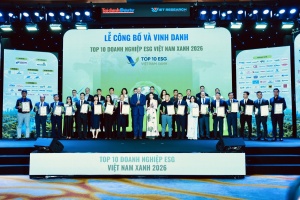 | Top 100 ESG Vietnam Green Enterprises announced for 2026 The Top 100 ESG Vietnam Green Enterprises and Top 10 ESG Green Enterprises in key industries have been announced, recognising businesses that have embedded sustainability principles into their long-term strategies. |
What the stars mean:
★ Poor ★ ★ Promising ★★★ Good ★★★★ Very good ★★★★★ Exceptional
 Tag:
Tag:
Latest News




More News
- Vietnam’s challenge to turn market reform into long-term capital (September 08, 2026 | 09:16)
- Smarter infrastructure design key to Vietnam’s AI ambitions (August 24, 2026 | 16:27)
- Strategic vision key to high-speed rail success in Vietnam (August 07, 2026 | 10:03)
- DSV backs Vietnam's push for more sustainable logistics (August 04, 2026 | 17:10)
- Roche Pharma Vietnam appoints new general manager, reinforcing commitment to Vietnam healthcare (July 23, 2026 | 15:41)
- Constant Energy on Vietnam solar power and policy hurdles (July 22, 2026 | 08:00)
- Key points when drafting a company charter to reduce disputes in Vietnam (July 20, 2026 | 08:00)
- LivWell expands holistic health ecosystem for businesses and communities in Vietnam (July 09, 2026 | 16:43)
- Thai beverage group sees Vietnam as long-term growth partner (July 02, 2026 | 08:30)
- AstraZeneca chief on Vietnam's healthcare financing shift (June 30, 2026 | 16:47)









 Mobile Version