

AWS chief medical officer on how tech can lower rare disease therapy barriers

It is one of medicine's tragic paradoxes that, collectively, rare diseases have significant impact on human health. The World Health Organisation defines conditions affecting fewer than 1 in 2,000 people as rare, and it is estimated that over 300 million people worldwide currently live with one of the 7,000 conditions classified in this way. That is six times as many as have been diagnosed with cancer in the last five years.
 |
Low public awareness and a lack of medical studies exacerbate the challenges through the difficulty of diagnosing conditions, which can lead to sufferers being excluded from care.
A key contribution that the cloud and AI can make to healthcare outcomes involves rebalancing this numbers game. AI is helping to transform genomics and DNA sequencing, so researchers can scale their work globally, share insights through the cloud, and develop innovative approaches for a better understanding of patients' experiences.
Some of the better-known examples of rare diseases include motor neuron disease, cystic fibrosis, Duchenne muscular dystrophy, and haemophilia. As with many rare diseases, these four conditions have one crucial thing in common. They are caused by genetic variations that can manifest - in a wide range of different ways, at different stages.
Not all rare diseases are inherited, and those resulting from rare bacterial or viral infections, autoimmune responses, or sporadic genetic mutation come with similar challenges. Affecting individuals rather than populations makes these diseases less visible, and they generate much less of a public sense of urgency because they don’t occur in epidemics or pandemics.
And so many of those affected by rare diseases are children, who may have difficulty communicating their symptoms, which can contribute to diagnostic complexity and can cause great distress to patients and their networks of support.
Greater understanding and ongoing research are helping to illuminate the value of genetic testing in helping to diagnose many rare conditions. Genomics England works with AWS and its partner Illumina to embed genomic analysis into the diagnostics journey and help transform the speed with which suspected cases of rare conditions can be confirmed.
Genomics England’s 100,000 Genomes Project laid the foundations for whole genome sequencing for patients with suspected rare conditions through the NHS Genomic Medicine Service. It has sequenced more than 100,000 genomes and made the NHS the first national health system in the world to offer whole genome sequencing as part of routine care.
For those affected by rare conditions and their families, the impact of ready access to diagnosis through genomics may help provide important insights. For one mother, Mel, the service led to the discovery that two of her children, including one previously diagnosed with autism and dyspraxia, had an ultrarare neurodegenerative condition, caused by a variant in the DHDDS gene.
Although there were only 59 documented cases of this condition worldwide, Mel was able to reach out to specialists working on it for suggestions of specific vitamins that could help support management of tremor symptoms.
 |
In a feature on the Genomics England website, she explained at the time that the children’s tremors had reduced by 20–30 per cent since they started taking them. However, she was also clear that support managing symptoms is only the start. As founder of the charity Cure DHDDS, she has focused on raising funds for research, holding scientific conferences, and building an international patient registry.
According to Mel, they juggle so many balls because they need to act quickly. The aim is to find a drug that can slow down the disease whilst waiting for tomorrow’s treatments, such as ASO or RNA therapies.
Cloud computing may help lower barriers to developing these therapies for rare diseases by democratising access to computing power and generative AI capabilities and providing highly secure, federated datasets to help enable development of novel treatments and support drug discovery efforts. These technologies may also help transform the economics of rare disease therapies, potentially making treatments viable even for conditions affecting smaller populations.
AI and the cloud may help bring other scaling benefits to initiatives tackling rare diseases as well. AWS has worked with the National Library of Medicine’s National Centre for Biotechnology Information in the United States to make the Sequence Read Archive, one of the world’s largest repositories of genome sequencing data, freely accessible from Amazon Simple Storage Service using the AWS Open Data Sponsorship Programme.
The archive includes approximately 40 petabytes of data that include about 40 million run accessions on the Open Data Sponsorship Programme. By gaining access to the scheme, researchers worldwide can locate and retrieve sequencing data from those experiments, helping to enable smoother global collaboration and support research efforts.
One of the greatest challenges involved in diagnosing and treating rare diseases is the difficulty decoding the experiences of the very young children who comprise a significant share of sufferers.
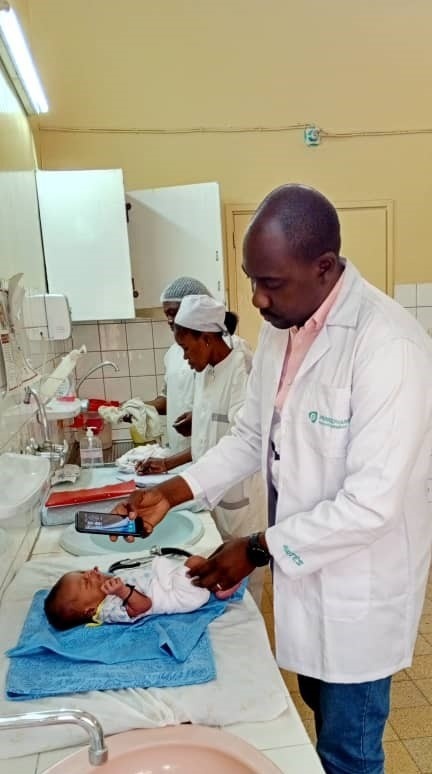
The Children’s National Hospital in the United States, one of the first recipients of a new $10 million AWS funding initiative to support research into paediatric health and rare diseases, has built AI technology that can analyse smartphone camera images to assist clinicians in identifying subtle changes in newborns’ facial features.
Through this technology, they can detect rare genetic disorders. In numerous instances, these signals may be identified later in a child’s development when preventive care is less effective. However, when identified earlier with AI, they can save children from years of misdiagnosis. Instead, they receive the treatment and support they need from the start.
For millions of people with rare diseases, the experience often involves a lengthy journey that can cause significant challenges for them and their loved ones. Until now, healthcare systems have faced constraints in funding, data, and understanding needed to properly identify these conditions and address them with the appropriate urgency their life-changing impact deserves.
Although this absence of support might feel like indifference to patients, the real obstacle has been technological limitations. By continuing to fill this gap, AI and cloud computing may help improve the experience of living with a rare disease, which can help to give these conditions the attention they require.
 | Oliver Klein, chief technologist at AWS, shares with VIR's Bich Thuy his perspective on the shift from traditional AI to agent-based architectures, and how AWS is supporting the next generation of intelligent, self-directed applications. |
 | AWS continues long-term commitment to digital transformation Amazon Web Services will continue to heavily invest in Vietnam, spanning in infrastructure, partner ecosystem development and skills training as part of its long-term support for digital transformation in the country. |
 | The 20th anniversary of AWS: Vietnam and the next chapter of cloud and AI Marking its 20th global anniversary, Amazon Web Services is entering a new chapter, bringing agentic AI into the hands of builders, enterprises, startups, and the public-sector. Mai-Lan Tomsen Bukovec, vice president of technology (data and analytics) at AWS, spoke with VIR’s Bich Thuy on how Vietnam can harness human-AI collaboration. |
What the stars mean:
★ Poor ★ ★ Promising ★★★ Good ★★★★ Very good ★★★★★ Exceptional
 Tag:
Tag:Themes: Digital Transformation
- Amazon Kuiper licensed for private satellite telecommunications network in Vietnam
- AWS ramps up security tools amid growing AI risks
- Machine vision and 3D: How logistics and warehousing are catching up with manufacturing
- Nvidia proposes areas of strategic cooperation with Vietnam
- Draft legal amendments target red tape and decentralisation
Related Contents






Latest News





More News
- DSV backs Vietnam's push for more sustainable logistics (August 04, 2026 | 17:10)
- Roche Pharma Vietnam appoints new general manager, reinforcing commitment to Vietnam healthcare (July 23, 2026 | 15:41)
- Constant Energy on Vietnam solar power and policy hurdles (July 22, 2026 | 08:00)
- Key points when drafting a company charter to reduce disputes in Vietnam (July 20, 2026 | 08:00)
- AkzoNobel executive on sustainability as a manufacturing growth driver (July 10, 2026 | 14:53)
- LivWell expands holistic health ecosystem for businesses and communities in Vietnam (July 09, 2026 | 16:43)
- Thai beverage group sees Vietnam as long-term growth partner (July 02, 2026 | 08:30)
- AstraZeneca chief on Vietnam's healthcare financing shift (June 30, 2026 | 16:47)
- Vietnam emerges as one of VistaJet’s fastest-growing markets (June 18, 2026 | 16:21)
- Goldwind Asia chief on driving quality growth in wind sector (June 15, 2026 | 17:54)


Latest News






 Mobile Version