
Proposing solutions to help Ho Chi Minh City achieve double-digit growth

Prime Minister Le Minh Hung and the government delegation on June 13 had a working session with Ho Chi Minh City authorities.
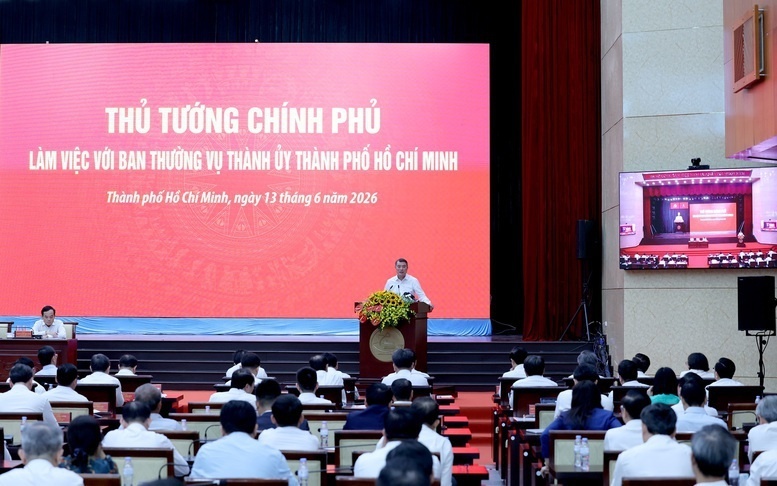 |
| Prime Minister Le Minh Hung at the meeting with Ho Chi Minh City authorities. Photo: VGP |
At the meeting, Minister of Science and Technology Vu Hai Quan congratulated Ho Chi Minh City on its first-ever ranking in the Top 100 global innovation and startup ecosystems, stating that it was a significant milestone and set a new goal to make Ho Chi Minh City a leading science, technology, and innovation centre in Asia.
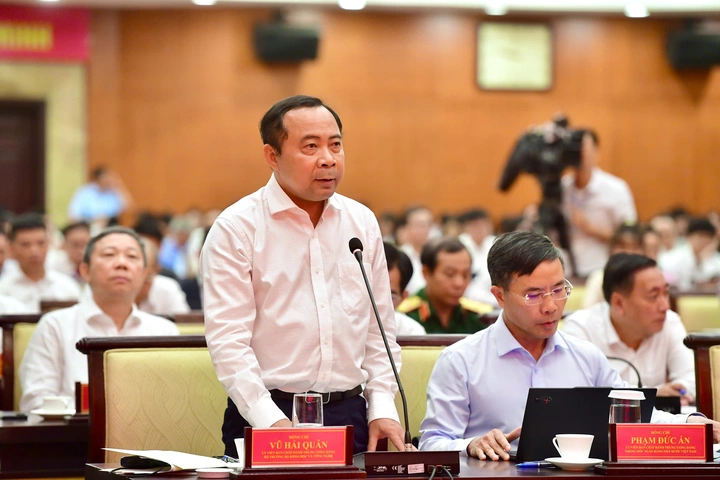 |
| Minister of Science and Technology Vu Hai Quan. Photo: MST |
According to the minister, a city's competitiveness is determined not only by capital or infrastructure but also by three core factors: superior institutions, strategic technology, and excellent human resources. Ho Chi Minh City needs to maintain its role as the leading startup centre in the country.
In the short term, Ho Chi Minh City needs to accelerate digital transformation in the small and medium-sized enterprise sector; supporting businesses in accessing essential platforms such as electronic invoices, digital accounting, customer management, digital signatures, and AI tools for sales and customer service.
In the long term, the city must be given a superior mechanism to experiment with new technologies, new business models, and new policies. While many cities compete based on geographical location and infrastructure, Ho Chi Minh City must compete based on institutions and the pace of innovation.
For the longer term, Minister Quan said Ho Chi Minh City should be granted special mechanisms to pilot new technologies, business models, and policies. While many cities compete on location and infrastructure, he argued that Ho Chi Minh City must compete on institutional quality and the speed of innovation.
He proposed five key priorities: accelerating digital transformation among small and medium-sized enterprises through greater access to digital platforms and AI tools; establishing a network of experts to support businesses in implementing digital transformation; improving support mechanisms for projects involving AI, automation, e-commerce, and data governance; creating special frameworks to test new technologies and business models; and developing key laboratories and research centres in strategic sectors such as AI, semiconductors, biotechnology, and big data.
The ultimate goal is to transform Ho Chi Minh City into a regional hub for training, attracting, and developing high-tech talent, creating new growth drivers for the next phase of development.
At the meeting, leaders from various ministries also proposed measures to support the city. Minister of Finance Ngo Van Tuan praised Ho Chi Minh City's performance in the first five months of the year, noting that its gross regional domestic product grew by 8.27 per cent in the first quarter of 2026, outpacing the national average.
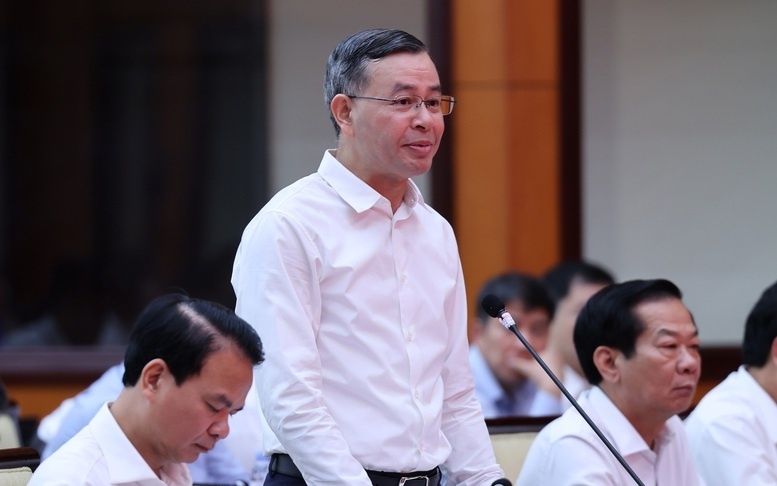 |
| Minister of Finance Ngo Van Tuan. Photo: VGP |
According to the minister, if the current growth momentum is maintained, the city will have difficulty achieving the growth target of over 10 per cent in 2026.
Ho Chi Minh City currently contributes approximately 23-25 per cent of the national GDP and 28-30 per cent of the total national budget revenue.
Analysing growth indicators, Minister Tuan noted that some sectors are still performing below the projected scenario. In particular, the service sector – which accounts for a large proportion of the city's economic structure – is expected to grow by only about 8.6 per cent, lower than the set target.
The city's export turnover in the first six months of the year is expected to increase by only about 5.3 per cent, much lower than the national average increase of over 19 per cent.
Minister Tuan also noted that although the private sector in Ho Chi Minh City accounts for a large proportion of the economy, its growth has not met expectations. The city needs to continue supporting businesses, especially in terms of production space, administrative procedures, access to capital, and human resources.
Ho Chi Minh City needs to leverage the leading role of public investment, creating a ripple effect, stimulating social investment, and encouraging the private sector to expand production and business.
The Ministry of Finance is committed to coordinating the review of each clause in the draft law on special urban areas, contributing to fundamentally removing obstacles in policies for the city.
Meanwhile, Minister of Industry and Trade Le Manh Hung proposed several strategic directions. Accordingly, Ho Chi Minh City needs to reorganise its development space towards strengthening regional linkages; in which, the central area plays a core role in high technology and high-quality services.
The minister also suggested that the city upgrade traditional industrial zones to follow the model of ecological industrial zones and circular economy.
Regarding the draft law on special urban areas, Minister of Justice Hoang Thanh Tung said that the ministry is closely coordinating with Ho Chi Minh City to research, review, and propose appropriate policies.
To date, the draft has been largely formed with nine chapters and 45 articles, including approximately 35-40 per cent new, outstanding, and unique policies aimed at maximising the potential and advantages and creating momentum for the city's development.
The Ministry of Justice will gather ideas and comments from ministries and agencies, and will continue to consult experts and scientists to finalise the draft law, striving to submit it to the government before July 10.
Regarding urban planning and development, Minister of Construction Tran Hong Minh requested Ho Chi Minh City to urgently review, and publish a list of urban areas and wards that meet the criteria for urban development according to Resolution No.111/2025/UBTVQH15 of the Standing Committee of the National Assembly on urban classification, ensuring a complete legal basis for state management of urban development.
Minister Minh said that Ho Chi Minh City needed must clearly define the position, role, and function of each urban area within the multi-centre mode to guide spatial planning and investment in synchronised technical and social infrastructure.
 | Ho Chi Minh City attracts over $3.8bn foreign investment in five months Ho Chi Minh City has pulled in more than $3.8 billion in foreign investment in the first five months of 2026, a more than 20 per cent increase on-year. |
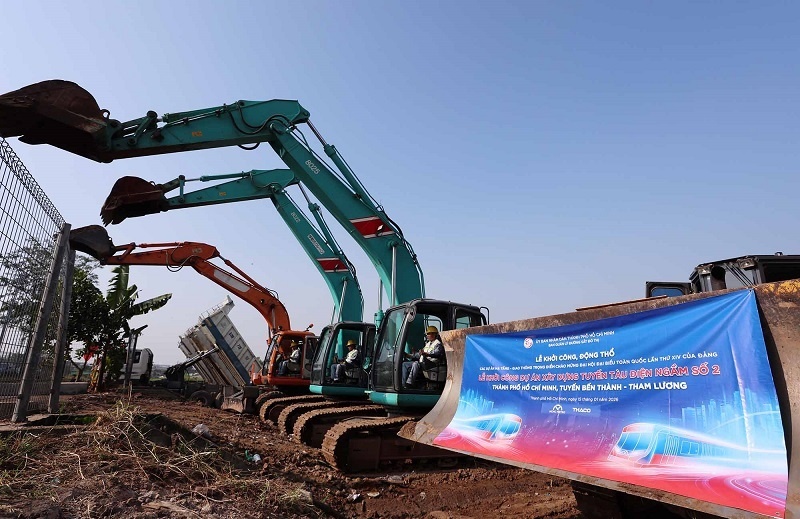
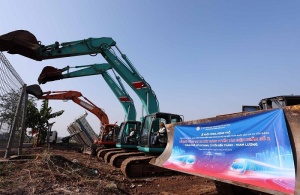 | Ho Chi Minh City to start construction on four urban railway lines Ho Chi Minh City People’s Committee is accelerating the procedures to start construction on four urban railway lines from now until the end of 2026, with the goal of completion by the end of 2030. |
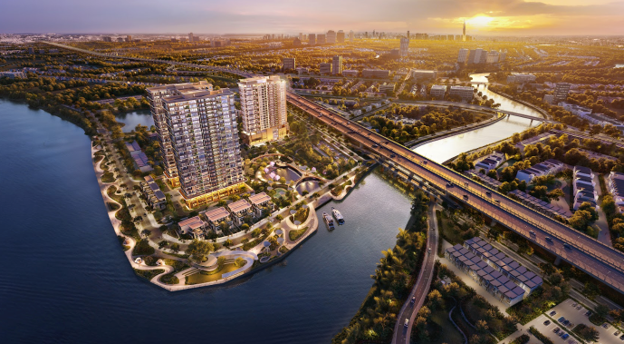 | Eastern Ho Chi Minh City enters new development phase After more than a decade of strategic planning, eastern Ho Chi Minh City is entering a new phase of development, driven by maturing transport infrastructure, a growing knowledge-based economy, and end-user demand from high-income residents gradually replacing speculative expectations, laying the groundwork for more sustainable real estate value in the long term. |
What the stars mean:
★ Poor ★ ★ Promising ★★★ Good ★★★★ Very good ★★★★★ Exceptional
 Tag:
Tag:Related Contents




Latest News




More News
- A broader platform for France-Vietnam cooperation (October 16, 2026 | 17:51)
- AEON to open 13th general merchandise store in Vietnam (October 14, 2026 | 17:56)
- Three international exhibitions open to boost industrial supply chain links (October 14, 2026 | 17:37)
- Garment and textile industry transitions towards high-value production (October 14, 2026 | 17:30)
- French business delegation meets MoF to discuss investment cooperation (October 14, 2026 | 11:37)
- Friso promotes global scientific collaboration on children’s gut health in Vietnam (October 13, 2026 | 16:18)
- Germany and Vietnam look to expand strategic cooperation and investment (October 13, 2026 | 16:14)
- Vietnam-Australia forum boosts AI and digital technology cooperation (October 13, 2026 | 11:30)
- Digital transformation shifts focus to added value (October 09, 2026 | 18:00)
- Melatec Dental Clinic - accompanying international clients on their smile care journey (October 09, 2026 | 17:25)



Latest News





 Mobile Version