
Perfecting legal corridor to boost high-tech sector

The draft consists of six chapters and 29 articles, reducing six articles, with some changes compared to the current law. It is expected that the amended law will be submitted to the National Assembly for consideration and approval at its upcoming 10th session.
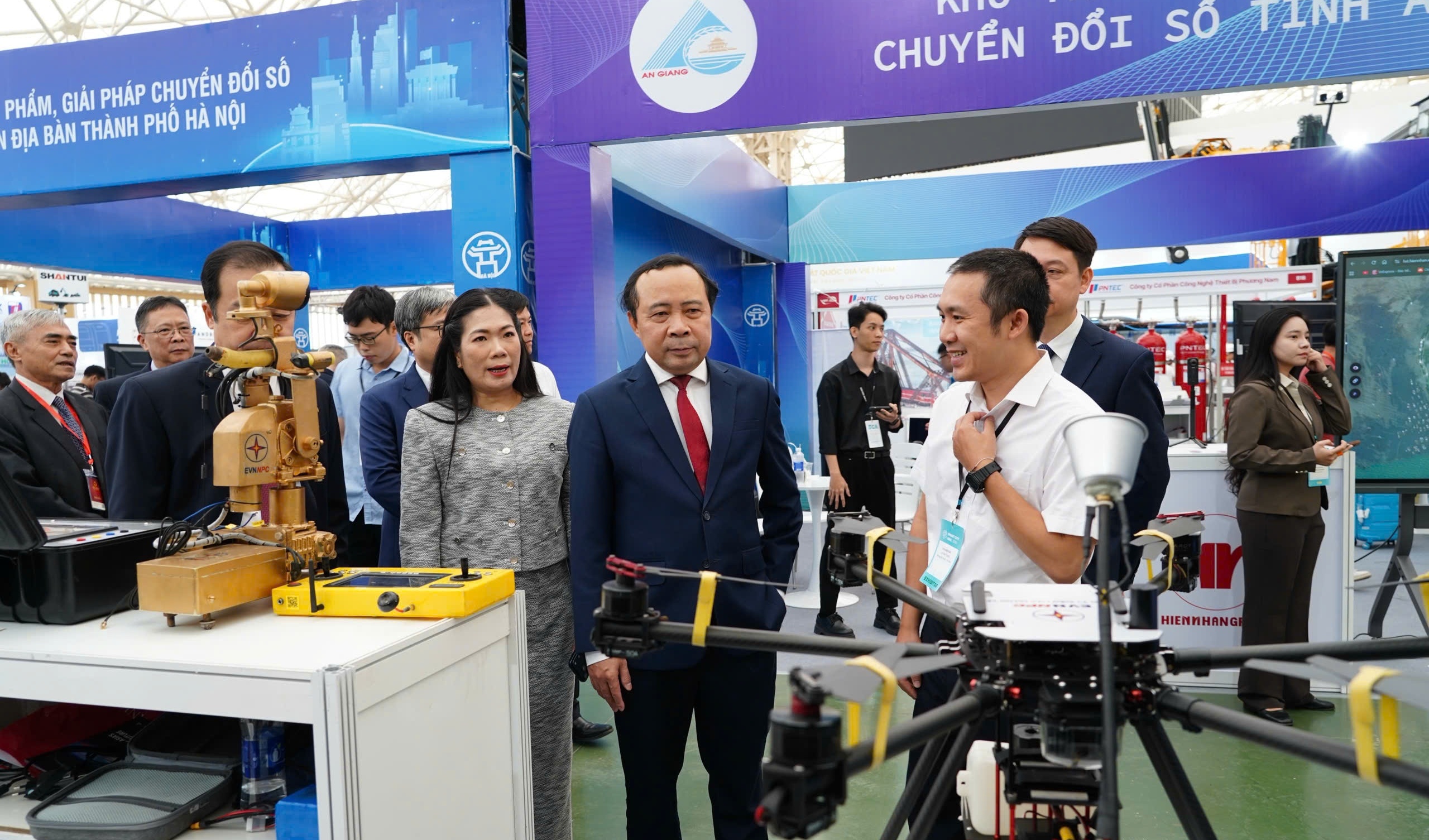
The workshop was co-chaired by Vu Hai Quan, permanent Deputy Minister of Science and Technology, and Nguyen Phuong Tuan, Vice Chairman of the NA Committee on Science, Technology and Environment, with the participation of NA deputies, experts, scientists, and businesses.
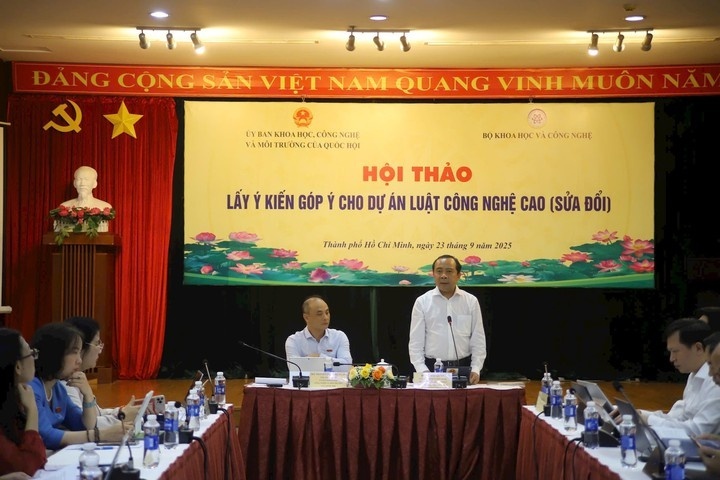 |
| The workshop was co-chaired by Vu Hai Quan, permanent Deputy Minister of Science and Technology, and Nguyen Phuong Tuan, Vice Chairman of the NA Committee on Science, Technology and Environment. Photo: MST |
According to Quan, the amendments aim to concretise the Party's policies, especially Politburo Resolution No. 57-NQ/TW dated December 2024 on breakthroughs in science and technology development, innovation, and national digital transformation. The resolution identifies high technology as a driving force for the country's industrialisation and modernisation. Therefore, the amended law needs to create a transparent, stable, and attractive legal corridor; promote research, development, application and transfer of high technology; and encourage domestic and foreign enterprises to invest.
The draft inherits as much as possible of the relevant regulations, and at the same time adjusts according to the new management thinking: effective management instead of process management. The law focuses on attracting social resources and encouraging businesses to fund research and development (R&D) in high technology, instead of relying solely on the state budget.
The law focuses on six policy groups, including completing the concept and criteria of high technology; redesigning the system of policies and beneficiaries of priority policies, incentives, and investment support; encouraging the development of the high-tech ecosystem; supplementing new regulations on high-tech park and high-tech urban models; supplementing and completing state management regulations on high technology, management, inspection, supervision, and efficiency assessment mechanisms; and supplementing regulations on requirements for comprehensive digital transformation of high-tech activities.
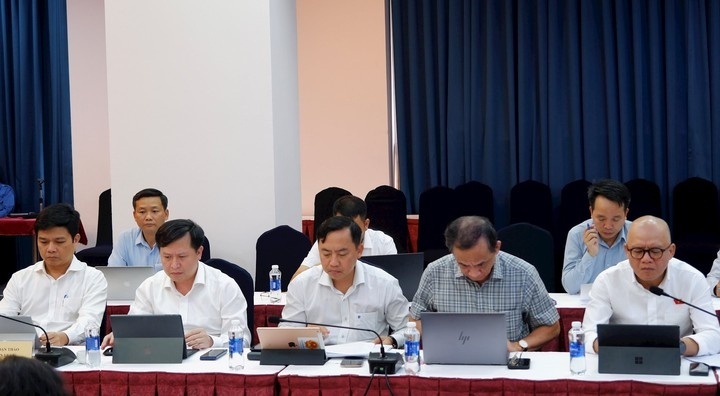
At the event, participants highly appreciated the draft law for covering the basic necessary contents. However, many opinions said that it is necessary to supplement clearer regulations on incentive mechanisms, criteria for establishment and operation of high-tech zones, high-tech urban areas, and high-tech agricultural zones, associated with ensuring security and safety, especially for foreign-invested projects.
They also proposed separate provisions on the development of high-tech industries, strategic industries, and supporting industries, serving the development of high-tech industries, with specific policies such as improving business capacity, supporting participation in the supply chain, and encouraging the production of components and core materials.
 |
| Photo: MST |
In addition, there should be policies to encourage domestic enterprises to transfer technology after mastering, pay attention to the development of high-tech industries and strategic technologies, and have incentive mechanisms that are strong, clear, and consistent with relevant laws to increase feasibility and consistency in implementation.
Tuan emphasised, “To have a good and feasible law, it is necessary to first finalise the concepts, terminology, and application criteria clearly and easily. However, it is also important to note that in all issues of technology transfer, digital transformation, AI, high technology, and people are still the core factor. Therefore, it is necessary to have a strong enough policy to train, attract, and retain high-quality human resources, but must avoid overlapping with the provisions of other laws.”
 | Ho Chi Minh City seeks US investment in green and high-tech sectors Chairman of Ho Chi Minh City People's Committee Phan Van Mai has invited US corporations to invest in the sustainable and high-tech sectors, aligning with the city's green growth strategy for 2030 and beyond to 2050. |
 | Dassault Systèmes and Viettel ink MoU to boost Vietnam’s high-tech sector Dassault Systèmes and Viettel signed an MoU to strengthen strategic cooperation in AI, machine learning (ML), digital design, and simulation on August 20. |
 | Vietnamese industry moves towards greener and high-tech future Vietnam's industrial sector is accelerating its shift towards sustainability and advanced technologies, with green manufacturing, semiconductors, and data infrastructure emerging as new growth pillars. |
What the stars mean:
★ Poor ★ ★ Promising ★★★ Good ★★★★ Very good ★★★★★ Exceptional
 Tag:
Tag:Themes: Digital Transformation
- Vietnam-Australia forum boosts AI and digital technology cooperation
- Digital transformation shifts focus to added value
- Amazon Kuiper licensed for private satellite telecommunications network in Vietnam
- AWS ramps up security tools amid growing AI risks
- Machine vision and 3D: How logistics and warehousing are catching up with manufacturing
Related Contents




Latest News


More News
- French experts share AI and digital governance insights in Hanoi (October 11, 2026 | 08:00)
- Digital government push focuses on data connectivity and AI (October 10, 2026 | 08:00)
- Ho Chi Minh City holds dialogue with businesses to address operational hurdles (October 09, 2026 | 17:27)
- AI beginning to reshape recruitment criteria (October 09, 2026 | 16:49)
- Electronics firms boost raw material reserves sevenfold amid supply concerns (October 09, 2026 | 08:00)
- NSRP navigates global energy supply volatility (October 08, 2026 | 16:59)
- Minitab launches campaign to combat illegal software use in Vietnam (October 08, 2026 | 15:54)
- Raising construction materials supply chain standards amid green transition (October 08, 2026 | 14:00)
- Samsung Vietnam to deepen cooperation with local manufacturers (October 08, 2026 | 12:00)
- Sojitz in Vietnam: 40 years from individual projects to a business cluster 'KATAMARI' (October 08, 2026 | 09:00)







 Mobile Version