
Retailers turn to AI and automation as shopper satisfaction slips

The report, released on December 18, said 87 per cent of retail leaders said GenAI and automation are critical to loss prevention efforts. The study also found that shopper satisfaction declined for the second consecutive year, falling across both in-store and online experiences and remaining below the peak recorded in 2023.
"Retailers that will succeed in the future are agile leaders who connect physical and digital experiences through intelligent workflows," said Christanto Suryadarma, sales vice president for Southeast Asia, South Korea, and Channel APJeC at Zebra Technologies, "By leveraging AI, automation, and improved processes, retailers can deliver the fast, seamless, and personalised experiences today’s shoppers expect."
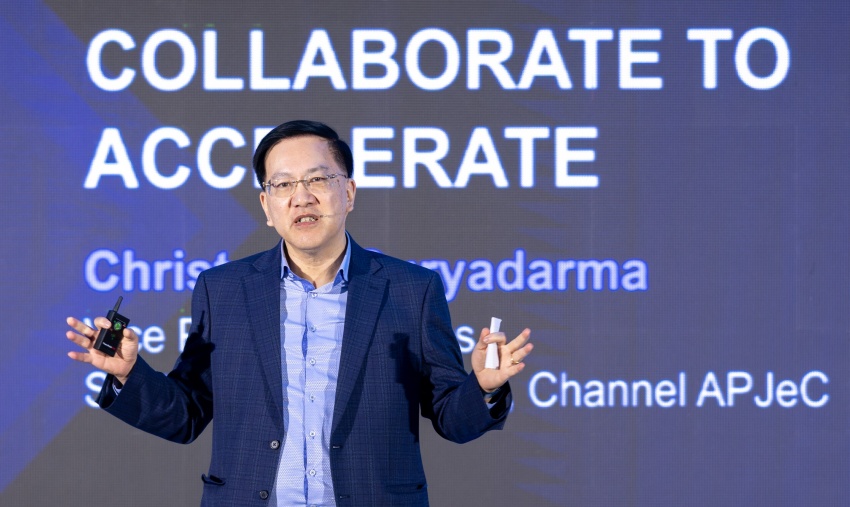 |
| Christanto Suryadarma, Sales vice president for Southeast Asia, South Korea, and Channel APJeC, Zebra Technologies |
The research also highlights a shift in shopper priorities. While increasingly drawn to convenience, speed, and value, nearly eight-in-ten shoppers prioritise discounts and promotions as inflation pressures persist. At the same time, consumers demand operational excellence, expressing frustration with out-of-stocks, locked-up products or a lack of self-checkout lanes.
According to the study, Vietnam’s retail sector is on a strong growth trajectory, with market value projected to reach approximately $163 billion by the end of 2025 and exceed $209 billion by 2030. This growth is driven by rising incomes, urbanisation, and a shift to modern retail formats.
Technology adoption is accelerating, supported by market trends and government policies in the retail development strategy to 2030, which prioritises digitalisation, omnichannel commerce, and sustainable supply chains. Retailers are expected to expand omnichannel platforms, use AI for demand forecasting and personalisation, modernise payment systems, and adopt automated logistics and warehouse solutions.
Tran Thi Bao Tran, Vietnam country manager, Zebra Technologies, said, “As e-commerce grows and shoppers expect greater convenience, speed, and personalisation, retailers in Vietnam are facing both new opportunities and real challenges. With solutions such as Zebra’s TC53e mobile computer, TC22R integrated handheld RFID reader, and its range of industrial and mobile printers, we are helping businesses build trust, strengthen customer loyalty, and stay competitive in a fast-changing retail market.”
Zebra Technologies said at a media briefing on December 18 that retailer readiness varies widely, despite strong growth potential and rising consumer demands. While many face similar challenges, each retailer has distinct priorities and pain points, making it essential to identify specific needs before applying technology solutions.
“For smaller retailers, even starting with the basics – such as barcode scanning, digitising the point of sale, and moving away from pen-and-paper processes – can be a strong first step,” said George Pepes, Asia-Pacific vertical solutions lead for retail at Zebra Technologies. “Larger retailers often already have these foundations in place and are instead focusing on real-time inventory visibility across the supply chain, including technologies such as RFID.”
Christanto Suryadarma added, "From my perspective, Vietnam is progressing rapidly, especially in manufacturing. In retail, however, I still see a significant opportunity to further digitise and automate operations. In Vietnam, I’ve seen good progress in areas like barcode usage and POS systems, but far fewer examples where store associates are equipped with digital devices to assist customers directly."
He recommended to empower frontline store associates with digital tools, give them the ability to work faster, be more productive, and deliver better customer experiences. Alongside RFID for inventory management, this is a critical next step.
"I hope to see more Vietnamese retailers, especially strong local and national brands, make breakthroughs in this area. The cost of technology is becoming more affordable, and the barriers to entry are lower than ever. What’s needed is leadership with the ambition to say, 'We don’t just want to be another retailer; we want to be the best in the country,'" he noted.
Retailers are increasingly recognising the importance technology plays in enhancing the shopping experience, as delays in accessing information can hinder associates and disrupt service.
Providing the right technology alleviates stress and boosts job satisfaction. More than 8-in-10 surveyed associates believe effective tools make their work more enjoyable and less stressful, while helping them provide better service to customers.
Unsurprisingly, inventory challenges continue to impact shopper satisfaction and retailer profitability. While improvement is evident year-over-year, almost half of shoppers (Global’s 52 per cent in 2025 vs 57 per cent in 2024; Asia-Pacific’s 47 per cent in 2025 vs 49 per cent in 2024) are still leaving stores without all the items they intended to purchase, often due to out-of-stocks or difficulties locating products.
Retailers acknowledge these gaps, with 84 per cent of global decision-makers (85 per cent in Asia-Pacific) citing real-time inventory synchronisation as a top priority for their organisations. In fact, many of them plan to implement advanced technologies such as computer vision, RFID, and GenAI over the next five years as they are viewed as essential tools for improving inventory visibility and reducing shrinkage.
Inventory optimisation also ranked in the top three for in-store profitability drivers, topped by automation for more real-time inventory visibility and in-store digital ads and retail media networks, which rose to 42 per cent in Asia-Pacific.
 |
| Photo: Zebra Technologies |
According to Christanto Suryadarma, there are few key drivers. First, Asia-Pacific has very high mobile technology penetration and retailers recognise that AI is extremely powerful in this context.
The good news is that in Asia-Pacific, much of the foundational infrastructure is already in place, mobile devices, cloud connectivity, and widespread cellular network coverage. Retailers see this and realise that by implementing AI, they can operate smarter and serve customers better.
He added that one additional factor he has heard from retailers is the influence of Gen Z shoppers, whose shopping behaviour is very different from older generations. They are heavily influenced by social commerce. They also expect fast responses and seamless service.
“More broadly, the shopper profile in Asia-Pacific is changing. Countries like Vietnam, Indonesia, the Philippines, and Malaysia have very young populations, and younger shoppers behave very differently from older generations. This demographic shift is pushing retailers to adopt technology faster,” he admitted.
According to George Pepes, one trend starting to see a lot of, particularly in India, is quick commerce. This model focuses on fulfilling orders from multiple micro-fulfilment centres located close to customers.
“What we’re really seeing here is a significant acceleration in fulfilment speed. It’s an exciting shift, and markets like Vietnam could also benefit from this model, as it aligns well with shopper expectations for convenience and immediacy,” he said.
Pepes explained that quick commerce relies heavily on real-time inventory visibility because everything happens online. Customers place orders digitally and expect delivery within 10 to 15 minutes. To support that kind of experience, strong digitisation is essential. Without accurate, real-time data and digital infrastructure, it’s simply not possible to adopt or scale a model like this effectively.
What the stars mean:
★ Poor ★ ★ Promising ★★★ Good ★★★★ Very good ★★★★★ Exceptional
 Tag:
Tag:Related Contents







Latest News



More News
- Expanding education partnerships to drive mutual growth (October 06, 2026 | 16:04)
- VTG 2026 to showcase textile and footwear innovation in Ho Chi Minh City (October 06, 2026 | 16:00)
- Infineon boosts Vietnam footprint with Ho Chi Minh City office (October 06, 2026 | 10:02)
- Vietnam Customs expands priority enterprise scheme to 74 firms (October 03, 2026 | 08:00)
- ASL Law opens Danang office (October 02, 2026 | 22:12)
- Project ACTIVE 2.0 launches in Vietnam to boost cervical cancer care (October 02, 2026 | 22:02)
- Vietnam launches first embodied AI conference to advance robotics ecosystem (October 02, 2026 | 17:00)
- DKSH Performance Materials – A trusted partner in Vietnam’s evolving personal care landscape (October 02, 2026 | 14:28)
- Ghanaian delegation reviews PSL Machinery’s cashew factory-management and implementation roadmap (October 02, 2026 | 10:18)
- People living with chronic kidney disease and diabetes should be aware of infectious disease risks (September 30, 2026 | 18:00)


Latest News




 Mobile Version