
Garment and textile sector seeks new growth after volatile year

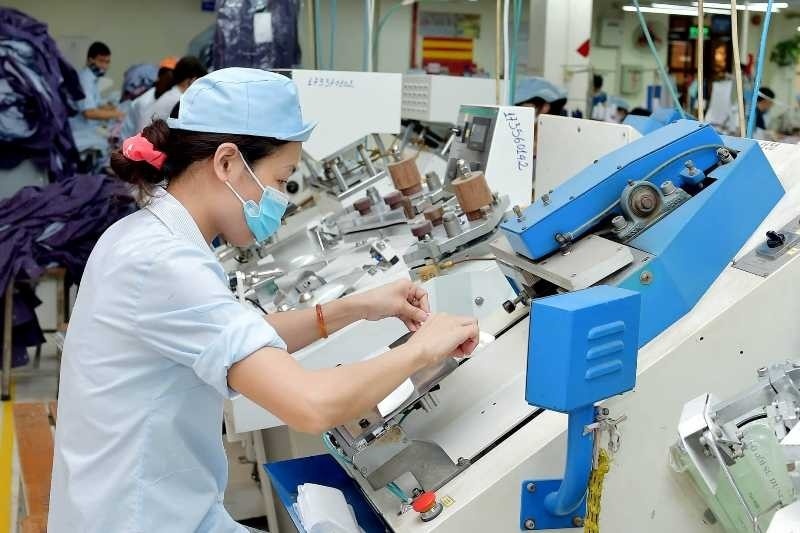
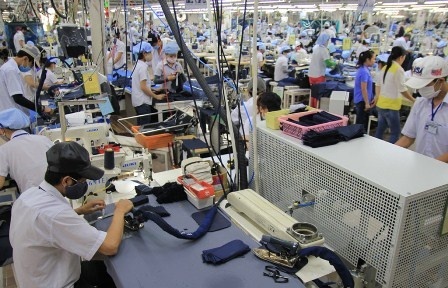
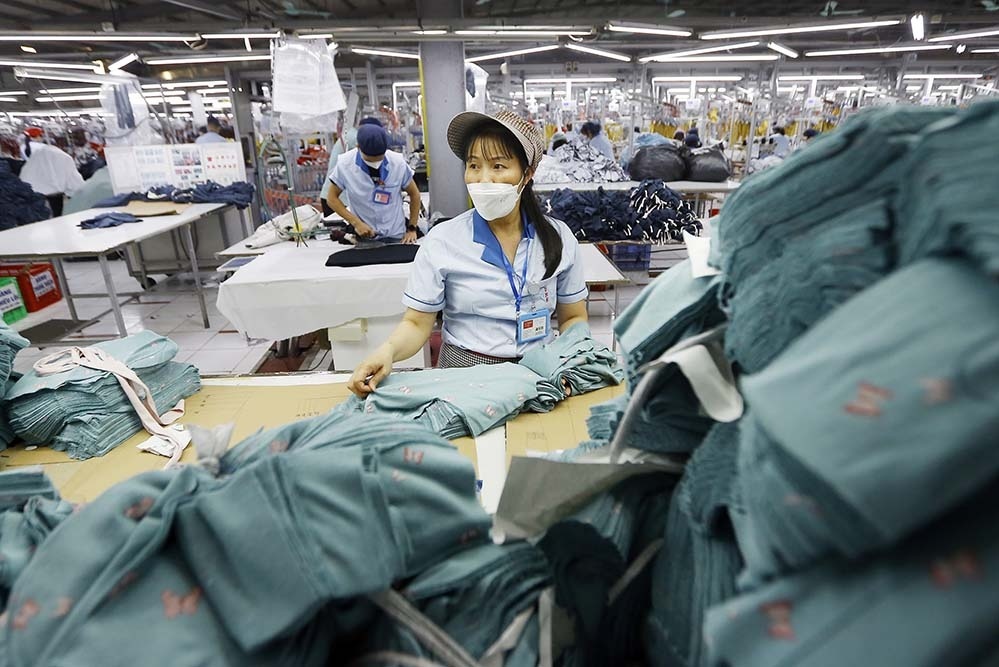
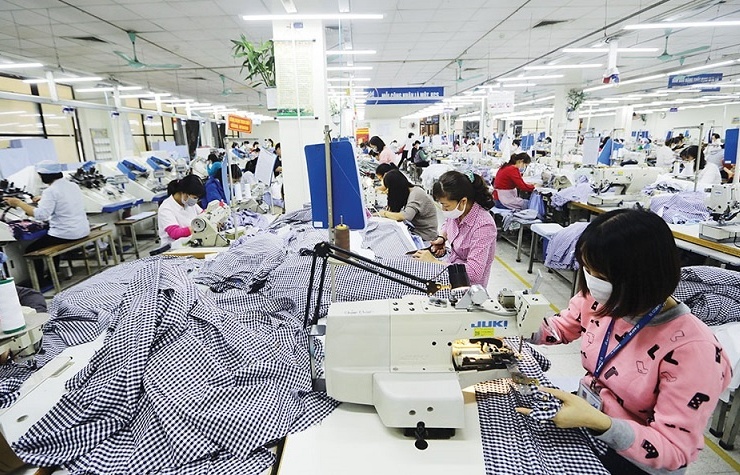
The apparel sector is in a final sprint to complete its 2025 targets, with total export value estimated at $46 billion, against the backdrop of sharp fluctuations in the global market.
Although this figure falls short of the original $48 billion target, it still represents a 5.6 per cent increase on-year, helping Vietnam retain its position among the world’s top three garments and textiles exporters.
“A shortfall of $2 billion was unavoidable in 2025 due to a series of disruptions stemming from global market shifts and international policy changes,” said Vu Duc Giang, chairman of the Vietnam Textile and Apparel Association (VITAS), at a press conference in Hanoi on December 10.
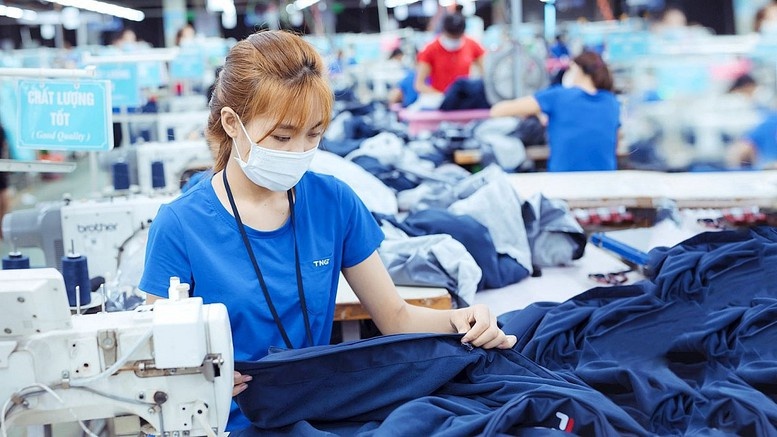 |
Escalating US-China trade tensions have pushed up tariffs on many textile-based products, while a complex geopolitical environment has directly affected global orders and purchasing power. On the demand side, consumers have continued to tighten spending, forcing manufacturers to accept smaller orders with faster delivery requirements and compressed production timelines.
This has significantly eroded profit margins. Businesses have had to constantly juggle fragmented orders, adjust production plans and increase investment to meet green standards and traceability requirements to retain international clients.
The business picture at Thanh Cong Textile Garment Investment Trading JSC (TCM) clearly reflects the sector’s growing divergence. Over the first 10 months of the year, TCM recorded profits approximating $9.5 million, down 2 per cent on-year, while revenue came to around $120.1 million, a decline of 5 per cent.
Its operating cash flow for the first nine months contracted approximately $3.8 million, compared with a positive $12.2 million in the same period last year. Even so, the company has secured additional orders through the first quarter of 2026, supported by seasonal holiday demand and a competitive edge as the US imposes higher tariffs on imports from several other exporting countries.
“As profit margins narrow and cash flows weaken, the industry is being forced to reassess internal capabilities, from production organisation to the level of autonomy within supply chains,” said Cao Huu Hieu, general director of the Vietnam National Textile and Garment Group, noting that the sector’s most enduring challenge remains dependence on imported raw materials.
The yarn segment totally relies on imported cotton, along with 90-95 per cent of fibres and a wide range of chemicals and dyes, posing a major risk should the US tighten tariffs on products with a high proportion of third-country origin.
According to VITAS, the Middle East and Africa are emerging as new growth destinations for Vietnamese garments and textiles exports, as traditional markets become increasingly volatile.
In the Middle East alone, the sector’s exports generated around $1 billion in 2024 and reached $700 million in just the first seven months of 2025. These results highlight the industry’s adaptability, as Vietnamese firms not only defended their mass-market segments but also gradually moved into higher value-added product lines with greater technological and design content.
Alongside export market expansion, many local garment manufacturers, including foreign-backed firms, are accelerating overseas investments.
Currently, nearly 30 companies in the sector have established a presence in Indonesia, Myanmar, and parts of Africa, South Asia, and Latin America. Pioneers such as May Song Hong and Phong Phu International Textile Group are gradually building multinational production networks, enhancing competitiveness and gaining greater resilience against global shocks.
“The multi-site production model allows companies to spread political and trade risks, optimise labour and transportation costs, and strengthen their reputation and ability to retain international customers,” said Vu Duc Giang, chairman of VITAS.
In practice, labour costs at factories in countries such as Indonesia and Egypt are significantly lower than in Vietnam, offering a clear advantage in product pricing.
Beyond labour considerations, many host countries enjoy favourable trade relations with major markets, with low or even zero tariffs, allowing firms to benefit from preferential treatment at the export stage. In addition, logistics costs and access to raw materials in some markets are better aligned with long-term production scale expansion strategies.
“We are gradually reducing our reliance on the US market, which is particularly vulnerable to policy shifts and tariff changes,” said Tran Nhu Tung, chairman of the Board at TCM.
Instead, TCM is intensifying its focus on the EU and markets covered by the Comprehensive and Progressive Agreement for Trans-Pacific Partnership and the Regional Comprehensive Economic Partnership to capitalise on tariff incentives and access orders with higher technical requirements.
This strategy is expected to help TCM protect profit margins, improve cash flow in the short term, and create additional growth momentum from late 2025 into the first half of 2026.
 | Textile apparel firms see mixed performance Amid a rebound in momentum, businesses in the textile and apparel sector have delivered a mixed business picture so far this year. |
 | Apparel sector players being proactive to surmount hard times Despite being bottomed-out, textile and garment firms remain prudent in business performance for the rest of this year to weather stormy times. |
 | Garment giants post robust Q1 profits despite global trade headwinds Vietnamese textile apparel producers saw impressive profit growth in the first quarter (Q1) of 2025, signaling a strong recovery in the sector. |
What the stars mean:
★ Poor ★ ★ Promising ★★★ Good ★★★★ Very good ★★★★★ Exceptional
 Tag:
Tag:
Related Contents




Latest News





More News
- Sojitz in Vietnam: 40 years from individual projects to a business cluster 'KATAMARI' (October 08, 2026 | 09:00)
- Coteccons targets 'Quality Growth' with 25 per cent dividend plan (October 07, 2026 | 13:00)
- Vietnam Education Forum opens UK Education Mission's Hanoi visit (October 07, 2026 | 12:27)
- Tax authorities deactivate TINs of nearly 180,000 businesses (October 07, 2026 | 12:08)
- World Bank raises Vietnam's 2026 GDP growth forecast to 7.4 per cent (October 07, 2026 | 11:41)
- Vietstock 2026 to spotlight livestock innovation and green transition (October 07, 2026 | 09:00)
- Vietnam’s GDP grows over 9 per cent in first nine months (October 05, 2026 | 18:45)
- Vietnam earns $56.3 billion from agro-forestry-fishery exports (October 05, 2026 | 18:32)
- DSV balances resilience and decarbonisation in supply chains (October 05, 2026 | 18:20)
- Electronics exports reach $175.4 billion in the first nine months (October 05, 2026 | 18:12)



Latest News






 Mobile Version