

The next leap in Cloud AI

Which industries are you most excited about for agentic AI right now, and which areas are still overlooked but have huge potential?
Honestly, every industry is already being transformed and will continue to be. When someone in a board meeting says, “AI is my competitive advantage”, I always say: it's not, because everyone will use AI. The real advantage comes from the data you bring and how you apply it.
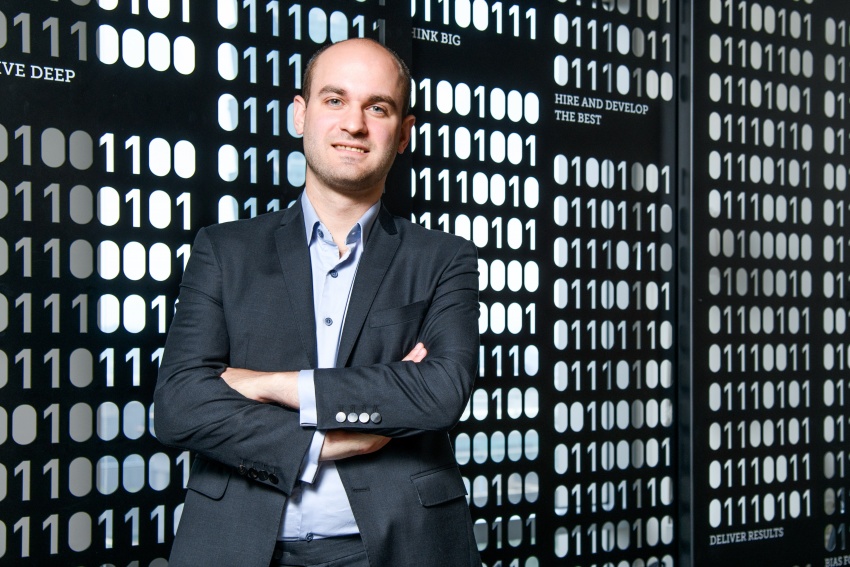 |
| Oliver Klein, chief technologist at AWS |
That said, a few areas stand out. First, software development. The entire way we build software is being reinvented. Then, there's application consumption. Instead of using a website or app, people will increasingly go through their AI assistant, which then interacts with your systems through agent-to-agent protocols. Then it's creative industries. You already saw Adobe on stage earlier, AI is transforming creative workflows end-to-end.
In advertising as well, it's becoming fully personalised, and that's happening right now, not in the future. In customer support and call centres, these are perfect use cases where AI agents add huge value. You saw the example with Amazon Quick and Amazon Connect in the keynote.
I know that sounds like a broad answer, but I truly believe every industry will be transformed. The shift is that anyone can now use natural language to interact with computer systems and extract value from their data. And honestly, what company wouldn't want that? I think everyone would.
In your view, what are the biggest technical barriers enterprises face when trying to move from pilots to full-scale agentic AI deployment?
I think we're already seeing many companies running agentic AI workloads on AWS in full production. And this is exactly where the foundations we're building with Bedrock and our core services become really relevant.
It's also why these frontier agents, like the Security Agent and the DevOps Agent, matter so much, because they allow customers to experiment, but to experiment safely and securely. The goal is to make it easy to test, iterate, and then move into production quickly, safely, and with confidence.
And you can see that all the new capabilities we're adding to Bedrock and these agents help customers accelerate that move to production if they're not already there, and many of our customers are already there.
Looking ahead three to five years, what does agentic AI at scale look like inside enterprises?
Three to five years is extremely hard to predict in this space, it's moving unbelievably fast. But if we look slightly shorter term, I would say the past year has already been the “year of production” for most of the customers I work with globally, and especially across Southeast Asia.
One major opportunity right now is combining your enterprise data foundations with AI agents. We're starting to see customers use models as-is and connect them to their systems, and that works well. But the next step is: how do you bring your own data in effectively? How do you let AI agents understand, manipulate, and act on your data to create real business value? That is where I see the next wave of enterprise adoption happening.
This is also why we built all these connectors. If you look at Amazon Quick and the Quick Suite, you'll find connections to Salesforce, Microsoft 365, Zendesk, whatever systems you're already using. Now you have an AI intelligence layer in the middle that can pull that data together, transform it, and empower your business users to create better customer experiences. That's where I see a lot of work happening next.
Looking a bit further out, like I said earlier, the way we interact with customers, and how customers interact with businesses, will change. Today, everything is about a UI: you download an app, you go to a website. I don't think that's the future. You'll use natural language to talk to your AI assistant, and the assistant will book your flights, reserve your hotel, or call customer service on your behalf.
We're already seeing this with customers like Booking.com, where you simply say, “I want to take a trip to France, figure it out for me,” instead of scrolling through long lists and clicking through pages.
Even inside Amazon, if you look at Rufus on Amazon.com, instead of typing keywords and browsing endless results, you just say: “I have a three-year-old who loves dinosaurs, what gift should I get?” Then you refine it: “Do you have something in red?” That's a completely different experience from navigating a long product grid.
Going forward, I think we'll see far more of these transformations, conversational experiences become the norm.
| At AWS re:Invent 2025, Adobe CEO Shantanu Narayen highlighted how AI is transforming creativity and marketing, empowering professionals and consumers alike to bring ideas to life faster and with greater precision. To accelerate this shift, Adobe and Amazon are expanding their collaboration, leveraging AWS's infrastructure to integrate AI across Adobe's flagship products, such as Express, Acrobat Studio, and Firefly, and to orchestrate customer experiences at scale through platforms like Adobe Experience Platform and GenStudio. Together, the companies aim to make AI-powered creativity and customer engagement more accessible, personalised, and effective, helping businesses thrive in the digital economy. |
 | AWS unveils major AI innovations at re:Invent 2025 Amazon Web Services (AWS) announced a wave of new AI innovations on December 2 at its annual re:Invent conference in Las Vegas, focusing on helping organizations adapt to the rapidly evolving AI landscape through advances in autonomous AI agents, cloud infrastructure, and foundation models. |
 | LPBank Securities accelerates AI and data innovation with AWS LPBank Securities (LPBS) is setting a new standard for digital finance, aligning with the country's wider push towards innovation and sustainable growth. Nguyen Duy Khoa, chairman and CEO of LPBS, spoke to VIR's Bich Thuy about how data and AI have become the foundation of operational efficiency and delivering better customer experiences. |
 | How AI and cloud are reshaping the factory floor Steve Blackwell, Product Engineering & Services CoE lead at AWS, spoke with VIR's Bich Thuy on how AI and advanced cloud technologies are set to transform the future of manufacturing. |
 | How AWS is powering the next-gen data era As data and AI converge to power next-generation experiences, Mai-LanTomsen Bukovec, vice president of technology at Amazon Web Services (AWS), told VIR's Bich Thuy how integrated data architectures and cloud services are reshaping innovation. |
What the stars mean:
★ Poor ★ ★ Promising ★★★ Good ★★★★ Very good ★★★★★ Exceptional
 Tag:
Tag:
Themes: Digital Transformation
- Amazon Kuiper licensed for private satellite telecommunications network in Vietnam
- AWS ramps up security tools amid growing AI risks
- Machine vision and 3D: How logistics and warehousing are catching up with manufacturing
- Nvidia proposes areas of strategic cooperation with Vietnam
- Draft legal amendments target red tape and decentralisation
Related Contents









Latest News





More News
- DSV backs Vietnam's push for more sustainable logistics (August 04, 2026 | 17:10)
- Roche Pharma Vietnam appoints new general manager, reinforcing commitment to Vietnam healthcare (July 23, 2026 | 15:41)
- Constant Energy on Vietnam solar power and policy hurdles (July 22, 2026 | 08:00)
- Key points when drafting a company charter to reduce disputes in Vietnam (July 20, 2026 | 08:00)
- AkzoNobel executive on sustainability as a manufacturing growth driver (July 10, 2026 | 14:53)
- LivWell expands holistic health ecosystem for businesses and communities in Vietnam (July 09, 2026 | 16:43)
- Thai beverage group sees Vietnam as long-term growth partner (July 02, 2026 | 08:30)
- AstraZeneca chief on Vietnam's healthcare financing shift (June 30, 2026 | 16:47)
- Vietnam emerges as one of VistaJet’s fastest-growing markets (June 18, 2026 | 16:21)
- Goldwind Asia chief on driving quality growth in wind sector (June 15, 2026 | 17:54)


Latest News







 Mobile Version