
Japfa Vietnam's safe and efficient livestock value chain

With biosecurity, product quality, workplace safety and environmental responsibility as its foundations, the company is steadily strengthening its integrated Feed-Farm-Food closed-loop model. This approach creates greater value for farmers while delivering safe, high-quality products to consumers.
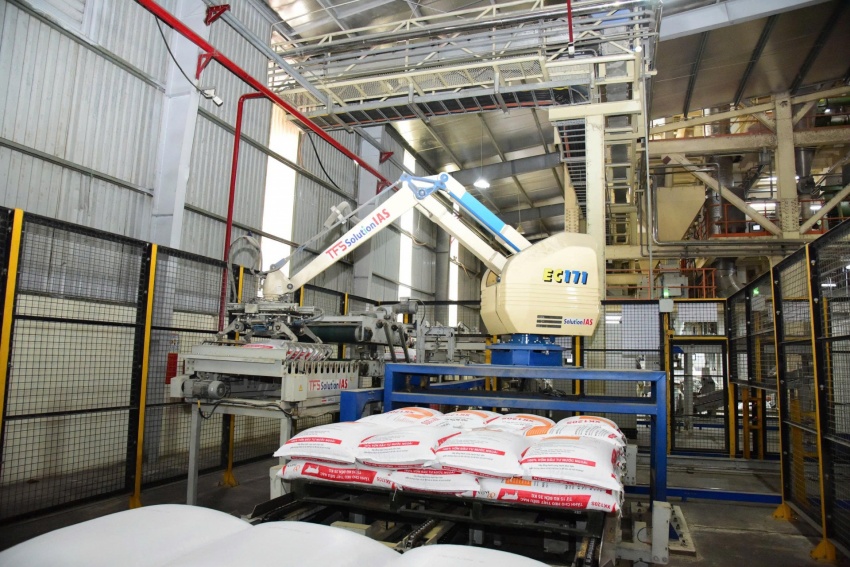 |
| Photo: Tran Ngan |
As part of a transformation strategy launched in 2024 to restructure its operations in response to market changes and support growth, Japfa Vietnam has made the development of a safe and healthy working environment a key priority.
The company has subsequently strengthened its environment, health and safety (EHS) management system, integrating safety and environmental standards into daily operations across its nationwide network of feed mills, farms, slaughterhouses and processing facilities.
Speaking to the media in the last days of August, Nguyen Van Quoc Cuong, EHS manager at Japfa Vietnam, said the company’s EHS system was built around four key pillars: leadership commitment, risk assessment and control, legal compliance, and continuous improvement.
The approach is designed to foster a proactive safety culture in which employees are encouraged to identify potential hazards and take part in managing workplace risks. Hazard identification and risk control are supported by regular training, emergency preparedness and safety education, with occupational health and workplace safety incorporated into day-to-day operations.
“EHS is a core priority across Japfa’s entire system. We see it as a core value and a competitive advantage in sustainable management. Based on this approach, Japfa is developing an EHS culture and creating a safe and sustainable working environment across its eight feed mills, more than 1,400 farms, and three pig and poultry slaughtering and meat-processing plants,” Cuong said.
The company has established regular communication and safety checks to reinforce these practices. EHS issues are discussed between management and employees on a weekly basis, while factories allocate the first five minutes of each working day to EHS reminders and safety requirements.
These briefings apply to everyone working at or visiting the facilities, including contractors, customers and drivers, rather than employees alone. Such routine practices allow the company to identify hazards, assess and control risks, strengthen emergency response capabilities and improve employees’ safety awareness. EHS requirements are incorporated into operational processes to encourage early risk prevention and a more proactive approach to workplace safety.
“Human safety, environmental responsibility and operational efficiency need to go hand in hand. By integrating risk management, environmental protection, occupational health and operational efficiency, we are gradually building a comprehensive and long-term EHS system that meets safety and environmental requirements while supporting the company’s goals,” Cuong said.
At its feed mills, Japfa has also introduced the 6S programme to create a more organised, systematic and safer working environment. Tran Thi Anh, warehouse assistant manager at Japfa’s Phu Tho Factory, said the programme has produced practical benefits beyond workplace cleanliness.
“6S helps us maintain an organised and clean workplace while standardising working processes and raising employees’ awareness of safety. It also makes it easier to identify potential hazards at an early stage, allowing us to address them before they develop into safety risks,” she said.
By integrating EHS principles into daily operations and encouraging participation across its workforce and wider network of stakeholders, Japfa Vietnam aims to make workplace safety and environmental responsibility an integral part of its operational culture, while improving efficiency and supporting its longer-term growth strategy.
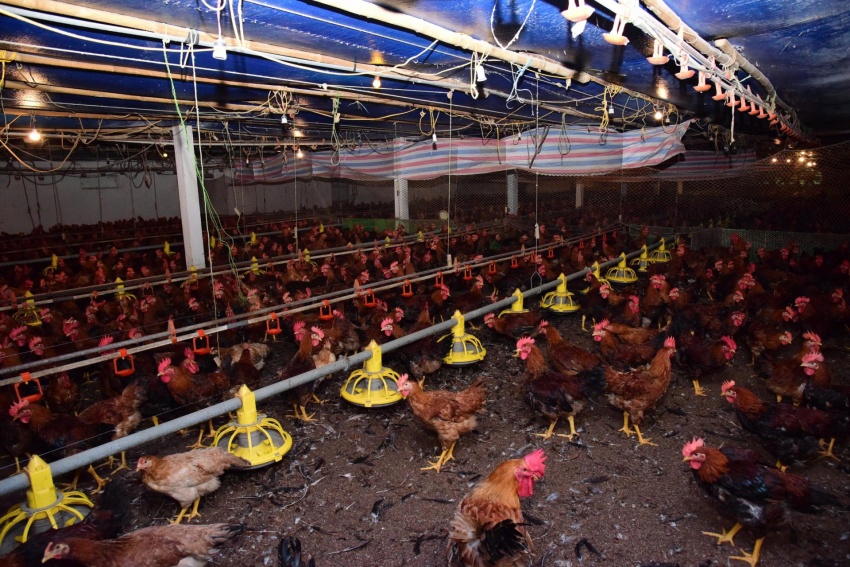 |
| Nguyen Manh Hai's chicken farm. Photo: Tran Ngan |
Alongside investments in production infrastructure and technology, Japfa Vietnam is expanding its contract farming model for coloured chickens, building long-term partnerships with local farmers and strengthening links across the poultry value chain.
The company currently works with nearly 700 farming households across the country, with its contract farming network supplying more than 40 million commercial coloured chickens to the market each year.
The model combines the characteristics of local chicken breeds with the genetic advantages of imported breeds to produce birds that are healthy, uniform and well suited to local consumer preferences, with flavourful meat and an appealing appearance.
Under the model, partner farms operate modern closed-house systems and receive comprehensive support from Japfa, including day-old chicks, feed, technical guidance and standardised husbandry protocols. Environmental management and strict biosecurity measures are also applied to improve survival rates, flock quality and overall production efficiency.
Japfa’s product off-take policy is another important element of the model, allowing farmers to plan production with greater certainty, reduce exposure to market fluctuations and invest more confidently in expanding their farms. This has helped shift the relationship from the provision of production inputs towards longer-term cooperation and shared value creation across the supply chain.
A typical example is the farm operated by Nguyen Manh Hai in Yen Thinh village, Bat Bat Commune, Hanoi. Hai has worked with Japfa under the contract farming model since 2006.
When he started, Hai and his wife used all of their savings and borrowed additional funds to build the farm. As the business proved profitable, they reinvested their earnings in new poultry houses and gradually expanded the operation. The family’s farm now covers 26,800 sq.m and comprises three closed-house production areas, with a capacity of around 25,500 chickens per cycle.
In 2019, with support and guidance from Japfa, Hai switched to raising Mia chickens, a traditional Vietnamese breed from Ba Vi known for its flavourful meat.
“Mia chickens have a longer growing period, but they have good disease resistance and a high tolerance for heat. They are also less vulnerable when power outages or extreme weather occur. Compared with industrial breeds, Mia chickens are more resistant to disease, and when proper disease-prevention procedures are followed, mortality can be kept very low,” Hai said.
His farm currently raises around 2.5 batches a year, with an average market weight of 2.75-2.8kg per bird. Each cycle produces 65-70 tonnes of chicken for sale.
“With a contract farming fee of around 30 US cents per kilogram, after covering electricity, water and labour costs, the farm generates net profits of around VND1 billion ($390,000) a year. The stable production model gives us greater confidence to maintain and expand the farm over the long term,” he said.
According to Pham Thi Thanh Binh, director of Commercial Coloured Chicken Production at Japfa Vietnam, the model generates benefits beyond direct farm income by creating jobs and enabling the transfer of modern farming techniques and technologies to local producers.
“Through long-term cooperation with farmers, we can help them improve production capacity, adopt more advanced husbandry practices and increase their income. At the same time, the model creates more stable livelihoods for farming households and contributes to the development of local livestock production,” Binh said.
The scale of Japfa’s contract farming network has continued to expand. In 2025, the total number of native and coloured chickens raised under the company’s contract farming system reached around 40 million, and this figure is expected to rise to 50 million in 2026. Japfa currently pays its partner farms around $21 billion in contract farming fees each year, equivalent to approximately $1.7 million a month.
 Japfa Vietnam hosts annual customer conference Japfa Vietnam hosts annual customer conference |
 Japfa marks 30 years in Vietnam with focus on sustainable growth Japfa marks 30 years in Vietnam with focus on sustainable growth |
What the stars mean:
★ Poor ★ ★ Promising ★★★ Good ★★★★ Very good ★★★★★ Exceptional
 Tag:
Tag:Related Contents



Latest News




More News
- French business delegation meets MoF to discuss investment cooperation (October 14, 2026 | 11:37)
- Friso promotes global scientific collaboration on children’s gut health in Vietnam (October 13, 2026 | 16:18)
- Germany and Vietnam look to expand strategic cooperation and investment (October 13, 2026 | 16:14)
- Vietnam-Australia forum boosts AI and digital technology cooperation (October 13, 2026 | 11:30)
- Digital transformation shifts focus to added value (October 09, 2026 | 18:00)
- Melatec Dental Clinic - accompanying international clients on their smile care journey (October 09, 2026 | 17:25)
- 12 localities achieve double-digit growth in first nine months (October 09, 2026 | 17:00)
- CYE 2026 announces top 5 finalists (October 09, 2026 | 16:55)
- Robotics inspires Vietnam’s next generation of engineers (October 08, 2026 | 15:18)
- Vietnam among fastest AI adopters, Pearson-AWS study finds (October 07, 2026 | 12:26)







 Mobile Version