
Battery storage prioritised as rooftop solar incentives under review

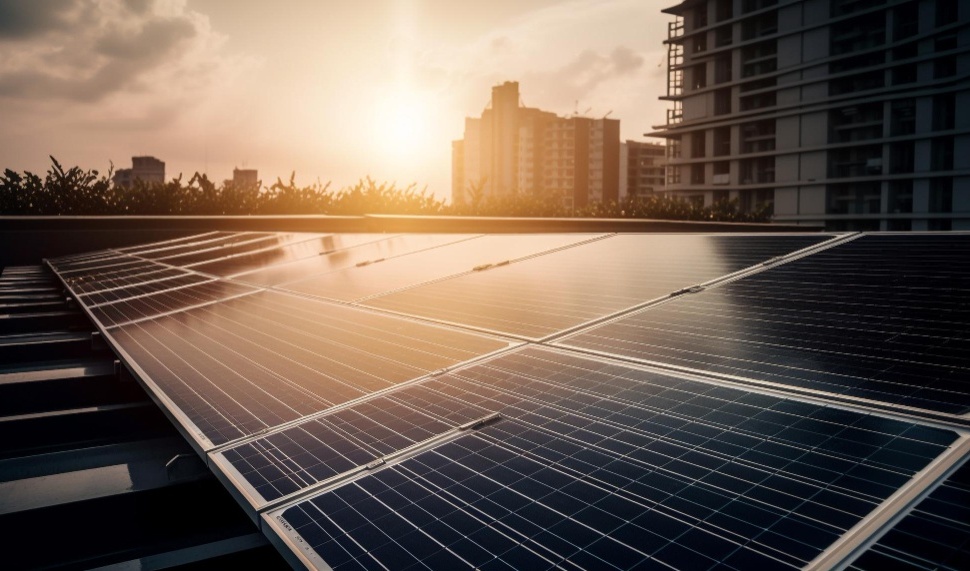
Speaking at the Ministry of Industry and Trade's (MoIT) second-quarter press briefing on July 7, officials said financial constraints had delayed a dedicated rooftop solar incentive scheme, but recent regulatory changes have already introduced new mechanisms to support renewable energy deployment.
The ministry also confirmed that revisions to the Electricity Law are being drafted alongside implementing regulations to streamline the legal framework and reduce administrative procedures.
 |
| Bui Quoc Hung, deputy director general of MoIT's Electricity Authority. Photo: congthuong.vn |
Bui Quoc Hung, deputy director general of MoIT's Electricity Authority, said the government had tasked the ministry with drafting a decision establishing incentives for rooftop solar systems. "The proposal originally included two forms of support: partial investment subsidies funded by the state budget and preferential loans to help households install rooftop solar panels," he said.
However, after consultations with other ministries, the Ministry of Finance said budget resources were not yet available to finance direct subsidies. Meanwhile, discussions are continuing over which financial institutions should provide concessional lending, preventing the decision from being issued so far.
Despite the delay, Hung said the government issued Decree No.243/2026/ND-CP issued on June 26, amending regulations governing direct power purchase agreements and renewable energy development. The decree introduces additional mechanisms to encourage rooftop solar deployment and provides the legal basis for implementing further support measures in the coming period.
The MoIT also outlined plans to accelerate battery energy storage deployment as Vietnam integrates a growing share of renewable energy.
Under the revised National Power Development Plan for 2021–2030 with a vision to 2050, Vietnam aims to develop between 10,000 MW and 16,000 MW of energy storage capacity by 2030. MoIT has already allocated storage capacity targets to provincial authorities and state utility Vietnam Electricity (EVN).
Currently, Northern Power Corporation and Hanoi Power Corporation are investing in battery storage projects. According to the National System and Electricity Market Operation Company, central and southern Vietnam do not yet face urgent storage needs because electricity supply remains sufficient to meet demand. As a result, initial investments are being prioritised in northern Vietnam, where supply-demand pressures are greater.
Hung said both EVN and local governments would continue investing in storage systems. The ministry is also studying proposals to recognise energy storage as an ancillary service supporting grid operations. "Battery storage will also become mandatory for utility-scale solar projects. Under current planning requirements, new solar farms included in the national power plan will be required to install storage capacity equivalent to around 10 per cent of installed generation capacity with a minimum two-hour discharge duration," he said.
Responding to questions about possible changes to peak and off-peak electricity pricing for residential customers, Hung said Vietnam currently has no plans to introduce time-of-use tariffs for households.
He noted that the country's load profile has changed significantly as solar generation has expanded. Previously, electricity demand peaked both at midday and in the evening. However, the rapid growth of solar power has largely flattened midday demand, leaving the evening as the system's primary peak period.
"Although residential customers are not currently billed based on time-of-use pricing, they represent the second-largest electricity-consuming group after industry," he said. As part of ongoing revisions to the Electricity Law, the MoIT is studying whether large residential consumers could eventually be encouraged to shift electricity use to off-peak hours to ease pressure on the power system.
Any future rollout would depend on several prerequisites, including widespread deployment of smart meters, supporting technical infrastructure, reliable data transmission systems and comprehensive assessments of the potential impact on consumers and society. For now, officials stressed that the proposal remains under study and no implementation timetable has been set.
 |
The MoIT also confirmed that amendments to the Electricity Law are being prepared alongside implementing decrees and circulars to ensure consistency once the revised law takes effect.
Hung said drafting the legislation is particularly complex because current legal requirements oblige ministries to prepare implementing regulations at the same time as submitting legislative amendments.
"The MoIT is therefore simultaneously finalising the draft law, consulting ministries, businesses and other stakeholders, while preparing implementing decrees. "The number of circulars to be issued will depend on the contents of the implementing decrees," he said.
According to the ministry, the objective is to draft a more detailed Electricity Law that clearly defines key provisions in the legislation itself, thereby reducing reliance on numerous subordinate legal documents. Officials are currently reviewing how many implementing decrees will ultimately be required, with the number depending on the level of detail contained in the revised law.
Existing regulations are also being updated to align with recent policy changes. These include Decree 243 amending regulations on direct renewable electricity trading and renewable energy development, as well as Decree No.72/2025 governing adjustments to average retail electricity prices.
The MoIT is also revising Circular No.60/2025 on electricity tariffs to align it with the ministry's latest decision on peak, off-peak and standard operating hours for the national power system.
Deputy Minister of Industry and Trade Nguyen Sinh Nhat Tan said reviewing the legal framework would not be difficult because the current Electricity Law already has a clearly defined system of implementing decrees and circulars. "When the law is amended, all related implementing regulations will naturally be reviewed within that framework," he said.
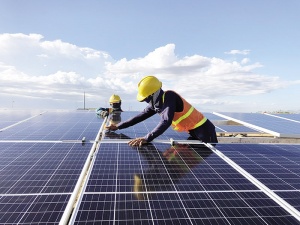 | Solar power could save Vietnam $600 million in fossil fuel imports Solar power may help Vietnam avoid a total $594 million from potential coal and gas imports, as prices for both commodities soar from the Iran war, according to a report by Zero Carbon Analytics on March 16. |
 | Policy and financial blips limit rooftop solar market Low surplus electricity prices, inconsistent policy incentives, and cumbersome administrative procedures are continuing to hold back Vietnam’s rooftop solar market, despite strong growth prospects. |
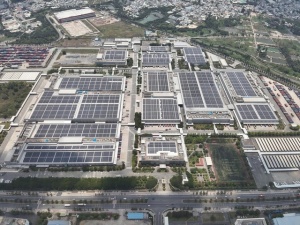 | Samsung Vietnam takes 28MWp rooftop solar system into operation Samsung Electronics HCMC CE Complex (SEHC), an electronics manufacturer based in Ho Chi Minh City, has brought a 28MWp rooftop solar power system into operation, marking a milestone in its sustainability strategy. |
What the stars mean:
★ Poor ★ ★ Promising ★★★ Good ★★★★ Very good ★★★★★ Exceptional
 Tag:
Tag:Related Contents








Latest News





More News
- GreenYellow and Vina Paper partner on rooftop solar project (October 05, 2026 | 09:00)
- Consultation workshop refines Vietnam's clean hydrogen strategy (October 04, 2026 | 08:00)
- JBIC considers new financing options for Vietnam’s energy projects (October 03, 2026 | 08:00)
- Vestas to supply 16 turbines for two new Vietnam wind farms (October 01, 2026 | 07:00)
- Inter-sectoral cooperation on Montreal protocol (September 30, 2026 | 17:20)
- EV battery recycling rate proposed at 8 per cent from 2029 (September 29, 2026 | 16:00)
- Bankability remains hurdle for Vietnam's JETP projects (September 29, 2026 | 12:08)
- Binh Minh Plastics extends clean water project to border communities (September 29, 2026 | 10:57)
- Coca-Cola Vietnam expands packaging collection programme (September 25, 2026 | 08:15)
- Pacifico Energy secures sea survey licence for offshore wind project in Lam Dong (September 24, 2026 | 18:02)








 Mobile Version