
SABECO turns green commitments into measurable gains

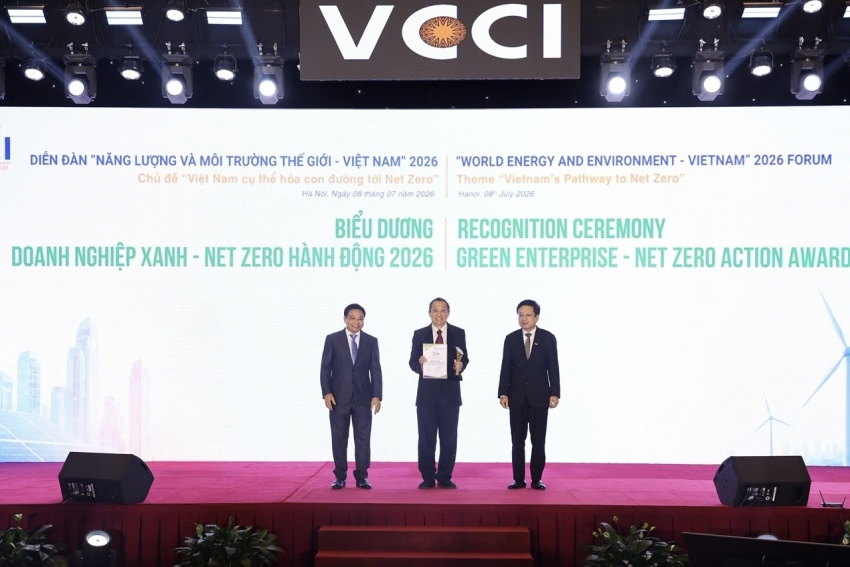 |
SABECO was ranked No.1 in the “Green Enterprise – Net Zero Action 2026” programme at the World Energy and Environment Forum – Vietnam. Photo: VCCI |
The brewer was ranked first in the “Green Enterprise – Net Zero Action 2026” programme at the World Energy and Environment Forum – Vietnam 2026, held in Hanoi in July, highlighting its progress in embedding sustainability targets across its operations.
The recognition came as Vietnam continued to strengthen the policy and market foundations for its green transition. On June 29, the first trading session on the domestic carbon exchange recorded the transfer of more than 1,200 tonnes of CO₂ equivalent, worth a combined VND161.7 million ($6,100). Decree No.272/2026/ND-CP then took effect on July 4, providing a legal framework for offshore wind development.
Against this backdrop, the July forum brought together regulators, experts and businesses to discuss practical approaches to energy transition and environmental management.
Saigon Beer-Alcohol-Beverage Corporation, better known as SABECO, topped the 2026 assessment after nominations from local authorities were reviewed against criteria and assessment tools developed by the World Energy Council in Vietnam, with the results subsequently appraised by an independent expert panel.
The ranking reflected not a single project, but the extent to which SABECO has incorporated environmental, social and governance goals into its broader operating model.
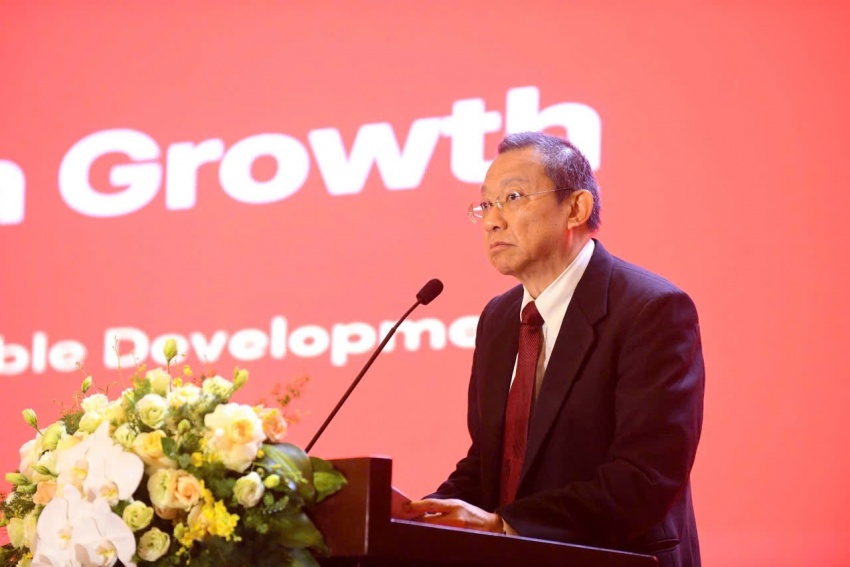 |
| Larry Lee, deputy general director in charge of strategic assets and sustainability at SABECO. Photo: VCCI |
Larry Lee, deputy general director in charge of strategic assets and sustainability at SABECO, said the group’s scale meant that even incremental operational improvements could generate a significant wider impact.
“SABECO operates at a scale where every decision we make can have a meaningful impact,” Lee said. “Every improvement in energy use, water efficiency, packaging, logistics, supplier standards or people development can create positive effects across the entire ecosystem.”
That approach is increasingly visible across the company’s production network.
In 2025, renewable energy accounted for 46.4 per cent of SABECO’s total energy consumption, while all of its breweries had implemented CO₂ recovery systems aimed at improving energy efficiency and reducing emissions.
The company also reported a 7 per cent reduction in water-use intensity compared with 2023, while 100 per cent of its packaging was recyclable or reusable. Some 81.4 per cent of waste was recovered or recycled.
Sustainability requirements have also been extended further into the supply chain. All of SABECO’s partners have committed to complying with the company’s Code of Conduct, supporting the wider adoption of responsible business practices.
Beyond environmental performance, SABECO is placing greater emphasis on governance and disclosure as part of its longer-term transition.
Lee said transparent governance was central to the company’s ability to sustain operational improvements over time. SABECO maintains systems for monitoring ESG indicators to assess progress, manage impacts and improve performance, while publishing an annual Sustainability Report to disclose commitments and implementation results to stakeholders.
The report references the GRI Standards 2021 and is aligned with the United Nations Sustainable Development Goals, providing a more consistent framework for ESG-related disclosure.
The company also uses regular engagement with employees, customers, partners, investors and consumers to reassess material sustainability issues and adjust its strategy in response to evolving market expectations.
This approach is becoming increasingly important as ESG requirements are incorporated more deeply into global supply chains, where companies are being assessed not only on stated commitments but also on the credibility and ability to measure implementation.
For SABECO, that places operational efficiency, transparency and supply chain standards alongside more traditional considerations such as production capacity and market competitiveness.
Lee said the company would continue pursuing its longer-term sustainability ambitions rather than treating the latest recognition as an end point.
“Sustainability is not a destination, but a journey that we build together,” he said. “SABECO remains committed to the spirit of ‘Rise with Vietnam’, accompanying people, communities, the environment and the future.”
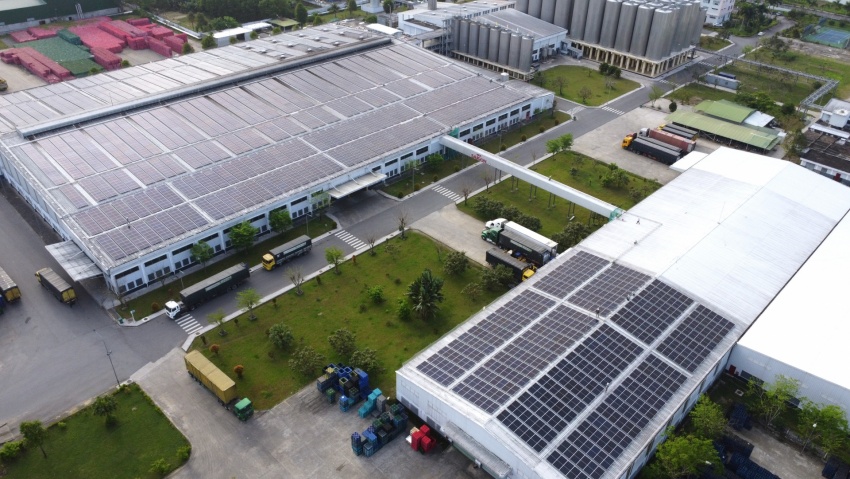 |
| The rooftop solar system at Saigon Quang Ngai Brewery helps improve energy efficiency. Photo: SABECO |
As Vietnam’s green transition advances, SABECO’s ranking illustrates a broader shift among domestic companies from setting sustainability goals towards integrating them into day-to-day operations.
For businesses facing rising expectations around emissions, energy use and ESG transparency, the ability to convert commitments into measurable improvements is increasingly becoming part of competitive positioning.
What the stars mean:
★ Poor ★ ★ Promising ★★★ Good ★★★★ Very good ★★★★★ Exceptional
 Tag:
Tag:Related Contents



Latest News


More News
- Consultation workshop refines Vietnam's clean hydrogen strategy (October 04, 2026 | 08:00)
- JBIC considers new financing options for Vietnam’s energy projects (October 03, 2026 | 08:00)
- Vestas to supply 16 turbines for two new Vietnam wind farms (October 01, 2026 | 07:00)
- Inter-sectoral cooperation on Montreal protocol (September 30, 2026 | 17:20)
- EV battery recycling rate proposed at 8 per cent from 2029 (September 29, 2026 | 16:00)
- Bankability remains hurdle for Vietnam's JETP projects (September 29, 2026 | 12:08)
- Binh Minh Plastics extends clean water project to border communities (September 29, 2026 | 10:57)
- Coca-Cola Vietnam expands packaging collection programme (September 25, 2026 | 08:15)
- Pacifico Energy secures sea survey licence for offshore wind project in Lam Dong (September 24, 2026 | 18:02)
- Vietnam secures $221 million in UN development programmes for 2027-2031 (September 23, 2026 | 17:39)


Latest News






 Mobile Version