
Policy and financial blips limit rooftop solar market

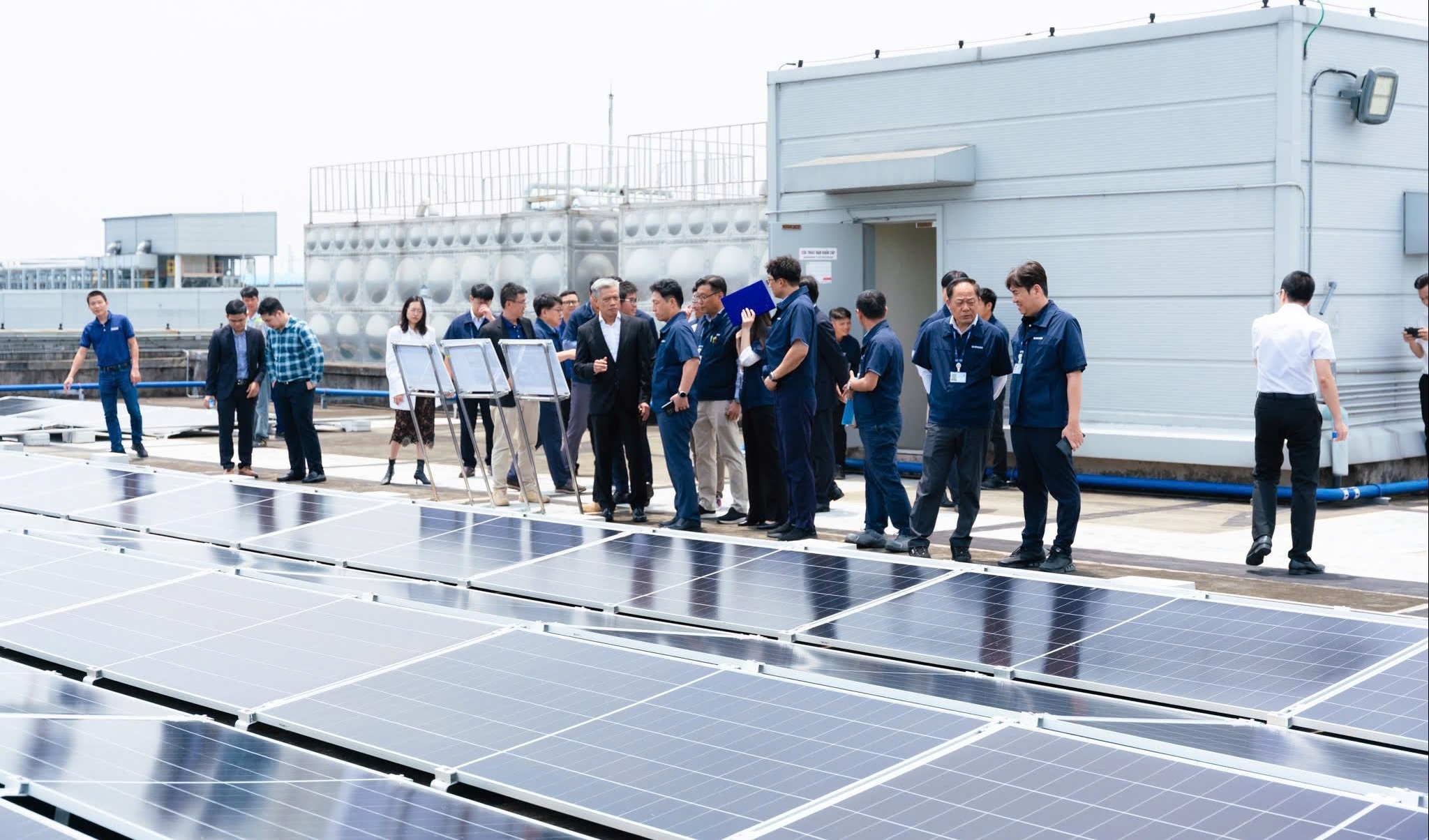
At last week’s seminar on ensuring energy supply in Vietnam held in Ho Chi Minh City, experts agreed that rooftop solar still possesses enormous development potential, particularly in urban and industrial centres such as Ho Chi Minh City. However, policy uncertainty and weak financial incentives continue to limit broader market participation.
According to renewable energy investor Nguyen Thanh Toan, only around one-fifth of rooftop potential within industrial parks in Ho Chi Minh City has been utilised, while household participation remains limited because the investment case is still unconvincing.
“The electricity generated during the daytime is often not fully consumed, while the selling price for surplus electricity fed back into the grid remains too low to compensate for electricity purchased from the grid at night,” Toan said.
Under current regulations, self-produced and self-consumed rooftop solar systems are allowed to sell only up to 20 per cent of installed capacity back to the grid at just above VND800 (3 US cents) per kWh.
This is significantly lower than the preferential feed-in tariff (FiT) applied during 2019-2020, when rooftop solar projects enjoyed purchase prices of around VND2,100 (8 US cents) per kWh excluding VAT.
Authorities are now considering increasing the permitted ratio of surplus electricity sales of 20-50 per cent. Although the proposal could create fresh opportunities for the renewable energy sector, experts say that the pricing structure remains insufficiently attractive.
“The planned increase would certainly provide more room for market development,” Toan added. “However, if electricity is still purchased at average market prices, profitability for investors will remain limited.”
The industrial segment nevertheless continues to offer considerable opportunities. Ha Huy Cuong, deputy CEO of Nam A Bank, noted that roughly 55 per cent of electricity consumption in Ho Chi Minh City currently serves industrial production activities, creating substantial potential for factories to utilise rooftop space to improve energy self-sufficiency and reduce operating costs.
“However, sectors with lower electricity demand, such as warehouses and logistics centres, require more flexible mechanisms for handling surplus electricity generation. Without suitable policies, the market could face another prolonged slowdown similar to the stagnation seen after 2021,” Cuong said.
Beyond pricing issues, the sector still faces unresolved technical and regulatory concerns, including fire prevention standards, equipment certification, and the treatment and recycling of used battery systems.
Phan Thanh Lam, chairman of the Ho Chi Minh City Renewable Energy Association, argued that the biggest obstacle facing rooftop solar development no longer lies in technology or installation costs, both of which have fallen sharply in recent years.
“The biggest hindrance today is the pricing mechanism rather than technology,” Lam said. “Electricity purchase prices remain too low to create sufficient financial motivation for investors.”
Vietnam’s rooftop solar market experienced explosive growth during two FiT periods in 2019/2020, when favourable tariffs triggered strong investment from households and businesses. However, once these preferential mechanisms expired, market momentum weakened considerably.
According to Lam, existing policies have yet to create a sufficiently strong stimulus to revive investor confidence. Administrative procedures remain relatively complicated, particularly for systems involving electricity sales back to the national grid. As a result, many households and businesses prefer systems solely for self-consumption rather than deeper participation in the electricity market.
The government and the Ministry of Industry and Trade are finalising a draft decree on rooftop solar development that is expected to introduce more flexible mechanisms for market participants. The draft proposes more diverse grid connection models, including systems that do not feed electricity back into the national grid, while also reviewing installed capacity restrictions.
Bui Quoc Hoan, deputy CEO of Southern Power Corporation, said policymakers are now prioritising market-based compensation for excess electricity generation. Hoan stressed that battery energy storage systems would become increasingly important in improving the efficiency and commercial viability of rooftop solar investments.
“Many businesses are now combining rooftop solar systems with battery storage rather than investing in solar power alone in order to optimise operating costs,” he said.
The economics of rooftop solar projects have also improved due to falling equipment prices and tech advances. For households in southern Vietnam with monthly electricity bills of around VND2 million ($80), Hoan estimated that rooftop solar systems combined with battery storage could recover investment capital within approximately four years.
For industrial enterprises, investment efficiency is even more attractive because of larger operating scales. Whereas a seven-year payback period was previously considered acceptable, many projects today can recover investment capital within only 3.5-4.5 years.
Vietnam’s broader policy direction is becoming increasingly supportive. Under Directive No.10/CT-TTg issued on March 30, the government has set a target for 50 per cent of rooftops at offices and public buildings nationwide to install rooftop solar systems within the next five years.
What the stars mean:
★ Poor ★ ★ Promising ★★★ Good ★★★★ Very good ★★★★★ Exceptional
 Tag:
Tag:Related Contents





Latest News



More News
- JBIC considers new financing options for Vietnam’s energy projects (October 03, 2026 | 08:00)
- Vestas to supply 16 turbines for two new Vietnam wind farms (October 01, 2026 | 07:00)
- Inter-sectoral cooperation on Montreal protocol (September 30, 2026 | 17:20)
- EV battery recycling rate proposed at 8 per cent from 2029 (September 29, 2026 | 16:00)
- Bankability remains hurdle for Vietnam's JETP projects (September 29, 2026 | 12:08)
- Binh Minh Plastics extends clean water project to border communities (September 29, 2026 | 10:57)
- Coca-Cola Vietnam expands packaging collection programme (September 25, 2026 | 08:15)
- Pacifico Energy secures sea survey licence for offshore wind project in Lam Dong (September 24, 2026 | 18:02)
- Vietnam secures $221 million in UN development programmes for 2027-2031 (September 23, 2026 | 17:39)
- Carlsberg Vietnam shows how resource efficiency can shape green industrial growth (September 18, 2026 | 09:03)


Latest News




 Mobile Version