
EVN steps up investment in battery storage to support growing renewable capacity

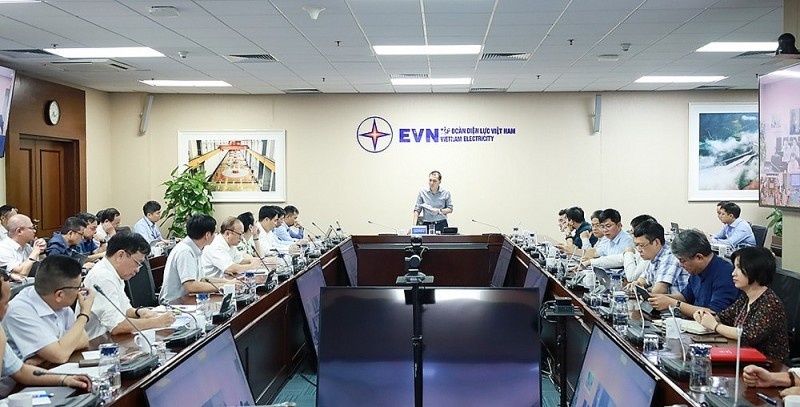 |
At a meeting held in Hanoi on April 8, Vietnam Electricity (EVN) chairman Dang Hoang An chaired a review of the implementation progress of battery energy storage systems (BESS) projects within the national power system.
EVN board member Dang Huy Cuong highlighted the rapid global expansion of energy storage, noting that total installed BESS capacity worldwide is expected to reach around 300,000 MW in 2025. This scale underscores the technology’s increasingly vital role in the global energy transition.
"In Vietnam, as renewable energy continues to account for a larger share of the power mix, BESS is expected to play a critical role in enhancing system stability," he said.
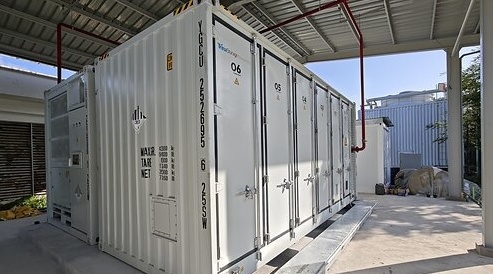
Battery storage can help meet peak demand, potentially reducing or partially replacing the need for traditional peaking power plants. It can also support electricity supply and mitigate overload risks during high-demand periods.
Following directives from the Ministry of Industry and Trade, EVN has since 2025 instructed its subsidiaries and affiliated units to prepare for investing in and installing battery storage systems across the grid. The move aims to ensure sufficient power supply to meet peak demand in 2026 and beyond.
At the distribution level, Northern Power Corporation (EVNNPC) has conducted initial surveys of 110 kV substations suitable for BESS deployment. Preliminary calculations suggest that total installable capacity across its network could reach approximately 530 MW, with a storage duration of two hours, equivalent to 1,060 MWh.
EVNNPC has been working closely with National System and Market Operation Company (NSMO) to determine appropriate scale and deployment objectives. In the first phase, the corporation is implementing BESS projects with a combined capacity of 305 MW, expected to be completed by the end of June 2026, while subsequent phases are planned.
Meanwhile, Hanoi Power Corporation has been tasked with developing BESS projects with a total capacity of 275 MW. During the pilot phase, the corporation is deploying 50 MW of battery storage at five substations across the capital.
In southern Vietnam, Southern Power Corporation is exploring the feasibility of deploying BESS on Phu Quy Island. According to its leadership, integrating battery storage into the island’s power system is expected to deliver clear economic benefits.
On the transmission side, National Power Transmission Corporation is also pushing forward with BESS deployment, aiming to complete the installation of its first 100 MW of battery storage at substations by January 2027.
In parallel, Power Project Management Board No.1 is looking at investment options for BESS projects with a total capacity of between 300 MW and 500 MW. Initial surveys have identified four potential sites in northern Vietnam, located near major power sources, for future development phases.
Under the revised National Power Development Plan VIII, Vietnam aims to achieve between 10,000 MW and 16,300 MW of energy storage capacity by 2030, reflecting the growing importance of BESS in the country’s long-term energy strategy.
Despite the momentum, EVN acknowledged that BESS deployment still faces several challenges that require resolution. These include issues related to planning frameworks, investment mechanisms, site selection, and the development of technical standards and regulations.
In addition, fire safety in the installation and operation of battery systems remains a critical concern, requiring stringent technical requirements and careful risk management.
Addressing the meeting, An emphasised that BESS should be viewed as a key solution in both the operation and development of the power system.
"One of the main advantages of battery storage, is its relatively short deployment time," he said. "While investment costs remain relatively high, BESS can still offer competitive advantages when assessed alongside traditional power sources, particularly in terms of flexibility and system efficiency."
He also stressed that BESS should not be limited to peak shaving and overload reduction, but rather considered across multiple roles within the power system.
"EVN has been instructed to develop a comprehensive and synchronised roadmap for BESS deployment, ensuring effective investment and implementation. In particular, northern Vietnam has been identified as a priority area for accelerating battery storage development," An said. "The selection of locations, scale, and technologies for BESS projects will need to be carefully calibrated on a yearly and phased basis, aligned with actual system demand and technical requirements."
To address existing issues, EVN will work with relevant agencies, including the Institute of Energy and NSMO, to propose solutions to the Ministry of Industry and Trade.
 | EVN signs power deal for 1,200 MW LNG plant in Ho Chi Minh City Vietnam Electricity has signed an agreement for the Hiep Phuoc Liquefied Natural Gas Power Plant – Phase I, marking a step forward for the project. |
 | EVN and PV GAS agree to supply LNG for Quang Trach power plants Vietnam Electricity (EVN) and Petrovietnam Gas (PV GAS) signed a framework agreement on the supply of liquefied natural gas (LNG) from the Vung Ang LNG terminal in Ha Tinh to the Quang Trach II and III power plants on April 3 in Hanoi. |
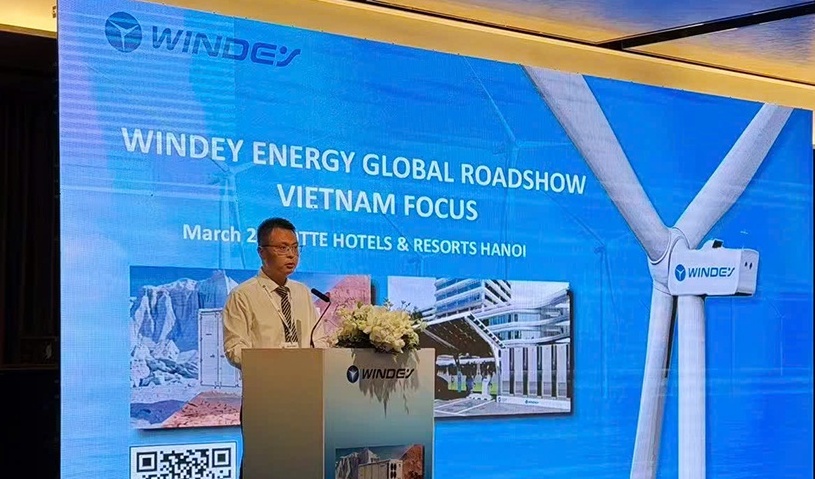
 | Suitable battery storage can mitigate grid congestion As Vietnam accelerates its energy transition, battery energy storage is emerging as a critical piece of the puzzle, Lu Jian, deputy general manager at Windey Innovolts, talked with VIR’s Nguyen Huong the company’s perspective on market prospects, tech differentiation, and the evolving role of storage in supporting renewables integration. |
What the stars mean:
★ Poor ★ ★ Promising ★★★ Good ★★★★ Very good ★★★★★ Exceptional
 Tag:
Tag:Related Contents


Latest News


More News
- JBIC considers new financing options for Vietnam’s energy projects (October 03, 2026 | 08:00)
- Vestas to supply 16 turbines for two new Vietnam wind farms (October 01, 2026 | 07:00)
- Inter-sectoral cooperation on Montreal protocol (September 30, 2026 | 17:20)
- EV battery recycling rate proposed at 8 per cent from 2029 (September 29, 2026 | 16:00)
- Bankability remains hurdle for Vietnam's JETP projects (September 29, 2026 | 12:08)
- Binh Minh Plastics extends clean water project to border communities (September 29, 2026 | 10:57)
- Coca-Cola Vietnam expands packaging collection programme (September 25, 2026 | 08:15)
- Pacifico Energy secures sea survey licence for offshore wind project in Lam Dong (September 24, 2026 | 18:02)
- Vietnam secures $221 million in UN development programmes for 2027-2031 (September 23, 2026 | 17:39)
- Carlsberg Vietnam shows how resource efficiency can shape green industrial growth (September 18, 2026 | 09:03)


Latest News




 Mobile Version