
Vietnam's hospitality sector on the rise: new supply, big ambitions

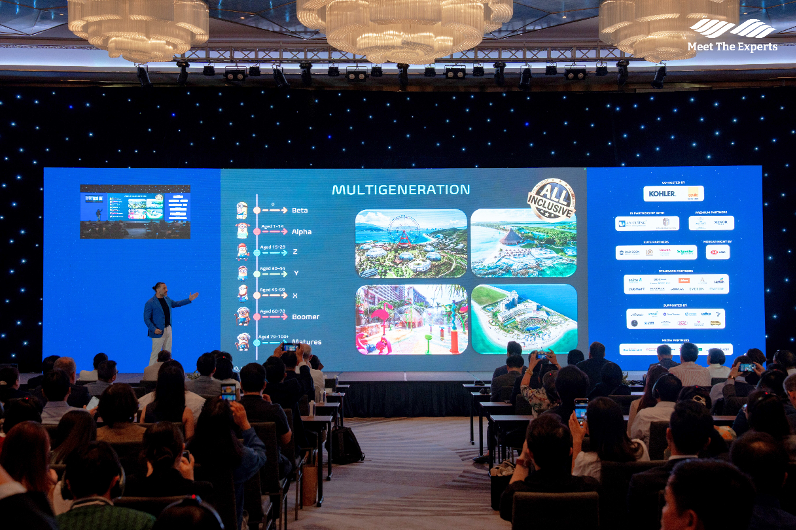 |
| Mauro Gasparotti, senior director, SE Asia of Savills Hotels and creator of the MTE series |
Vietnam has set an ambitious 2025 target of welcoming 25 million international visitors, a 40 per cent rise compared to 2024. The country continues to actively review and relax visa policies, expand international flight routes, upgrade tourism infrastructure, and strengthen destination marketing, encouraging competitiveness against regional peers.
Vietnam has had a strong rebound in international arrivals and is among the fastest-growing markets in Southeast Asia.
Previously, the hospitality market faced a risk of oversupply in certain destinations, and from 2015 to 2019, new supply increased by 20 per cent compound annual growth rate, outpacing many regional markets. However, post-pandemic, new annual supply growth slowed significantly to only 5 per cent.
Bousserind Comson, senior director of sales, Thailand and Vietnam, hospitality, Amadeus, said that across Vietnam, hotel occupancy rates have been rising, particularly in hot destinations and cities. "We’re also seeing a steady increase in ADR (average daily rate) and length of stay, now averaging over two nights. This suggests travellers are exploring multiple destinations within Vietnam during a single trip," she said.
She raised a positive trend growing: direct bookings. "This is great news for hotels, as it is often the most cost-effective channel. Vietnam remains a standout market compared to other Southeast Asian countries, where demand has remained flat or declined."
Vietnam is growing faster than the rest of Southeast Asia in terms of travel demand. Moreover, higher-spending travellers (business class, older demographics) present growing opportunities. "Now is the time to act, Vietnam has momentum. By understanding demand patterns and traveller behaviour, hotels can strategically position themselves to capture this wave of growth," she emphasised.
Michael Kokalari, chief economist, VinaCapital, said that Vietnam’s tourism market has enjoyed two strong years, mainly driven by a surge in Chinese arrivals. "While we may not see the same explosive growth next year, tourism is expected to remain solid, especially as international stimulus policies (in the US, Europe, and China) spill over into Vietnam," he said.
Domestic tourism, however, has been more sluggish. This is due to middle-class households rebuilding savings post-COVID. That trend is likely to reverse next year, with improving consumer sentiment and a rebound in domestic spending, a positive sign for hospitality businesses.
"For investors and operators in real estate and hospitality, the opportunity is clear: now is the time to act," the economist highlighted.
Mauro Gasparotti, senior director for SE Asia, Savills Hotels, and creator of the MTE series, commented, “Vietnam is gradually establishing itself as one of the preferred destinations for Asian travellers. Tourism and accommodation offerings are becoming increasingly diverse, with the entry of new hotel brands across multiple segments catering to different demand groups."
His outlook on upcoming developments includes, "Future supply will remain concentrated in coastal destinations, with Danang and Phu Quoc leading in room count. Hanoi continues to see growth in the upscale and luxury segments, mainly driven by branded international hotels. Meanwhile, Ho Chi Minh City faces a shortage of new projects, creating opportunities for existing hotels, especially in the upper-upscale and international-branded segment, to sustain performance growth."
During the panel discussion on Vietnam’s hospitality market, senior representatives from Accor, BIM Group, Masterise Group, T&T Hospitality, Sun Group, and Radisson Hotel Group discussed hotel operations in Vietnam, the momentum of different sectors, and future opportunities.
Speakers emphasised the rise of integrated mixed-use projects near major cities like Hanoi and Ho Chi Minh City, aimed at sustaining investor interest. These developments often combine hotels, resorts, convention centres, retail, and leisure facilities to create multifunctional ecosystems that appeal to both international and domestic markets.
In addition to mixed-use projects, the all-inclusive resort model is also gaining momentum. Its key advantages include access to large land banks, improved connectivity, and growing traveller demand for “all-in-one” experiences.
At MTE, representatives from VinaCapital and Savills Hotels shared macroeconomic perspectives, an overview of Vietnam’s hospitality sector, and key movements in the branded residences market. In addition, senior speakers from The Ascott Limited, Dewan Architects + Engineers, Minor Hotels, and Haskoning discussed emerging models such as experience-led social living concepts, the application of AI in design, and creating value through dining, wellness, and premium experiences. They explored opportunities, risks, and global case studies of reclamation projects.
In the real estate-focused sessions, representatives from Savills, Indochina Capital, MIK Group Vietnam, GroupGSA, Club Med, The Ascott Limited, and Kusto Home Vietnam exchanged insights on the essential elements of luxury projects and shared experiences in integrated development. Speakers also evaluated the outlook of branded residences in Vietnam, particularly in Hanoi and Ho Chi Minh City, and noted the critical role of branding throughout project development and operations.
The discussion further underlined the importance of sustainability, aiming to deliver holistic experiences in living spaces and service quality. Panellists also noted the growing role of foreign investors in reshaping Vietnam’s real estate and hospitality landscape. Finally, they emphasised that for the market to grow sustainably, it is vital to build strategic partnerships and enhance the regulatory framework to strengthen investor confidence.
 | Food & Hospitality Malaysia 2025 Unveils Industry Solutions Event focuses on building a future-ready sector. |
 | Hospitality and real estate leaders to gather for MTE Hanoi 2025 Meet The Experts (MTE), one of the region’s leading hospitality and real estate conferences, is set to return with its Hanoi 2025 edition at a pivotal moment for Vietnam’s property and tourism sectors. |
 | Vietnam boasts opportunities to attract global high-net-worth investment Against a rapidly changing geopolitical and economic backdrop, global wealth flows continue to evolve as high-net-worth individuals (HNWIs) and businesses take a more holistic approach to location. Vietnam is emerging as a promising destination, but it must seize the moment with improved policy framework, infrastructure, and living standards. |
 | The new home of modern business at Hanoi's Starlake Located in Starlake, Hanoi’s rising administrative and economic centre, Oriental Square by OSI is quickly becoming a standout among the capital’s top-tier Grade A office developments. |
What the stars mean:
★ Poor ★ ★ Promising ★★★ Good ★★★★ Very good ★★★★★ Exceptional
 Tag:
Tag:Related Contents






Latest News


More News
- The perfect time to escape the city at Seahorse Resort & Spa (August 28, 2026 | 09:42)
- M Village founder raises $26 million (August 26, 2026 | 15:48)
- Eastin Grand Saigon puts Vietnamese twist on afternoon tea (August 17, 2026 | 11:03)
- Palladium Hotel Group launches Asia-Pacific HQ in Vietnam (August 17, 2026 | 10:33)
- Reverie Saigon unveils 2026 mooncake collection (August 14, 2026 | 15:29)
- Meliá Hotels International expands in Vietnam with first Meliá Collection hotel (July 28, 2026 | 20:03)
- Ngan Dinh Saigon: where traditional cuisine meets Asian flavours (July 21, 2026 | 11:44)
- The Reverie Saigon appoints new general manager (July 09, 2026 | 14:54)
- NHAAN Resort & Spa Hoi An ready to accept reservations ahead of August opening (July 08, 2026 | 21:12)
- Hoi An Memories Resort & Spa: Where cultural heritage shapes luxury hospitality (July 07, 2026 | 10:00)






 Mobile Version