
Resolution 21 to reshape Vietnam’s real estate market

 |
| Photo courtesy of baodautu.vn |
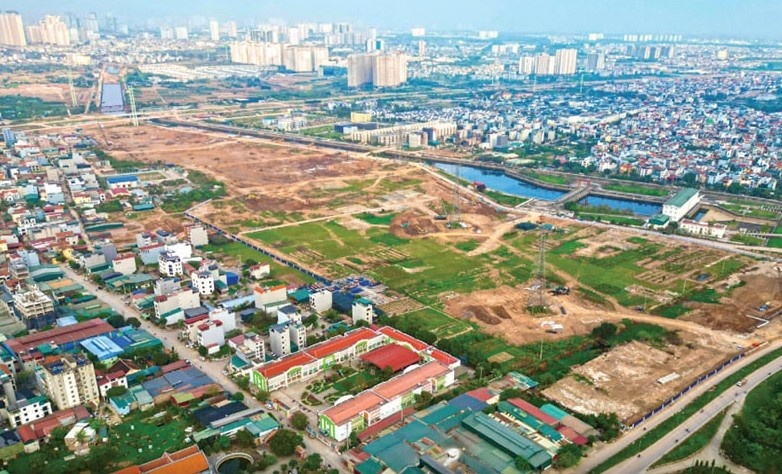
On July 28, the Central Committee of the Communist Party of Vietnam issued Resolution 21-NQ/TW, replacing Resolution 18 of 2022, to set out the direction for amendments to the Land Law aimed at addressing regulatory bottlenecks and supporting sustainable development.
The proposed amendments to the land and housing laws focus on resolving legal constraints related to land allocation, land valuation, and decentralisation to local authorities to accelerate project implementation.
The resolution emphasises greater state oversight of land prices, the introduction of service life limits for apartment buildings, long-term land allocation for commercial housing projects–particularly apartment developments–and the promotion of rental housing.
The government aims to moderate property prices by increasing housing supply through measures including prioritising long-term land allocation for apartment projects, boosting rental housing, and introducing service-life limits for apartment buildings. MBS Research noted that these policies aimed at moderating property prices primarily focus on increasing the supply of apartment housing.
Another key issue is to prioritise long-term land allocation for commercial housing development, particularly apartment projects. Such measures prioritising apartment development signal an effort to increase housing supply amid tightening land availability.
In addition, the policy also aims to accelerate compensation and site clearance by institutionalising measures to expedite these processes, particularly for key projects. In addition, it aims to promote resettlement development by shifting from compensating for acquired assets towards “rebuilding livelihoods” for residents affected by state land acquisition.
MBS Research says that this will facilitate the acceleration of compensation and site clearance for key infrastructure projects, with a focus on the development of resettlement urban areas.
Another key policy idea is potential taxation of real estate gains, with higher tax rates on vacant and underutilised properties. This will help to curb speculative investments.
According to MBS Research, the key policy change is the introduction of service-life limits for apartment buildings, alongside clearer financial obligations for owners in apartment renovation and reconstruction.
Provincial authorities would oversee planning, quality assessment, and compensation coefficients, while apartment owners would retain corresponding rights and financial obligations upon expiry of the building’s service life.
No specific regulations have been issued to date. However, proposals by the Ho Chi Minh City Real Estate Association suggest that the new framework should not apply retroactively, allowing existing apartments to retain long-term ownership rights.
For ageing or deteriorating projects, redevelopment could be facilitated through owner contributions or cooperation with developers. For 50- year apartment projects, MBS Research expects owners and developers to potentially make additional land-use and construction payments to extend the project’s operating period.
For Vietnam’s real estate market, drawing on international practices, MBS Research expects apartment projects under the proposed amendments to the Land Law could be subject to a 50–99-year tenure, after which developers may be given priority to pay additional fees for project renovation and redevelopment.
It is forecast that demand for freehold apartments will increase in the near term ahead of the new regulations. However, upside may remain limited amid an unfavourable market environment, as investors adopt a more cautious stance towards planning revisions and elevated interest rates. Over the longer term, service-life regulations could reduce the attractiveness of leasehold apartments to investors, as preferences remain skewed towards long-term ownership, potentially benefiting low-rise housing and land plots.
Given the policy directions under Resolution 21, apartment projects with approved 1/500 master plans, completed land-use payments, or sales approvals are expected to attract stronger investment demand and achieve higher absorption, supported by buyers’ preference for long-term ownership and relatively affordable products amid elevated interest rates.
 | Industrial players demand more value As industrial investors shift their focus to establishing modern manufacturing operations, developers are being compelled to move beyond infrastructure provision and towards creating long-term value. |
 | Vinhomes Drives Asian Sustainable Real Estate Market Growth Through ESG Integration Vietnamese property developer Vinhomes expanded its urban development framework across Asian markets by embedding integrated environmental, social, and governance standards into its large-scale real estate projects. |
 | Corporate bond recovery set to continue amid funding, maturity pressures Vietnam’s corporate bond market is regaining momentum, led by banks and selective real estate issuers, as funding needs rise amid mounting maturity pressures and cautious investor sentiment. |
What the stars mean:
★ Poor ★ ★ Promising ★★★ Good ★★★★ Very good ★★★★★ Exceptional
 Tag:
Tag:Related Contents




Latest News

More News
- Huong Viet Properties breaks ground on Palm City riverside park (October 09, 2026 | 15:35)
- HoREA proposes new framework for affordable commercial housing (October 08, 2026 | 17:01)
- Hong Hac City event to explore Bac Ninh's urban transformation (October 08, 2026 | 15:27)
- Onsen in the heart of the city: a new experience at the shopping mall (October 08, 2026 | 08:00)
- Enterprises honoured as Outstanding Provider of Green Industrial Solutions (October 06, 2026 | 18:03)
- MIK Group launches House of MIK in Ho Chi Minh City (October 03, 2026 | 17:00)
- Vietnam hospitality shifts towards integrated mixed-use developments (October 03, 2026 | 10:00)
- Stavian IP accelerates its modern expansion (October 02, 2026 | 14:00)
- ESG for future-ready industrial success (October 02, 2026 | 09:00)
- Green Future Awards honour five leading industrial park developers (October 01, 2026 | 22:20)



Latest News





 Mobile Version