
Corporate bond recovery set to continue amid funding, maturity pressures

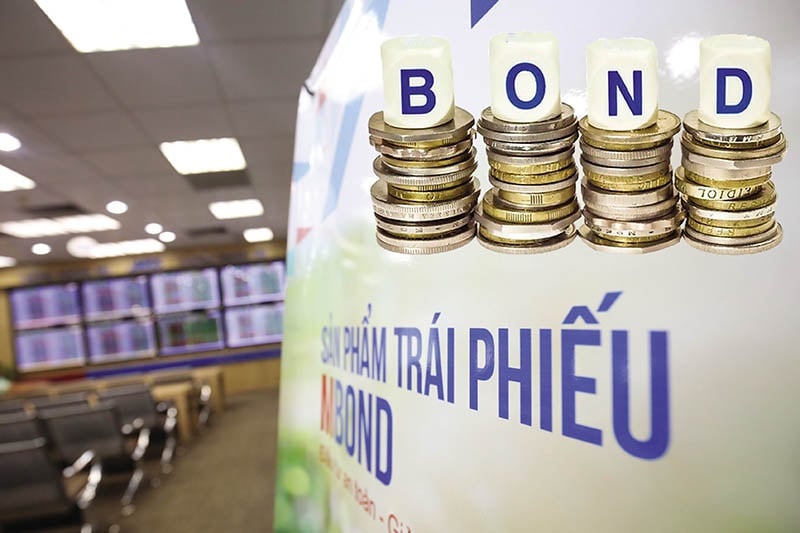
According to data compiled by Vietnam Bond Market Association from the Hanoi Stock Exchange and the State Securities Commission, the cumulative value of privately placed bonds reached $7.5 billion in the first six months of the year, while public offerings totalled $993.3 million.
In the second half of the year, an estimated $4.65 billion worth of bonds will mature. Of the 10 largest issuers since the outset of the year, seven were banks and three were real estate companies. Vinhomes ranked first, followed by Techcombank, MB, SHB, and LPBank.
The market remained highly differentiated, with capital flows concentrated mainly in banking and real estate. Bank bonds accounted for around half of total private placements, at nearly $3.76 billion, while real estate companies accounted for around 40 per cent, equivalent to $3 billion.
 |
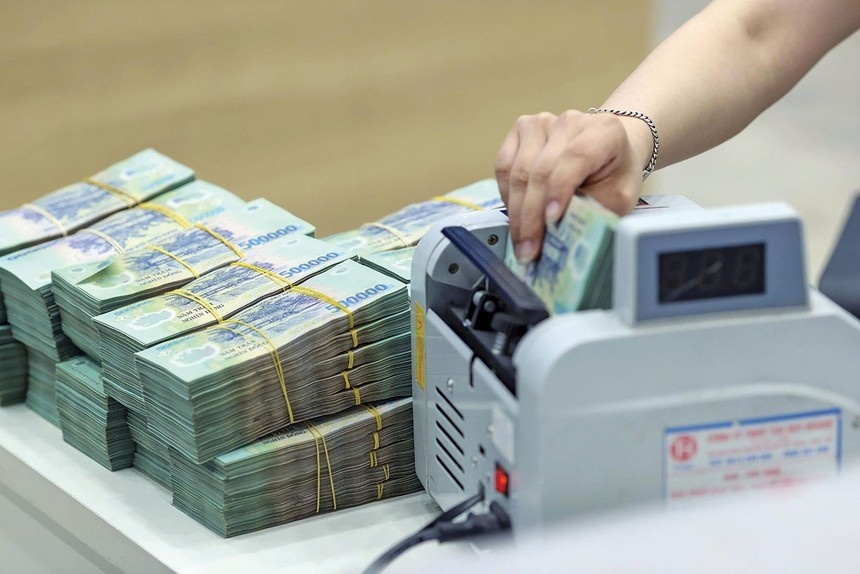
| Photo: baodautu.vn |
Tran Thai Binh, senior analysis director at OCBS Securities, said banks' issuance was driven not only by the need to raise funds but also by the need to restructure maturities, supplement Tier 2 capital sources and improve capital adequacy and other safety ratios.
“The need has become more apparent as credit growth has remained high, while system liquidity came under pressure at times, as reflected in the overnight interbank interest rate, which reached 12.49 per cent, per annum at the end of June. The fact that many banks have stepped up bond issuance to raise Tier 2 capital shows that strengthening financial capacity has become more important than optimising short-term funding costs,” he said.
Tier 2 capital can be regarded as a capital buffer that gives banks greater capacity to absorb losses when risks arise. Banks can strengthen Tier 2 capital by issuing certain types of eligible long-term bonds.
Coupon rates – the interest payments that issuers commit to paying investors throughout the life of a bond – have hovered around 8 per cent, reflecting funding costs that are more appropriate to maturity risk, liquidity pressures and capital adequacy requirements.
In the real estate sector, issuance activity also recovered more clearly in 2026, but remained selective, focusing on companies with established brands, collateral and strong sales capabilities. Issuance has been driven mainly by refinancing needs, cash-flow restructuring and preparations for debt repayments, as around $4.64 billion worth of bonds are due to mature in the second half of the year.
Interest rates also reflect the market's differentiation. Banks have maintained relatively stable coupon rates thanks to their stronger credit profiles, while real estate companies still have to pay higher rates because of risks related to project legal status, collateral and cash flows.
This is in line with the government's policy of strengthening supervision while continuing to facilitate access to capital for capable businesses.
Binh expects the primary corporate bond market to continue recovering in the coming quarters, supported by banks' funding needs, real estate companies' refinancing requirements and the ongoing improvement of the legal framework.
"However, coupon rates are unlikely to fall rapidly as investors remain cautious about credit risks, collateral and repayment capacity," Binh said. "As a result, the market will remain differentiated. Leading banks and companies should be able to raise funds at reasonable costs, while highly leveraged businesses or those with incomplete project legal procedures will face greater difficulties."
In real estate, issuance value is expected to continue improving as progress is made in resolving legal issues, refinancing needs increase and policies supporting safe market development take effect.
The government's target of completing at least one million social housing units by 2030 will also create additional long-term funding demand for companies with the capacity to implement such projects.
“Nevertheless, the market is unlikely to return to the period of mass issuance seen previously. Companies with clean land banks, clear legal status, stable sales cash flows and transparent collateral will find it easier to raise funds, while highly leveraged companies will still have to accept high funding costs or face difficulties in making new issuances,” Binh said.
 | New regulations create more transparent corporate bond market A new draft decree on corporate bonds seeks to enhance transparency, tighten accountability, and strengthen oversight to rebuild investor confidence, and support capital market development. |
 | Corporate bonds take on sharper focus Vietnam’s growing demand for long-term capital is bringing renewed attention to the role of the corporate bond market, with policymakers and market participants seeking to rebalance the country’s financial structure. |
 | Corporate bond issuance slows in first quarter amid tight credit Vietnam's corporate bond market saw limited activity in the first quarter of 2026, a seasonal lull due to the extended Lunar New Year holiday and a wait‑and‑see approach by issuers. |
 | Corporate bond maturity pressure set to ease sharply in Q3 Vietnam’s corporate bond market showed further signs of improvement in the first five months of 2026, as early redemptions surged, overdue payments remained contained and third-quarter maturity pressure was projected to decline sharply. |
What the stars mean:
★ Poor ★ ★ Promising ★★★ Good ★★★★ Very good ★★★★★ Exceptional
 Tag:
Tag:
Related Contents







Latest News




More News
- Eximbank to strengthen corporate governance structure (October 16, 2026 | 11:32)
- Citi honours 13 banks with 2025 STP Awards (October 15, 2026 | 16:01)
- Green transition requires realistic roadmap (October 14, 2026 | 17:31)
- VIR workshop explores credit policy and carbon market development (October 14, 2026 | 11:22)
- Stronger carbon market needed to unlock climate finance (October 14, 2026 | 11:00)
- Carbon market opens new avenues for green finance (October 14, 2026 | 10:00)
- VPBank and Western Union enhance digital remittance experience (October 13, 2026 | 15:44)
- Eximbank’s next chapter: Richa Goswami on purpose, relevance and trust (October 13, 2026 | 10:52)
- Vietnam and Luxembourg sign MoU to strengthen financial cooperation (October 13, 2026 | 10:20)
- Vietnam seeks stronger cooperation with Fitch Ratings to improve sovereign credit rating (October 13, 2026 | 10:07)



Latest News







 Mobile Version