
New customs framework to reward compliance and target risks

A Customs Department representative told VIR that they had finalised the draft circular on compliance management and risk management in customs operations after incorporating feedback from ministries, sectors, localities, and relevant agencies.
Earlier, on September 28, the Ministry of Finance issued Official Dispatch No.15295/BTC-CHQ seeking comments from ministries and ministerial-level agencies, People's Committees of provinces and centrally governed cities, and several relevant units on the draft Circular governing compliance management in customs administration and risk management in customs operations.
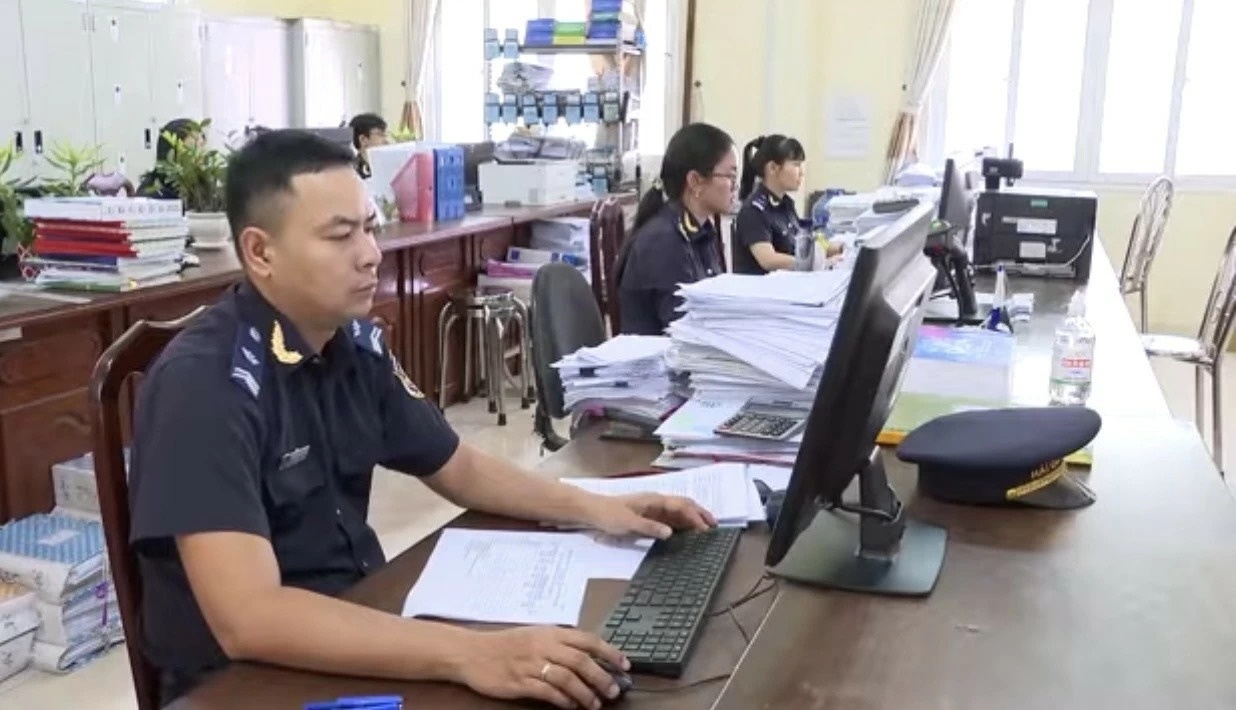 |
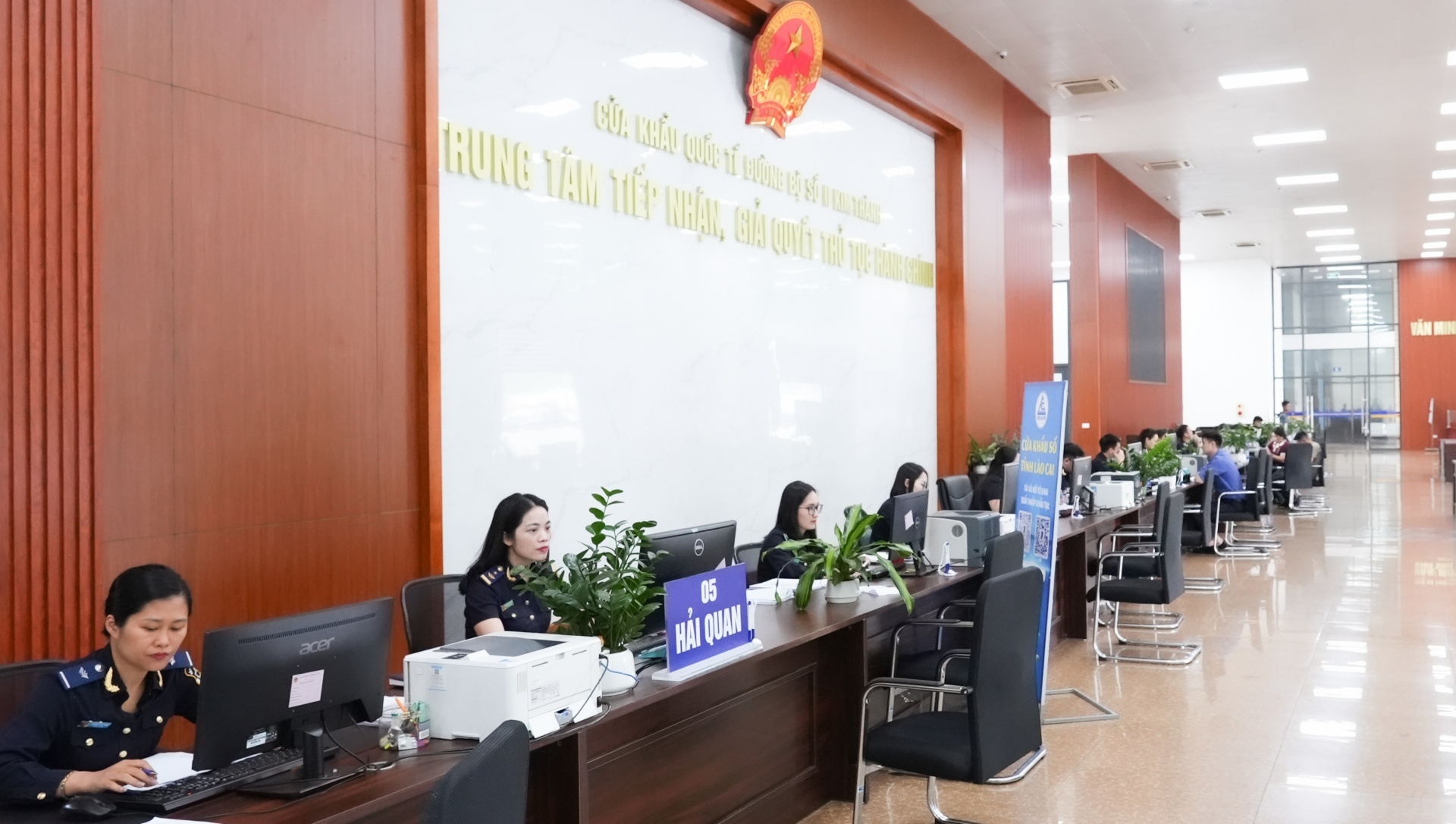
| Customs officers settling professional information. Photo: thoibaotaichinhvietnam.vn |
According to the Customs Department, during the drafting process, the drafting agency received 40 submissions, including 13 from ministries and sectors, 26 from provincial and municipal People's Committees, and one from the Central Committee of Vietnam Fatherland Front.
The comments focused on refining assessment criteria, classification principles, data-sharing mechanisms, and the responsibilities of parties involved in implementing compliance management and risk management.
On this basis, the draft continues to refine provisions on assessing and classifying businesses according to their compliance levels.
The assessment will not be based solely on an individual act or isolated violation, but will take a comprehensive view of businesses' overall performance in fulfilling their customs-related legal obligations, their level of cooperation, and relevant information collected and analysed by customs authorities.
This approach will help identify differences more clearly among business groups, enabling the application of proportionate management measures.
Businesses with a good compliance record that proactively fulfil their obligations will have opportunities to receive appropriate support measures, while those showing signs of higher risk will be subject to enhanced monitoring and inspection.
Another important aspect is the mechanism for encouraging voluntary compliance. Accordingly, the draft aims to strengthen the provision of information, guidance, and assistance to businesses in identifying and addressing shortcomings in their implementation of customs procedures.
Through this approach, businesses will not only be assessed on their compliance levels but also be given opportunities to improve their compliance throughout their operations.
This is an important factor in ensuring that assessment results accurately reflect actual conditions and avoid creating barriers for businesses that have made positive improvements.
Importantly, the draft Circular on compliance management and risk management in customs operations aims to classify businesses based on data and their level of legal compliance.
This approach will both provide greater support for compliant businesses and enable customs authorities to focus their controls on entities posing potential risks.
A notable feature of the draft is that, rather than applying a relatively uniform management approach, customs authorities will assess businesses based on information, data, and their track records of legal compliance.
The assessment results will serve as a basis for selecting appropriate management measures, both encouraging voluntary compliance among businesses, and improving the effectiveness of controls over cases with a higher risk of violations.
Alongside changes to business assessment methods, the draft places emphasis on improving the quality of risk management through the exploitation, integration and analysis of data, with a view to reducing blanket inspections and shortening customs clearance times.
According to the Customs Department, collecting and processing information from multiple sources will provide customs authorities with additional grounds for identifying irregularities, assessing the risk of violations, and selecting entities for inspection and supervision.
Notably, the application of technology and AI in data analysis and risk identification is being considered as a means of enhancing information-processing capabilities.
When data is effectively utilised, customs authorities can take a more proactive approach to detecting irregularities, rather than relying primarily on manual inspections, or responding only after violations have occurred.
The draft also emphasises human oversight of risk analysis and assessment results, thereby helping to minimise data inaccuracies and the mechanical application of alerts in practice.
From a management perspective, combining compliance assessments with risk analysis will help customs authorities allocate resources more effectively.
The finalisation of the draft aims to standardise operational procedures and bring about a shift in management practices, with data as the foundation, compliance levels as the basis for decision-making, and risk management as the means of resource allocation.
When implemented, the mechanism is expected to enhance the effectiveness of state management of customs, reduce compliance costs, and create a more favourable environment for import and export activities.
 | Enterprises importing goods to UK must be put on new customs system quickly HM Revenue and Customs (HMRC) are reminding businesses to use the Customs Declaration Service (CDS) for import declarations from October 1. |
 | Customs Department issues urgent guidance on food safety inspection of imported animal products The customs authorities will still apply the current regulations when conducting food safety inspections for imported animal-derived and aquatic products |
 | Vietnam Customs expands priority enterprise scheme to 74 firms Vietnam's Customs Department has granted or extended priority status to seven companies, bringing the total number of firms covered by the scheme to 74. |
 | Vietnam pledges transparent tax and customs policies for South Korean businesses Vietnam will continue reforming tax and customs policies, simplifying administrative procedures, and strengthening digitalisation to improve the investment environment and support foreign-invested enterprises, Deputy Minister of Finance Cao Anh Tuan told a dialogue with South Korean businesses on October 21 in Hanoi. |
What the stars mean:
★ Poor ★ ★ Promising ★★★ Good ★★★★ Very good ★★★★★ Exceptional
 Tag:
Related Contents






Latest News
More News
- Vietnamese brands make gains in ASEAN’s brand economy (November 03, 2026 | 16:54)
- Lite-On to pump additional $320 million into subsidiaries in Vietnam (November 02, 2026 | 17:19)
- Local firms need bigger role in global supply chains, panel hears (November 02, 2026 | 14:03)
- SABECO posts stronger earnings ahead of Lunar New Year peak (November 02, 2026 | 14:01)
- FV reaches 100 Da Vinci Xi robotic surgeries attracting international patients to Vietnam (October 29, 2026 | 19:00)
- Robots no longer preserve of large corporations (October 29, 2026 | 15:35)
- Vietnam moves closer to 10 per cent growth target (October 28, 2026 | 12:48)
- Vietnam and Laos customs authorities hold 2026 conference (October 28, 2026 | 12:29)
- Plaud launches AI work companion in Vietnam (October 28, 2026 | 12:20)
- Breakthroughs in radiotherapy technology and new drugs for breast cancer treatment (October 27, 2026 | 17:00)







 Mobile Version