

Vietnamese companies optimistic on international growth

 |
| Photo: baodautu.vn |
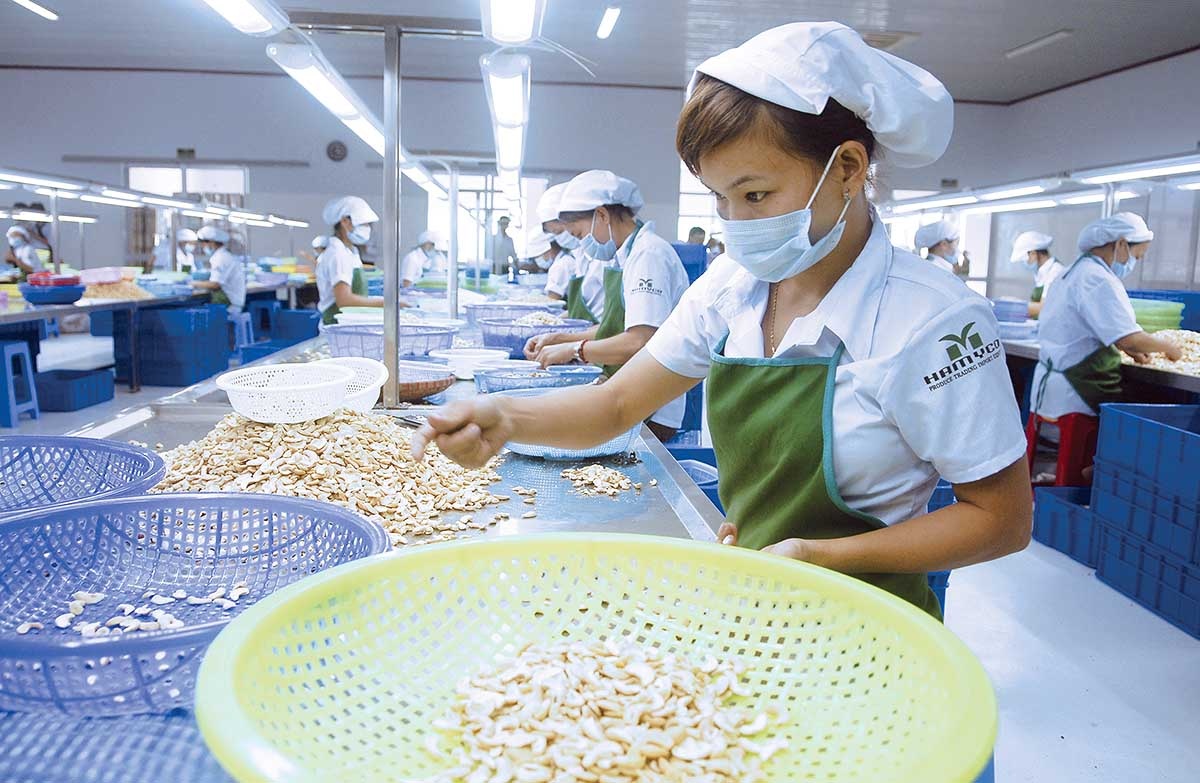
The survey captures the views of 10,000 senior business leaders across 26 markets on trade, tariffs, supply chains, and technology.
Findings show that 94 per cent of Vietnamese businesses expect their international trade to grow over the next two years. Vietnam ranks joint top in the survey with the Philippines, compared with 86 per cent globally.
The survey also highlights the cost pressures facing businesses in the market. Tariffs are the most commonly cited cost factor among Vietnamese respondents, identified by 52 per cent, compared with 43 per cent globally. Energy costs follow at 49 per cent, versus 44 per cent globally.
Despite these pressures, Vietnamese businesses report positive outcomes from changes made to their supply chains. Ninety per cent say these changes have improved cash flow and working capital, higher than the global figure of 78 per cent. Almost all respondents (97 per cent) say their actions in response to trade uncertainty and disruption have been effective, compared with 86 per cent globally.
The survey also points to the importance of trade agreements and regional networks. Nearly all Vietnamese businesses surveyed (99.6 per cent) use at least one free trade agreement (FTA), compared with 95 per cent globally. However, 97 per cent report that barriers remain to using FTAs more extensively, compared with 92 per cent globally.
The most common markets in which Vietnamese businesses are increasing their reliance are Vietnam itself, at 50 per cent, followed by Singapore at 46 per cent and Thailand at 41 per cent.
Malaysia is the market most frequently identified as increasing its reliance on Vietnam, at 32 per cent, followed by Thailand at 31 per cent, and Singapore and South Korea at 29 per cent each.
Globally, energy costs were the highest-ranked factor affecting businesses' cost bases over the past six months (44 per cent of respondents), followed by tariffs (43 per cent) and freight (41 per cent). These pressures are expected to persist. Sixty-eight per cent of business leaders say they have already experienced higher overall costs, 72 per cent expect costs to rise further over the next two years, and 59 per cent report higher working capital requirements since 2025.
In addition to increased expenditure, uncertainty is also weighing on revenues, with 92 per cent of respondents expecting supply chain delays or disruption to affect their revenues over the next two years.
Global businesses are taking practical steps to protect margins and remain competitive. Improving efficiency and productivity is the most common response to rising costs, cited by 53 per cent of business leaders, followed by renegotiating supplier arrangements (43 per cent), absorbing costs into profit margins (38 per cent), and passing costs on to customers (36 per cent).
 | Reform to resilience: How Vietnamese businesses build long-term strength As Vietnam’s business environment evolves, companies like Tan Hiep Phat show how long-term investment in technology, production and capabilities can turn reform momentum into lasting competitiveness. |
 | EFTA–Vietnam Free Trade Agreement opens up opportunities to enhance supply chain The EFTA–Vietnam Free Trade Agreement will open up opportunities for Vietnamese products, especially those with supply chains meeting increasingly stringent quality and sustainability requirements in new markets. |
 | Omnichannel distribution helps Vietnamese businesses expand market reach Combining traditional distribution with cross-border e-commerce can help Vietnamese businesses expand sales opportunities and reduce reliance on any single market or platform. However, they need to strengthen management capabilities, optimise logistics costs, and build closer supply chain links to ensure sustainable market access. |
What the stars mean:
★ Poor ★ ★ Promising ★★★ Good ★★★★ Very good ★★★★★ Exceptional
 Tag:
Related Contents

Latest News
More News
- VIFC Academy launches to build skilled financial workforce (November 16, 2026 | 12:06)
- Vietnamese furniture businesses must embrace global trends (November 15, 2026 | 20:53)
- $100 million committed to technology businesses in VIFC-HCMC (November 15, 2026 | 20:45)
- IMF supports Vietnam's growth outlook after review (November 15, 2026 | 20:34)
- TCP Group champions youth ties as Vietnam–Thailand relations turn 50 (November 12, 2026 | 15:39)
- Ho Chi Minh City kicks off Vibrant HCMC shopping drive (November 12, 2026 | 08:00)
- Tan Hiep Phat strengthens commitment to science and technology talent (November 11, 2026 | 17:04)
- Petrolimex deepens strategic cooperation with Japan’s ENEOS (November 11, 2026 | 15:05)
- UK trade preferences come with strict requirements (November 11, 2026 | 14:42)
- Nestlé Vietnam won big at MMA SMARTIES Vietnam 2026 with 17 awards (November 11, 2026 | 14:36)





 Mobile Version