
Vietnam pledges transparent tax and customs policies for South Korean businesses

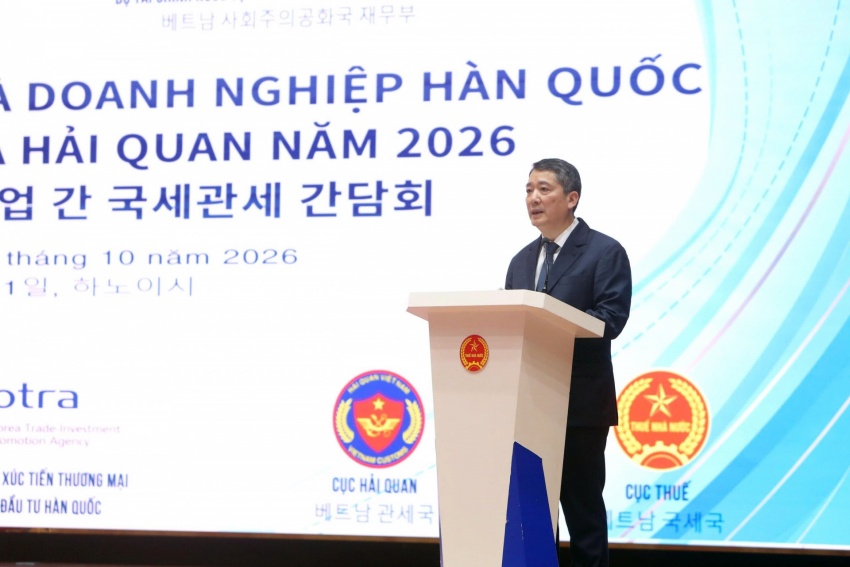 |
| Deputy Minister of Finance Cao Anh Tuan. Photo: Duc Minh |
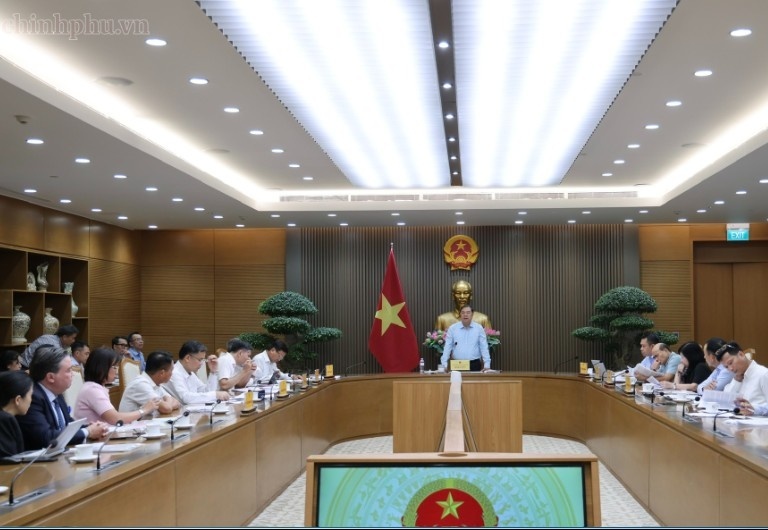
The Ministry of Finance’s (MoF) 2026 Tax and Customs Policy Dialogue with South Korean Businesses provided a platform for government authorities and investors to discuss regulatory developments, address operational difficulties, and identify measures to improve the business environment.
Deputy Minister Tuan said the government was committed to creating a transparent, stable, and predictable regulatory framework, particularly in tax and customs administration, to support businesses’ long-term investment and production plans.
"South Korea is Vietnam’s largest foreign investor and one of its most important trading partners. South Korean companies have contributed not only capital but also technology, manufacturing capabilities, and Vietnam’s integration into global value chains," he said. "In 2026, despite domestic economic challenges and continued global uncertainty, the MoF had proposed measures involving taxes, fees, charges, and land rental reductions to support businesses."
He also highlighted the government’s Resolution No.280/NQ-CP, dated September 22, 2026, which outlines an action plan to implement a resolution on the development of the foreign-invested economic sector.
The resolution recognises foreign-invested enterprises as an important component and driver of Vietnam’s economy and international integration. It also calls for a more transparent, stable, and predictable legal framework, particularly in taxation and customs.
The MoF has continued reviewing and amending tax and customs legislation to simplify administrative procedures, accelerate digital transformation, and resolve difficulties facing businesses. It has also worked with the South Korean Embassy to organise an online tax and customs question-and-answer programme, through which businesses can raise concerns and access responses published on the Tax Department’s website.
The deputy minister said the MoF would continue improving the legal framework, strengthening compliance management, and addressing business recommendations. Priorities include refining regulations on the global minimum tax and encouraging advance pricing agreements through a decentralised model aligned with international practices.
“We look forward to constructive feedback from the South Korean business community in Vietnam to help us continue improving policies and making tax and customs procedures more transparent, clear, and convenient,” he said.
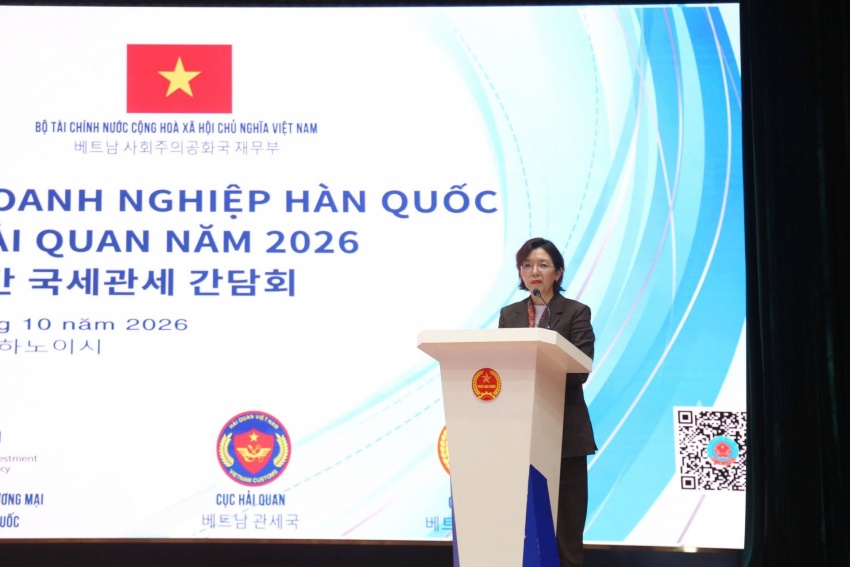 |
| South Korean Ambassador to Vietnam Lee Mi Yon. Photo: Duc Minh |
South Korea welcomes Vietnam’s reforms
South Korean Ambassador to Vietnam Lee Mi Yon praised the Vietnamese authorities for their continued efforts to facilitate investment and maintain a stable operating environment for South Korean businesses.
"South Korea is Vietnam’s largest cumulative foreign investor, its second-largest provider of official development assistance, and its third-largest trading partner," she said.
The ambassador noted that the annual tax and customs dialogue had been held since 2008, providing a regular channel for businesses to raise concerns directly with the authorities. Discussions at previous meetings had helped translate some business recommendations into practical policy improvements.
She described the 2026 dialogue as an opportunity to exchange views on policy directions and seek solutions to difficulties encountered by businesses in their day-to-day operations.
Koo Bon Kyung, CEO of the Korea Trade-Investment Promotion Agency for Southeast Asia and Oceania, also commended Vietnam’s efforts.
He highlighted the use of e-invoicing and upgrades to automated customs clearance systems, which have enhanced transparency and processing efficiency. The extension of VAT reductions and support policies for high-tech and export-oriented businesses had also helped ease financial pressures amid global economic uncertainty.
However, Koo argued that Vietnam would need to look beyond cost competitiveness to strengthen its position as a global manufacturing hub.
“Global supply chains are shifting away from a sole focus on reducing production costs towards greater supply chain resilience, compliance with environmental regulations, and enhanced self-reliance in critical technologies and components,” he said.
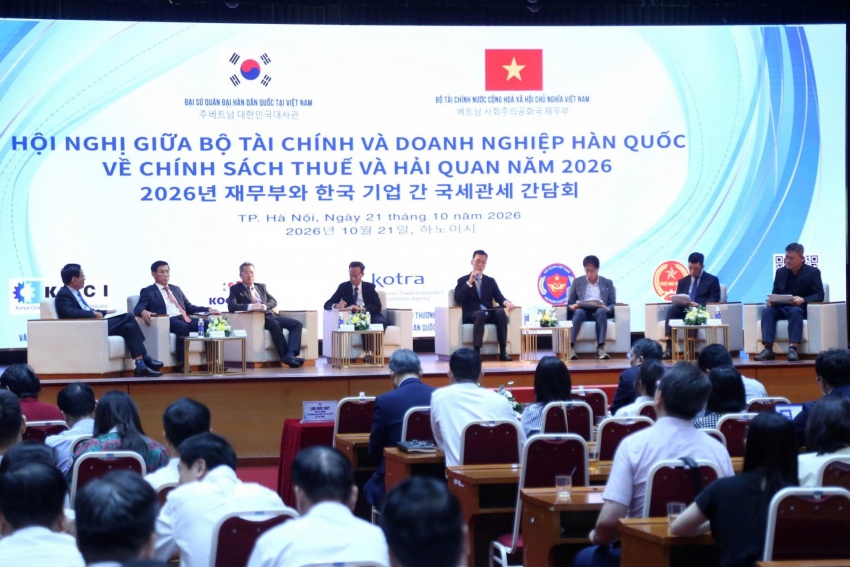 |
| Photo: Duc Minh |
Strengthening industrial capacity and the investment environment
Kyung outlined several priorities for Vietnam, including developing supporting industries, expanding technology cooperation, accelerating the green transition, and building a more integrated digital trade environment.
He stressed the importance of strengthening domestic capabilities in foundational industries, such as metalworking, plastics, and precision mould-making, to support the sustainable development of high-tech sectors including electronics, semiconductors, and automobiles.
"Closer cooperation with South Korean companies in research and development (R&D) and technology transfer could help Vietnamese enterprises upgrade their technical capabilities and increase domestic content in manufacturing," he said.
On the green transition, Kyung called for more effective implementation of the Direct Power Purchase Agreement mechanism and expanded tax incentives for environmentally friendly equipment and infrastructure. These measures would help foreign-invested and domestic businesses access reliable, reasonably priced renewable electricity as global environmental requirements become more stringent.
He also encouraged Vietnam to develop R&D infrastructure for high-tech industries, particularly semiconductors and AI, while strengthening cooperation between the two countries in specialised technical training.
Digital trade was another priority. Kyung called for an integrated digital trade platform and further modernisation of customs procedures to facilitate cross-border transactions and reduce administrative burdens.
Alongside these long-term priorities, he proposed several institutional reforms to make Vietnam more competitive in attracting investment. These include simplifying overlapping investment incentives and clarifying eligibility criteria; strengthening investor protection and intellectual property rights to facilitate technology transfer; accelerating VAT refunds; and ensuring consistent interpretations of tax regulations nationwide.
Kyung also called for greater predictability in customs valuation and Harmonised System code classification, alongside faster advance rulings on product classification. He further recommended upgrading Vietnam’s National Single Window and expanding AI-enabled electronic customs clearance to ensure that goods involved in digital trade and e-commerce can move across borders more efficiently.
For foreign investors, Koo stressed, the most valuable incentives extend beyond tax reductions to encompass a business environment in which investment and technology are protected and administrative procedures are transparent and predictable.
"A stable and transparent institutional framework would benefit not only South Korean investors but also Vietnamese enterprises, enabling local suppliers to strengthen their capabilities and become more deeply integrated into global supply chains," he said.

What the stars mean:
★ Poor ★ ★ Promising ★★★ Good ★★★★ Very good ★★★★★ Exceptional
 Tag:
Related Contents




Latest News
More News
- KUKA Vietnam inaugurates new Hanoi headquarters (October 22, 2026 | 09:00)
- OJI Group invests in $110 million aseptic carton packaging plant in Vietnam (October 22, 2026 | 08:23)
- Foreign investors pour billions into Vietnam's semiconductor sector (October 21, 2026 | 14:49)
- Hyosung TNC begins bio-BDO production in Vietnam (October 21, 2026 | 12:12)
- Ho Chi Minh City to unveil new projects worth $13.5 billion at AEF 2026 (October 21, 2026 | 11:51)
- Market upgrade is just the beginning: Vietnamese companies face tougher test to attract capital (October 20, 2026 | 16:04)
- EFTA–Vietnam Free Trade Agreement opens up opportunities to enhance supply chain (October 20, 2026 | 15:56)
- Dong Thap province steps up industrial expansion and infrastructure connectivity (October 19, 2026 | 08:56)
- Vung Ang LNG Terminal looks for candidates for $1 billion EPC contract (October 16, 2026 | 17:53)
- Work on digital technology building begins in Hanoi (October 16, 2026 | 17:46)





 Mobile Version