
Harnessing 5G and AI convergence for transformative economic growth in ASEAN

The report, “Leveraging 5G to Accelerate AI-Driven Transformation in ASEAN: Imperatives, Policy Insights, and Recommendations”, provides actionable strategies to unlock the region's digital potential.
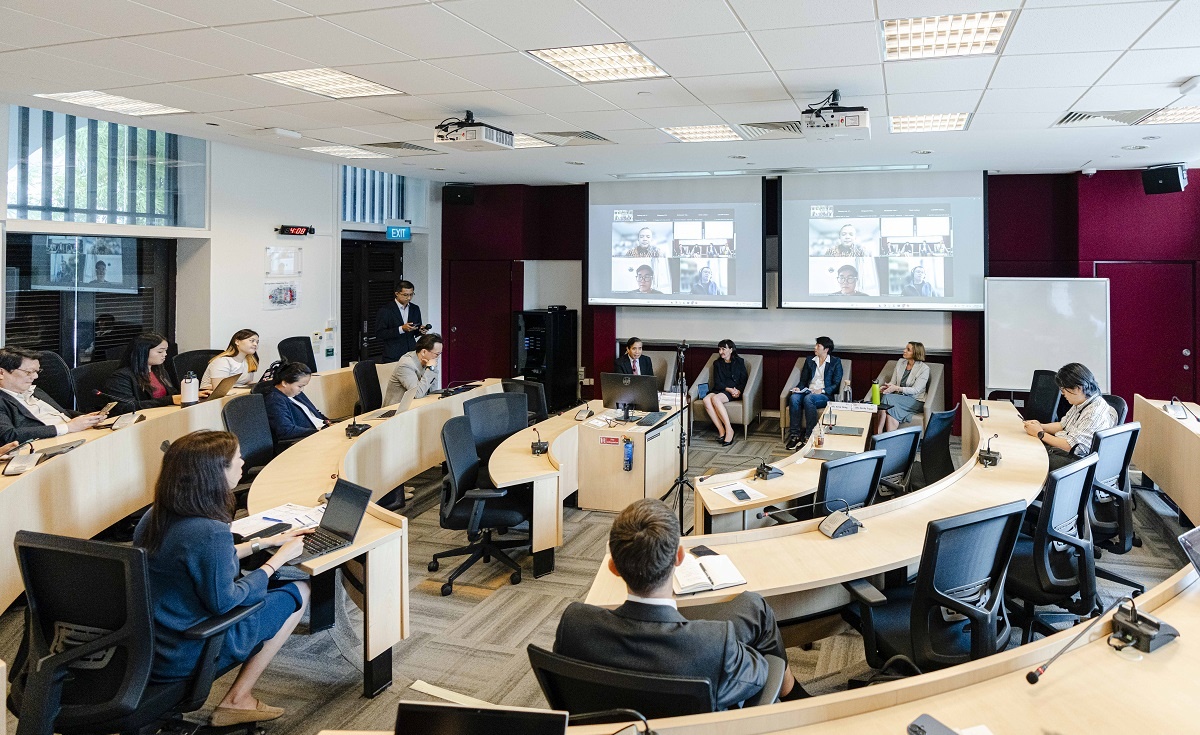 |
ASEAN faces a critical window of opportunity. The research shows 5G alone is projected to contribute $130 billion to Asia-Pacific's economy by 2030. However, adoption remains uneven across the region, ranging from 48.3 per cent penetration in Singapore to less than 1 per cent in several ASEAN member states.
Without coordinated action, these risks deepening digital divides and weakening regional competitiveness. ASEAN may get left behind as other regions accelerate their digital transformation.
"The convergence of 5G and AI represents the infrastructure of innovation, powering smart manufacturing, precision agriculture, and autonomous mobility. But ASEAN cannot afford to wait. The window for establishing regional leadership in intelligent connectivity is rapidly closing," said Professor Vu Minh Khuong from LKYSPP.
"Our report provides ASEAN with a blueprint to navigate the complex intersection of 5G and AI integration. Coordinated strategies that can accelerate regional leadership in intelligent connectivity must be established to help the region move beyond incremental improvements toward transformative digital leadership," he added.
The LKYSPP study, drawing from extensive stakeholder interviews and survey responses from over 400 professionals across eight ASEAN countries, identifies 10 critical imperatives for 5G-AI transformation, beginning with establishing coordinated digital leadership to address fragmentation that is currently slowing regional progress.
ASEAN governments should treat 5G as a strategic AI enabler, not merely a telecom upgrade, while addressing the widening skills gaps that are impeding enterprise adoption across the region.
Becky Fraser, vice president of global government affairs at Qualcomm, said that it's not just about the faster downloads that most consumers immediately associate with 5G, it really is about transforming the industry, enabling smart cities, and enhancing public services.
"5G is really connected to the most talked-about technology of the day, AI. We're seeing real benefits of 5G and AI coming together. And now we really see investments in 5G as investments in AI competitiveness," she said. “AI benefits from 5G because 5G brings with it many features.”
To secure ASEAN's digital future, the report recommends implementing five strategic priorities: establishing national 5G-AI development strategies with clear 2025-2030 roadmaps; creating empowering coordination agencies in ASEAN member countries; deploying forward-looking spectrum policies that promote accessibility and innovation.
The others are fostering vibrant AI-driven ecosystems through public-private collaboration, and implementing robust monitoring frameworks to track progress and enable course corrections.
The LKYSPP report emphasises that enterprise adoption should be prioritised as the primary driver of 5G's economic impact. Looking across the region, there is much potential and notable examples of success: Singapore's 5G-powered smart ports have achieved 50 per cent latency reduction.
Elsewhere, Thailand has deployed AI-enhanced disaster management systems, and Malaysia's wholesale network model has reached 82 per cent population coverage.
These examples illustrate the potential for transformative impacts when coordinated strategies are effectively implemented.
According to the LKYSPP report, private 5G networks are essential for Industry 4.0 transformation, while fixed wireless access offers a compelling solution for bridging connectivity gaps in underserved areas.
The report also positions current 5G deployment as critical infrastructure for the 6G evolution expected by 2030, making today's strategic decisions particularly important for future competitiveness.
Looking ahead, the study envisions ASEAN leading a 5G-AI powered future where enterprises scale globally through intelligent manufacturing, farmers optimise yields using AI-driven analytics, and students in remote areas access immersive education platforms. Realising this vision will require bold coordinated action, strategic coordination and planning, and sustained commitment to digital transformation.
 | Vietnam strengthens 5G to unlock digital economy The Asia-Pacific's digital transformation landscape is witnessing Vietnam steadily asserting its position as a rising force, drawing recognition from global industry players. |
 | ZTE Day 2025 showcases the future of AI and 5G innovations ZTE Corporation, a global provider of integrated information and communication technology solutions, hosts its annual series of technical seminars, ZTE Day Vietnam, in Hanoi on April 24. |
 | Japan's Rakuten Symphony to trial 4G and 5G Open RAN mobile networks in Vietnam Japan-based Rakuten Symphony inked an MoU with MobiFone Corporation on June 4 to collaborate on a pilot project to deploy 4G and 5G Open RAN networks in Vietnam. |
 | Vietnam's adoption of 5G networks driving innovation The telecom industry is entering an exciting new chapter with strong 5G adoption and a growing ecosystem that will drive innovation and reshape the way people live, work and connect. |
What the stars mean:
★ Poor ★ ★ Promising ★★★ Good ★★★★ Very good ★★★★★ Exceptional
 Tag:
Tag:Themes: Digital Transformation
- Vietnam transforming AI ambitions into business impact
- Work on digital technology building begins in Hanoi
- Vietnam-Australia forum boosts AI and digital technology cooperation
- Digital transformation shifts focus to added value
- Amazon Kuiper licensed for private satellite telecommunications network in Vietnam
Related Contents









Latest News





More News
- EuroCham confidence index holds at 78.3 despite operational hurdles (October 16, 2026 | 17:27)
- Shrimp and rice firms face rising standards in export markets (October 16, 2026 | 09:00)
- SCG and Prime Group add value to the ecosystem (October 15, 2026 | 15:55)
- Project readiness key to unlocking green finance (October 15, 2026 | 12:35)
- Sovereign AI and human oversight key to secure digital government (October 15, 2026 | 12:32)
- MEXC Ventures partners with Corelia Academy: Bringing digital asset education closer to Vietnamese students (October 15, 2026 | 09:00)
- Global design expertise meets a more sophisticated Vietnam market (October 15, 2026 | 09:00)
- Vietnam growth nears double digits, UOB raises forecast (October 14, 2026 | 17:39)
- Smart factories need skills, finance and trust to scale (October 14, 2026 | 17:33)
- Sanofi-Aventis Vietnam appoints new head of Vaccines and country lead (October 12, 2026 | 17:21)











 Mobile Version