
Vietnam’s adoption of 5G networks driving innovation

According to the June 2025 Ericsson Mobility Report, 5G momentum is growing. It is forecast that nearly one-third of all mobile users, or about 2.9 billion people, are expected to be on 5G by the end of the year.
In Southeast Asia and Oceania, 5G subscriptions are forecast to reach around 630 million in 2030, contributing around 49 per cent of total mobile subscriptions in the region by then. 5G networks handled 35 per cent of global mobile traffic by the end of 2024, with forecasters expecting the figure to top 80 per cent by the end of the decade.
Vietnam is steadily advancing, having launched services in October 2024, with three service providers now providing 5G.
 |
| Rita Mokbel |
“From 5G to the digital economy, technology is driving the next wave of growth in Vietnam. Communication service providers are rallying to provide nationwide 4G/5G coverage in Vietnam,” said head of Ericsson Vietnam Rita Mokbel.
“There are numerous existing and futuristic 5G use-cases that can potentially bring a paradigm shift across enterprises, helping them become more efficient, future-ready as well as sustainable. The possibilities that 5G can create for enterprises will not only put them on a fast track to meet the demands of the new world but, more importantly, contribute to the socioeconomic development of Vietnam,” she added.
Recent advancements in 5G standalone networks, coupled with the progress in 5G enabled devices, have led to an ecosystem which is poised to unlock transformative opportunities for connected creativity.
“To fully realise the potential of 5G, it is essential to continue deploying standalone 5G and to further build out mid-band sites. Such capabilities serve as a catalyst for driving new business growth opportunities” noted Mokbel.
Enhanced deployment of will provide an even stronger foundation for adoption and drive new use cases for both enterprises and consumers.
Now, the impact of AI and generative AI is on the increase. As GenAI devices proliferate and AI apps become increasingly complex, both application service providers and communication service providers will need to focus more on uplink capabilities and latency.
The Ericsson Mobility Report talks about ongoing 5G device innovation with GenAI in smartphones expanding beyond high-end models, AI-powered smart glasses gaining utility through audio interaction, and increased adoption of differentiated connectivity for new consumer and enterprise applications.
The global mobile AI app market is growing robustly, with 115 million app downloads in December 2024 alone, marking an impressive 81 per cent on-year increase. The App Store and Google Play now offer over 29,000 mobile AI apps, of which, 14,000 were released in 2024
GenAI content today is predominantly produced by AI-apps based on interactive voice and text chats. This is expected to evolve with the advent of increasingly capable GenAI smartphones, new XR devices, and the proliferation of bandwidth-intensive new media formats in the forthcoming years.
This could significantly impact future mobile network traffic volumes and characteristics, particularly through increased video consumption and changing uplink requirements.
The report added that as GenAI continues its rapid integration into everyday applications, not all GenAI-powered experiences will have a meaningful impact on network traffic.
“While nearly all future apps, from productivity tools to creative platforms, will incorporate GenAI in some form either on the device or in the cloud, only a subset will drive mobile traffic growth: namely, those that enjoy a wide-scale adoption and require access to the cloud or content at high data rates,” it said.
Significant network impact will stem from applications that are both data-intensive and widely adopted, including video-based AI assistants that use real-time video feeds for interaction; and immersive gaming or gamified environments powered by sophisticated GenAI-driven characters and environments.
These categories stand out as potential drivers of net-new traffic, particularly when experienced through AR devices with always-on assistants, the report noted. Their data intensity comes from content rendering as well as from continuous AI inference and environment interaction, creating persistent uplink and downlink demands.
These new high-rate, high-adoption applications are likely to define the next wave of traffic drivers and subsequently impact spectrum requirements, network planning, investment, and ecosystem alignment, according to Ericsson.
 | Automating ports with 5G There are around 2,000 ports in the world, and they’re vital for a well-functioning global economy. The shipping industry has experienced significant growth, but to accommodate future traffic, ports will need to become more efficient and automated. |
 | Vietnam’s exciting journey towards a connected future The past year was a landmark one for Vietnam as the country launched 5G in keeping with its digital transformation agenda. The recent launch serves to fulfil the government’s vision of leveraging science, technology, and innovation to drive the digital transformation of the country, and it will create the next wave of inclusive and sustainable socioeconomic development for the country. |
What the stars mean:
★ Poor ★ ★ Promising ★★★ Good ★★★★ Very good ★★★★★ Exceptional
 Tag:
Tag:Related Contents




Latest News




More News
- Sojitz in Vietnam: 40 years from individual projects to a business cluster 'KATAMARI' (October 08, 2026 | 09:00)
- Coteccons targets 'Quality Growth' with 25 per cent dividend plan (October 07, 2026 | 13:00)
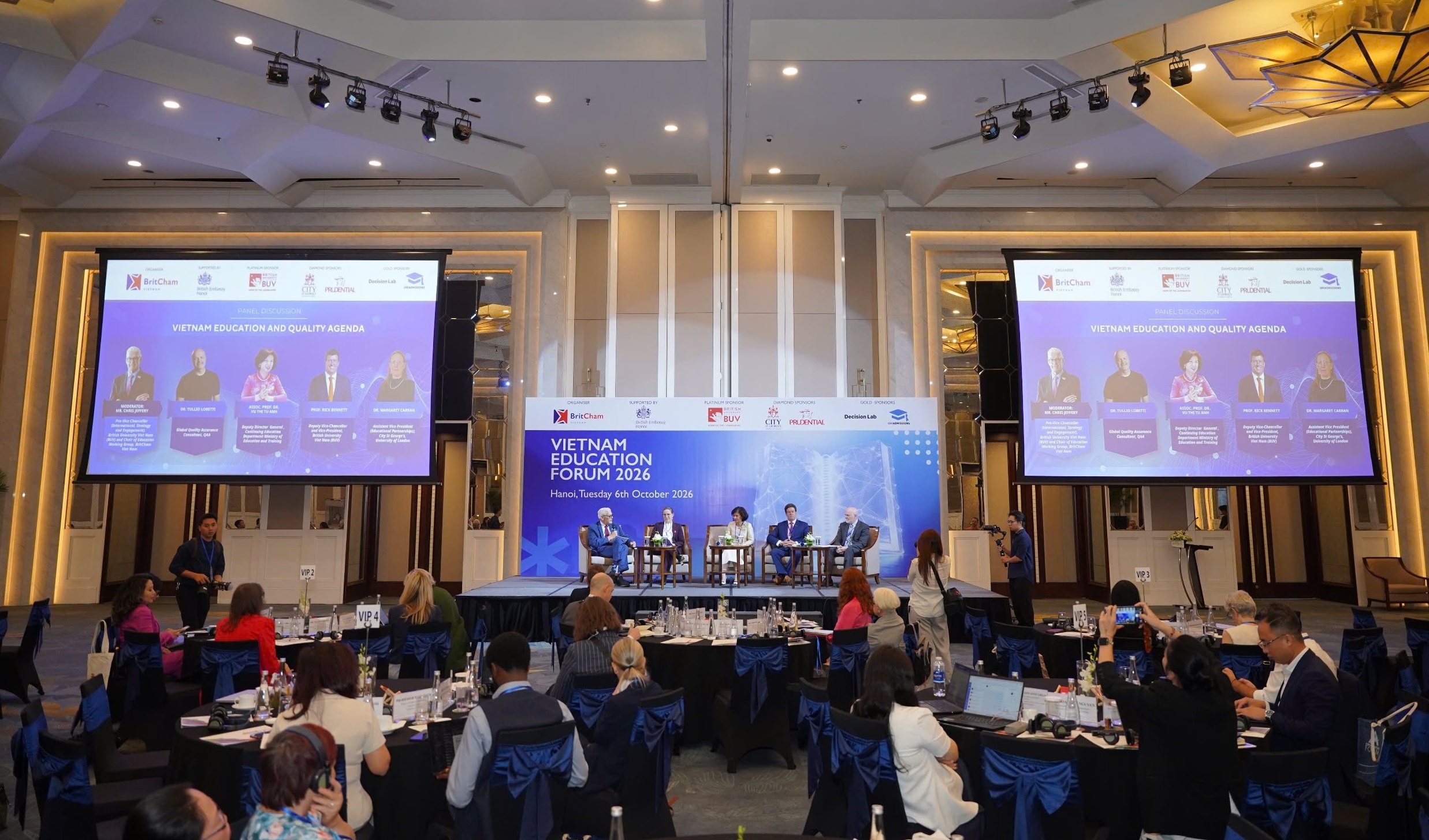
- Vietnam Education Forum opens UK Education Mission's Hanoi visit (October 07, 2026 | 12:27)
- Tax authorities deactivate TINs of nearly 180,000 businesses (October 07, 2026 | 12:08)
- World Bank raises Vietnam's 2026 GDP growth forecast to 7.4 per cent (October 07, 2026 | 11:41)
- Vietstock 2026 to spotlight livestock innovation and green transition (October 07, 2026 | 09:00)
- Vietnam’s GDP grows over 9 per cent in first nine months (October 05, 2026 | 18:45)
- Vietnam earns $56.3 billion from agro-forestry-fishery exports (October 05, 2026 | 18:32)
- DSV balances resilience and decarbonisation in supply chains (October 05, 2026 | 18:20)
- Electronics exports reach $175.4 billion in the first nine months (October 05, 2026 | 18:12)



Latest News





 Mobile Version